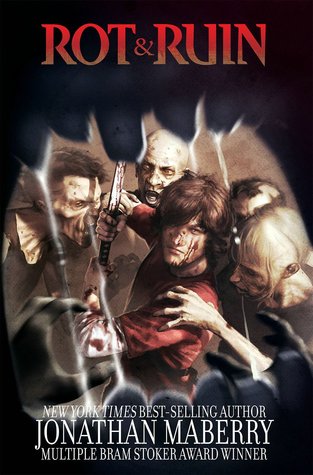
Last month, the trade paperback of the first graphic novel of the Rot & Ruin series by Jonathan Maberry came out. I read and enjoyed this story from between books 2 and 3, but was faced with a very tough question: Where on Earth do I put this?
While I do love graphic novels, and they are great for people who don't have much time to read (library directors, high school students) or for reluctant readers, there is an issue that rears its ugly head over them: they have pictures. Yeah, obvious, I know. But that fact raises two problems: they are discounted as not being literary enough (baloney; see also my discussion of Maus) or parents debate whether children should have access to them. To read about violence and other questionable topics is one thing. To have them visually portrayed is another.
I have installed the complete novel series of Rot & Ruin at both of my libraries. The question I faced was whether I could put it in the school library, or if it should just go into the public library. People would get access to it somewhere. But, where?
There's not a terrible amount of blood or gore, especially considering that it's a zombie novel. But it is a zombie novel, and what's at stake in the plot is creepy and unnerving. Would it be appropriate for the school setting? It's for teens, like its parent novel series, but I do have students that start reading it in sixth grade.
After some ruminating, I decided to loan it to a particular freshman. He's a great patron, and I knew he'd give me honest answers on whether it was okay to have in school. Toward the end of last school year, he'd been asking if we could carry A Song of Ice and Fire by George R.R. Martin; he was reading the first one at the time. I said no, that it wasn't appropriate for school, and that I like my job. When I saw him in the fall, he had finished A Game of Thrones, and honestly told me that he now understood why I couldn't have it in the school library.
So, I handed it to him one morning, explained that I wasn't sure which library to put it in, and told him to read it and let me know what he thought. He loves the series, and was thrilled to have the opportunity. When I saw him at lunchtime, he was partway through and gushing about how great it was.
Last Wednesday, he returned it, and I asked him about it. He gushed more about it, and told me how a friend was interested in it, too. Not too keen on the art style, but he loved the story.
"Do you think I can put it in this library, or is it a bit too mature?" I asked. He thought about it, then said that he thought it okay. Not much violence or gore.
"Would you let your little brother read it?" I asked. His little brother is in fifth grade.
"He's not like other fifth graders," he replied.
I laughed. "True," I agreed. "But do you think it would be okay for fifth graders to read it?"
"No, Miss (Librarian), but I think sixth graders could handle it," my student determined.
And thus, I have taken his advice and added it to the school collection.
It's a good idea to find outside sources when considering collection development. Get the opinions of your most fervent patrons. I know you consider what they like and what gets the most checkouts, but don't be afraid to hand them something new, or even an advanced reading copy, and find out what they think. It's worthwhile.
I'm a librarian moonlighting as a librarian. I'm currently working at two Michigan libraries: a small town public library, where I am now the director, and a K-12 public charter school. I write reviews of YA and juvenile fiction, and books set in Michigan and/or written by Michigan authors. I also occasionally discuss libraries and library science.
Showing posts with label reviews. Show all posts
Sunday, May 17, 2015
Which library? Rot & Ruin graphic novel
Labels:
collection_development,
graphic_novels,
jonathan_maberry,
library_life,
reviews,
ya,
zombies
Saturday, April 25, 2015
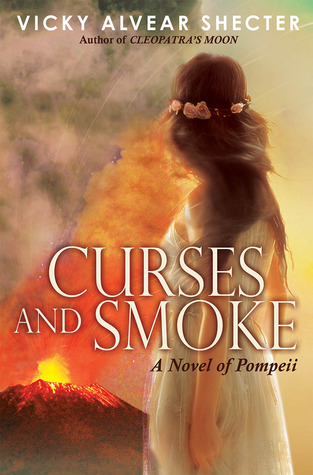
Yay for YA: Curses and Smoke
What's this? Two book reviews within a month?
Let me tell you about Curses and Smoke, by Vicky Alvear Shecter! (I previously reviewed another of her books, Cleopatra's Moon, in 2011.)
Statistics
Checkouts: 2
Typical reader: Teens interested in historical fiction and/or Pompeii
Source: The author generously donated this and another of her books to the school library!
Synopsis: Lucia is the daughter of the owner of a gladiatorial school, and is being sold off in marriage to an old man to better her father's status. Tag is a medical slave owned by her father, and dreams of becoming a gladiator and winning his freedom. These two childhood friends reconnect and plan to escape Pompeii and Lucia's father, while strange things are happening in nature on the slopes of Mt. Vesuvius ...
My Goodreads rating: 4 stars
First of all, I would like to thank the author very much for contacting me and offering to donate this and Hades Speaks! to one of my libraries. I hope I'm not too far behind in writing this honest review.
This is a wonderfully researched novel set at the time of the unexpected, catastrophic eruption in AD 79 that destroyed, yet preserved, the ancient Roman city of Pompeii. I enjoyed the look into the customs and culture of this ancient civilization, as shown through the novel. The extensive author's note at the end delighted me. Curses and Smoke taught me a lot about Pompeii, Mt. Vesuvius, and some aspects of ancient Roman life. As with Cleopatra's Moon, Ms. Shecter has worked magic with what resources were available.
For the most part, I enjoyed the story. There were times when I felt that it had too many similarities to James Cameron's Titanic, particularly in some ways the couples' escapes were thwarted. The situations both dragged on. Overall, though, it was a pretty good plot, with well-developed characters.
I didn't entirely hate the love polygon. Yes, it was a polygon, not a triangle; there were a lot of relationships intertwined. There were a few pleasant twists, however, and for those, I could accept the relationship intrigues at work.
Overall, this was an enjoyable novel. I would recommend it to teens, or middle school students looking for a book for their historical fiction book report assignment.
Let me tell you about Curses and Smoke, by Vicky Alvear Shecter! (I previously reviewed another of her books, Cleopatra's Moon, in 2011.)
Statistics
Checkouts: 2
Typical reader: Teens interested in historical fiction and/or Pompeii
Source: The author generously donated this and another of her books to the school library!
Synopsis: Lucia is the daughter of the owner of a gladiatorial school, and is being sold off in marriage to an old man to better her father's status. Tag is a medical slave owned by her father, and dreams of becoming a gladiator and winning his freedom. These two childhood friends reconnect and plan to escape Pompeii and Lucia's father, while strange things are happening in nature on the slopes of Mt. Vesuvius ...
My Goodreads rating: 4 stars
First of all, I would like to thank the author very much for contacting me and offering to donate this and Hades Speaks! to one of my libraries. I hope I'm not too far behind in writing this honest review.
This is a wonderfully researched novel set at the time of the unexpected, catastrophic eruption in AD 79 that destroyed, yet preserved, the ancient Roman city of Pompeii. I enjoyed the look into the customs and culture of this ancient civilization, as shown through the novel. The extensive author's note at the end delighted me. Curses and Smoke taught me a lot about Pompeii, Mt. Vesuvius, and some aspects of ancient Roman life. As with Cleopatra's Moon, Ms. Shecter has worked magic with what resources were available.
For the most part, I enjoyed the story. There were times when I felt that it had too many similarities to James Cameron's Titanic, particularly in some ways the couples' escapes were thwarted. The situations both dragged on. Overall, though, it was a pretty good plot, with well-developed characters.
I didn't entirely hate the love polygon. Yes, it was a polygon, not a triangle; there were a lot of relationships intertwined. There were a few pleasant twists, however, and for those, I could accept the relationship intrigues at work.
Overall, this was an enjoyable novel. I would recommend it to teens, or middle school students looking for a book for their historical fiction book report assignment.
Labels:
from_author,
historical_fiction,
reviews,
vicky_alvear_shecter,
ya
Wednesday, April 8, 2015
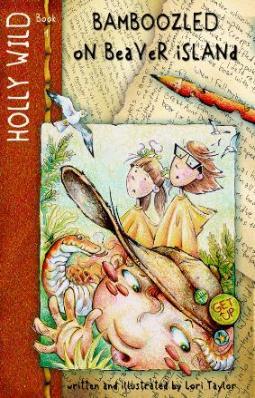
It's Elementary: Bamboozled on Beaver Island
Wow, I haven't written a book review since Banned Books Week, back in September. Color me sheepish - especially since I'd promised a few authors reviews of their books.
It's spring break around here this week, so I'm only working one of my jobs this week. (Still 40 hours over five days, but I get to sleep in most days and leave early a couple times.) And I am actually making good on promises.
Today, let me tell you about the first book in the Holly Wild series by Michigan author Lori Taylor.
Statistics
Checkouts: Just talked a student into it last week!
Typical reader: Michigan middle elementary children
Source: The author, at the Outback Art Fair last summer
Synopsis: Holly Wild wants to do something heroic. Will she have the opportunity to do so with her friends on a trip to Beaver Island?
My Goodreads rating: 5 stars
This is an illustrated novel in the vein of the ever-popular Diary of a Wimpy Kid or Dork Diaries, but significantly less "woe am I" than your average contemporary kids' fiction diary. Sure, Holly is not necessarily popular, but she doesn't wallow in it. This is a strong female character, with a healthy interest in adventure and science! Holly likes squishy, icky, gross things, and can use the scientific method to figure things out. Rejoice.
I am not big on mysteries, and I will say that I winced when I realized that there was a mystery to solve. However, this won me over with how fun and adventurous the escapades of Holly, her grandmother, and her friends Sierra and Tierra (twins, obviously) are. It also encourages the reader to get out and explore the natural world.
This is the first book in a series of at least three novels, all set in Michigan. It's perfect for children in second through fourth grades.
It's spring break around here this week, so I'm only working one of my jobs this week. (Still 40 hours over five days, but I get to sleep in most days and leave early a couple times.) And I am actually making good on promises.
Today, let me tell you about the first book in the Holly Wild series by Michigan author Lori Taylor.
Statistics
Checkouts: Just talked a student into it last week!
Typical reader: Michigan middle elementary children
Source: The author, at the Outback Art Fair last summer
Synopsis: Holly Wild wants to do something heroic. Will she have the opportunity to do so with her friends on a trip to Beaver Island?
My Goodreads rating: 5 stars
This is an illustrated novel in the vein of the ever-popular Diary of a Wimpy Kid or Dork Diaries, but significantly less "woe am I" than your average contemporary kids' fiction diary. Sure, Holly is not necessarily popular, but she doesn't wallow in it. This is a strong female character, with a healthy interest in adventure and science! Holly likes squishy, icky, gross things, and can use the scientific method to figure things out. Rejoice.
I am not big on mysteries, and I will say that I winced when I realized that there was a mystery to solve. However, this won me over with how fun and adventurous the escapades of Holly, her grandmother, and her friends Sierra and Tierra (twins, obviously) are. It also encourages the reader to get out and explore the natural world.
This is the first book in a series of at least three novels, all set in Michigan. It's perfect for children in second through fourth grades.
Labels:
contemporary,
elementary,
from_author,
marvelous_michigan,
mystery,
realistic_fiction,
reviews
Tuesday, September 23, 2014
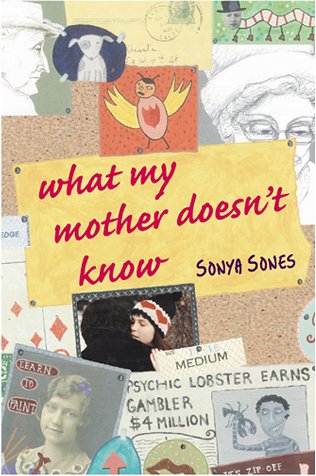
Banned Books Week: What My Mother Doesn't Know
It's that week I get most excited for, Banned Books Week! I know, I'm such a library geek. But I put the most planning into decorating for it, more than for any other "holiday." I research it, and why books are banned, and what's trending in promoting the freedom to read. And I do enjoy reading banned books.
As part of Banned Books Week, I always like to review a book that's stirred up particular controversy. Here are my thoughts on What My Mother Doesn't Know by Sonya Sones. It impressively made the Top Ten Banned/Challenges Books List for four nonconsecutive years.
Statistics
Checkouts: 10 checkouts from my public library (the one I run)
Typical reader: teen and tween girls
Source: My public library
Synopsis: Sophie is a boy-crazy high school freshman. This is a free-verse account of a few of her romantic flings.
My Goodreads rating: 4 stars
Banned/challenged for (in alphabetical order): nudity, offensive language, sexism, sexual content, sexually explicit, unsuited to age group
This book has quite the curriculum vitae when it comes to controversy. In 2004, it debuted on the Top Ten Banned/Challenged Books List at #6 for offensive language, being sexually explicit, and being unsuited to age group. In 2005, it was at #7, for sexual content, and being unsuited to age group. After a few years off, it came back in 2010 to regain #7, for sexism, sexually explicit, and unsuited to age group. In 2011, it was #8, for nudity, offensive language, and being sexually explicit. Wow.
Between the repeat infamy and the title ("Ooo, it sounds scandalous!"), I was expecting something pretty salacious.
... It isn't.
Really, it's one of the sweetest books about teenage romance that I've read. Granted, I don't read many. (And when I do, they tend to be angst-filled coming-out GLBT novels with plenty of heartbreak.) Sophie is boy-crazy and knows it. But she's a romantic, a serial-monogamist, with some sense in her hormone-addled head, giving her the ability to move on when a relationship is ending and defy peer pressure in certain instances. No spoilers, but the hints leading to, and the actual, third romance are pretty "aw"-inspiring.
What could be wrong with this book? (Beware of sass.)
Nudity. There's a scene where Sophie and her girlfriends go out for a bite to eat in trenchcoats and smiles. No one sees that they're not wearing anything underneath. It's their little secret. A goofy bit of fun. (And really, unless it's illustrated, how the heck does one criticize a book for having nudity?)
Offensive language. Sophie is Jewish, and in one instance, a rude man refers to her and her mother using a derogatory word beginning with a K. Certainly, that's something to get a reader upset over, because they'll otherwise never hear derogatory racial/ethnic slurs.
Sexism. I don't know. Maybe when Sophie gets groped by a random boy after a dance, and he comments to his friends that her breasts are real? Speaking of that scene, Sophie handled it excellently, defending herself and chasing the boys away.
Sexual content. Sophie discusses getting her period, and tries to buy feminine products. It's as bad as Are You There, God? It's Me, Margaret by Judy Blume. Oh. Right. That's been banned and challenged over the years, too. We certainly can't have girls reading about other girls dealing with menstruation. They might have been as in-the-dark as Sophie was, without instruction from her mother, and they might learn something from a book like this or the one by Judy Blume.
Sexually explicit. Certainly, there must have been some eye-widening scenes in this book, for it to be challenged so often for this offense. But what I found was mostly kissing. Oh, no, the horror. How dare teens kiss. They're supposed to wait until after their Sweet Sixteen.
In sum, this book with the eyebrow-raising title has gotten a lot of undue criticism, in my opinion. It's a mostly harmless book about a boy-crazy high school girl. This novel is just a lightning rod that attracts storms from people who are overly protective of girls, and don't want them knowing about anything that can and does impact their lives during puberty. Get over it.
As part of Banned Books Week, I always like to review a book that's stirred up particular controversy. Here are my thoughts on What My Mother Doesn't Know by Sonya Sones. It impressively made the Top Ten Banned/Challenges Books List for four nonconsecutive years.
Statistics
Checkouts: 10 checkouts from my public library (the one I run)
Typical reader: teen and tween girls
Source: My public library
Synopsis: Sophie is a boy-crazy high school freshman. This is a free-verse account of a few of her romantic flings.
My Goodreads rating: 4 stars
Banned/challenged for (in alphabetical order): nudity, offensive language, sexism, sexual content, sexually explicit, unsuited to age group
This book has quite the curriculum vitae when it comes to controversy. In 2004, it debuted on the Top Ten Banned/Challenged Books List at #6 for offensive language, being sexually explicit, and being unsuited to age group. In 2005, it was at #7, for sexual content, and being unsuited to age group. After a few years off, it came back in 2010 to regain #7, for sexism, sexually explicit, and unsuited to age group. In 2011, it was #8, for nudity, offensive language, and being sexually explicit. Wow.
Between the repeat infamy and the title ("Ooo, it sounds scandalous!"), I was expecting something pretty salacious.
... It isn't.
Really, it's one of the sweetest books about teenage romance that I've read. Granted, I don't read many. (And when I do, they tend to be angst-filled coming-out GLBT novels with plenty of heartbreak.) Sophie is boy-crazy and knows it. But she's a romantic, a serial-monogamist, with some sense in her hormone-addled head, giving her the ability to move on when a relationship is ending and defy peer pressure in certain instances. No spoilers, but the hints leading to, and the actual, third romance are pretty "aw"-inspiring.
What could be wrong with this book? (Beware of sass.)
Nudity. There's a scene where Sophie and her girlfriends go out for a bite to eat in trenchcoats and smiles. No one sees that they're not wearing anything underneath. It's their little secret. A goofy bit of fun. (And really, unless it's illustrated, how the heck does one criticize a book for having nudity?)
Offensive language. Sophie is Jewish, and in one instance, a rude man refers to her and her mother using a derogatory word beginning with a K. Certainly, that's something to get a reader upset over, because they'll otherwise never hear derogatory racial/ethnic slurs.
Sexism. I don't know. Maybe when Sophie gets groped by a random boy after a dance, and he comments to his friends that her breasts are real? Speaking of that scene, Sophie handled it excellently, defending herself and chasing the boys away.
Sexual content. Sophie discusses getting her period, and tries to buy feminine products. It's as bad as Are You There, God? It's Me, Margaret by Judy Blume. Oh. Right. That's been banned and challenged over the years, too. We certainly can't have girls reading about other girls dealing with menstruation. They might have been as in-the-dark as Sophie was, without instruction from her mother, and they might learn something from a book like this or the one by Judy Blume.
Sexually explicit. Certainly, there must have been some eye-widening scenes in this book, for it to be challenged so often for this offense. But what I found was mostly kissing. Oh, no, the horror. How dare teens kiss. They're supposed to wait until after their Sweet Sixteen.
In sum, this book with the eyebrow-raising title has gotten a lot of undue criticism, in my opinion. It's a mostly harmless book about a boy-crazy high school girl. This novel is just a lightning rod that attracts storms from people who are overly protective of girls, and don't want them knowing about anything that can and does impact their lives during puberty. Get over it.
Labels:
banned_books,
banned_books_week,
contemporary,
reviews,
ya
Saturday, September 20, 2014
Yay for YA: Sisters' Fate by Jessica Spotswood
It's probably worth repeating something I said earlier this year in another YA review: I don't typically indulge in reading to completion. So when I actually do finish a trilogy, you can bet that the author impressed me enough that I felt it worth my time to see it through to the end.
There was no way I was going to let Sisters' Fate, the third and final book in the Cahill Witch Chronicles trilogy by Jessica Spotswood, slip by me. That twist at the end of the second book! Oh, my word! I actually squawked when I read what happened, and wanted to throw something at the perpetrating character. So, I just had to know how things resolved in this book.
Not to mention, does the prophecy that one of the three sisters kills another come true? Or can fate be changed?
(For my review of the first book, Born Wicked, click here.)
Statistics
Checkouts: The book is new to the school library; the series surprisingly hasn't been checked out at all. I need to talk it up more, apparently.
Typical reader: Teen girls looking for paranormal romance
Source: Snowbound Books
Synopsis: As a fever ravages the city of New London, Cate must deal with what happened at the end of Star Cursed, the prophecy and what it could mean, her little sister Tess's own prophecies, her middle sister Maura's conniving ways, and regaining Finn's trust.
My Goodreads rating: 5 stars
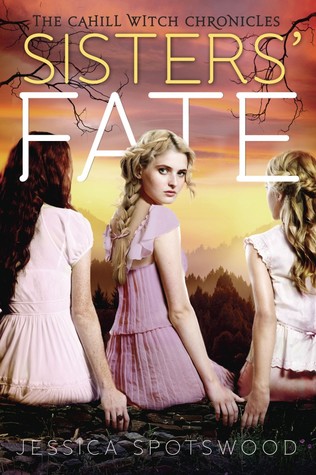
First, I must comment on the cover art. It's an improvement over the first book's hardcover printing, where Cate (presumably) looks all come-hither and wonton. The paperback edition of the first book, and the printings of the subsequent books, fit the stories much better. The three girls on this cover look like they could be Maura, Cate, and Tess.
On to the book itself. It was everything I wanted, and more. The end of the trilogy answered questions, left a few tasty dangling threads, and overall satisfied me. There's also a tremendous climax - multi-tiered, even - that is action-packed and far-reaching.
What I loved most about this book is that while there's romance, it surpasses what is the norm in teen literature. Cate benefits from her beau, but does not rely on him. He's a support, not a crutch. She can love, without being codependent. This is absolutely marvelous, and well-written. We need more strong females in YA fiction like her! Really, many of us could learn a bit from Cate.
I look forward to more of Ms. Spotswood's works in the future. (Also, thank you for the bookmarks.)
There was no way I was going to let Sisters' Fate, the third and final book in the Cahill Witch Chronicles trilogy by Jessica Spotswood, slip by me. That twist at the end of the second book! Oh, my word! I actually squawked when I read what happened, and wanted to throw something at the perpetrating character. So, I just had to know how things resolved in this book.
Not to mention, does the prophecy that one of the three sisters kills another come true? Or can fate be changed?
(For my review of the first book, Born Wicked, click here.)
Statistics
Checkouts: The book is new to the school library; the series surprisingly hasn't been checked out at all. I need to talk it up more, apparently.
Typical reader: Teen girls looking for paranormal romance
Source: Snowbound Books
Synopsis: As a fever ravages the city of New London, Cate must deal with what happened at the end of Star Cursed, the prophecy and what it could mean, her little sister Tess's own prophecies, her middle sister Maura's conniving ways, and regaining Finn's trust.
My Goodreads rating: 5 stars
First, I must comment on the cover art. It's an improvement over the first book's hardcover printing, where Cate (presumably) looks all come-hither and wonton. The paperback edition of the first book, and the printings of the subsequent books, fit the stories much better. The three girls on this cover look like they could be Maura, Cate, and Tess.
On to the book itself. It was everything I wanted, and more. The end of the trilogy answered questions, left a few tasty dangling threads, and overall satisfied me. There's also a tremendous climax - multi-tiered, even - that is action-packed and far-reaching.
What I loved most about this book is that while there's romance, it surpasses what is the norm in teen literature. Cate benefits from her beau, but does not rely on him. He's a support, not a crutch. She can love, without being codependent. This is absolutely marvelous, and well-written. We need more strong females in YA fiction like her! Really, many of us could learn a bit from Cate.
I look forward to more of Ms. Spotswood's works in the future. (Also, thank you for the bookmarks.)
Labels:
fantasy,
historical_fiction,
jessica_spotswood,
reviews,
ya
Monday, September 15, 2014
Guilty Pleasures: The Clockwork Dagger, by Beth Cato
The book I'd like to tell you about today comes out tomorrow (Tuesday, Sept. 16). I read the ARC two months ago. Oops! Not to say I've been busy or anything.
Here's my review of The Clockwork Dagger by Beth Cato.
Statistics
Checkouts: Comes out tomorrow - none! Having copies on the shelf before the release date is unethical, if not illegal.
Typical reader: Fans of steampunk, perhaps particularly the Parasol Protectorate series by Gail Carriger (I actually agree with a read-alike on the back cover of an ARC, for once)
Source: Advanced reading copy, courtesy of Snowbound Books
Synopsis: Trained as a medician (medical magician, if you will), Octavia Leander sets off into the world to take her first job in a rural town. But there is much intrigue and adventure to be had on her journey by airship.
My Goodreads rating: 5 stars
I fell in love with this book within the first dozen pages. This is no small feat, but I was extremely impressed. In that short amount of text, I learned more about the protagonist, why we should like her, how magic works, and the world she lives in than in some entire books.
And the book kept my love throughout. This is one that I resisted finishing as long as I could, to savor it longer. It depressed me at the end to know that I was reading an ARC, and I would have to wait even longer for the sequel (and it sounds like there will be one!)
How did I adore this book? Let me count the ways.
Here's my review of The Clockwork Dagger by Beth Cato.
Statistics
Checkouts: Comes out tomorrow - none! Having copies on the shelf before the release date is unethical, if not illegal.
Typical reader: Fans of steampunk, perhaps particularly the Parasol Protectorate series by Gail Carriger (I actually agree with a read-alike on the back cover of an ARC, for once)
Source: Advanced reading copy, courtesy of Snowbound Books
Synopsis: Trained as a medician (medical magician, if you will), Octavia Leander sets off into the world to take her first job in a rural town. But there is much intrigue and adventure to be had on her journey by airship.
My Goodreads rating: 5 stars
I fell in love with this book within the first dozen pages. This is no small feat, but I was extremely impressed. In that short amount of text, I learned more about the protagonist, why we should like her, how magic works, and the world she lives in than in some entire books.
And the book kept my love throughout. This is one that I resisted finishing as long as I could, to savor it longer. It depressed me at the end to know that I was reading an ARC, and I would have to wait even longer for the sequel (and it sounds like there will be one!)
How did I adore this book? Let me count the ways.
- It has a plucky, unique heroine with a well-rounded support cast.
- The magic is unlike any other I've read about, coming closest to a cross between a Dragonlance mystic and a druid with a penchant for healing.
- It's an interracial romance! How common is that?! For all the diversity in romance in literature, you'd forget that Loving v. Virginia made it legal in the U.S nearly 50 years ago. Eleanor & Park by Rainbow Rowell gets a lot of its attention because it's a love story between an overweight redhead girl and a half-Korean boy. I'd honestly like to see more books like these.
- Speaking of the romance, it isn't overbearing. And in a Victorian-style steampunk setting, that's to be expected. Flirting and wooing is very cordial.
- The plot has plenty of twists, turns, and intrigue.
- The worldbuilding is exquisite. It has a Dickensian feel, particularly in the cities. There wasn't much interaction between Octavia and the poor, but one particular scene made me sit back and say, "Whoa." Outside the cities, the author has constructed an interesting, different world with a mixture of magic and mechanisms, spirituality and science.
Labels:
fantasy,
guilty,
historical_fiction,
reviews,
steampunk
Thursday, August 14, 2014
Yay for YA: Hold Me Closer, Necromancer
Do you read books that people swear you'll like? Do you like the suggested books? Or do you feel like the person had no clue what you actually like?
Dana at Snowbound Books has been recommending the following book to me for several years now, practically since it was published. And Dana is a pretty good judge of what people could like to read; it's her job as a store owner, and she and I used to work together, so she does know my tastes. I finally purchased it for the public library, and read it before cataloging it. Did it live up to her hype?
Statistics
Checkouts: New to the public library
Typical reader: Fans of teen urban fantasy, teens looking for something edgy, fans of ALA award winners and finalists
Source: Snowbound Books
Synopsis: Sam LaCroix, a college dropout working at a burger joint, is surprised to learn that he is a necromancer. And that he has enemies because of this.
My Goodreads rating: 3 stars (3.5, rounded down)
Let's talk about what young adult literature is. I took a class on it, back in my master's program. And from that, I can tell you: everyone has a different definition of it. It depends on the definition of "young adult." Are young adults just teens? Should college students be included? Can it extend all the way through the 20s, especially considering how many 20-somethings are still in school, still living at home, still unemployed or minimally employed? Can we judge it based on what the American Library Association awards in the young adult categories?
If we work with a strict definition of "young adult literature is for teens, under 18," I wouldn't call it YA lit. The protagonist is a college dropout. There are also elements to the book that would make me hesitate to hand it to immature high school students. If they pick it up on their own, fine, it's their business and their parents' or guardians'. I'm not one to censor. But would I put this in a school library? No. Would I shelve it in a teen section? *squirm* Eh ...
On the other hand, ALA committees liked it and called it YA. Hold Me Closer, Necromancer was a finalist for the 2011 William C. Morris Debut Award, which is for a new author's first book in the YA realm. It was also on the YALSA (Young Adult Library Services Association) Best Fiction for Young Adults top ten list for 2011.
I also don't think it would appeal to typical adult readers. If your library has a "new adult" section, perhaps this book should be there. It's probably the best place possible. If not, YA works.
What did I actually think of the book? I suppose you are here for the review.
I greatly enjoyed the character development. Learning about Sam's background, which had many secrets and tantalizing revelations, captivated my interests. Characters are well-rounded, intriguing, and quirky. And the back of the book is amusingly vague, almost misleading, about his "undead friend" and "hot werewolf girl." Surprises can be fun, particularly in this book. I thoroughly enjoyed finding out all of what James was.
The plot ... it was an interesting twist on coming-of-age and finding one's place in life, certainly. But if you read a lot of this sort of genre, it blends in and is unremarkable. It suffers from a problem that gamers familiar with the Old World of Darkness settings would understand: The trope that everyone is actually supernatural, and the last human just became a hunter. Yawn. A bit of normalcy would have been exciting, if you get where I'm coming from.
That said, I did enjoy it overall. I could find myself reading the sequel, because there is a curious thread left hanging.
Dana at Snowbound Books has been recommending the following book to me for several years now, practically since it was published. And Dana is a pretty good judge of what people could like to read; it's her job as a store owner, and she and I used to work together, so she does know my tastes. I finally purchased it for the public library, and read it before cataloging it. Did it live up to her hype?
Statistics
Checkouts: New to the public library
Typical reader: Fans of teen urban fantasy, teens looking for something edgy, fans of ALA award winners and finalists
Source: Snowbound Books
Synopsis: Sam LaCroix, a college dropout working at a burger joint, is surprised to learn that he is a necromancer. And that he has enemies because of this.
My Goodreads rating: 3 stars (3.5, rounded down)
Let's talk about what young adult literature is. I took a class on it, back in my master's program. And from that, I can tell you: everyone has a different definition of it. It depends on the definition of "young adult." Are young adults just teens? Should college students be included? Can it extend all the way through the 20s, especially considering how many 20-somethings are still in school, still living at home, still unemployed or minimally employed? Can we judge it based on what the American Library Association awards in the young adult categories?
If we work with a strict definition of "young adult literature is for teens, under 18," I wouldn't call it YA lit. The protagonist is a college dropout. There are also elements to the book that would make me hesitate to hand it to immature high school students. If they pick it up on their own, fine, it's their business and their parents' or guardians'. I'm not one to censor. But would I put this in a school library? No. Would I shelve it in a teen section? *squirm* Eh ...
On the other hand, ALA committees liked it and called it YA. Hold Me Closer, Necromancer was a finalist for the 2011 William C. Morris Debut Award, which is for a new author's first book in the YA realm. It was also on the YALSA (Young Adult Library Services Association) Best Fiction for Young Adults top ten list for 2011.
I also don't think it would appeal to typical adult readers. If your library has a "new adult" section, perhaps this book should be there. It's probably the best place possible. If not, YA works.
What did I actually think of the book? I suppose you are here for the review.
I greatly enjoyed the character development. Learning about Sam's background, which had many secrets and tantalizing revelations, captivated my interests. Characters are well-rounded, intriguing, and quirky. And the back of the book is amusingly vague, almost misleading, about his "undead friend" and "hot werewolf girl." Surprises can be fun, particularly in this book. I thoroughly enjoyed finding out all of what James was.
The plot ... it was an interesting twist on coming-of-age and finding one's place in life, certainly. But if you read a lot of this sort of genre, it blends in and is unremarkable. It suffers from a problem that gamers familiar with the Old World of Darkness settings would understand: The trope that everyone is actually supernatural, and the last human just became a hunter. Yawn. A bit of normalcy would have been exciting, if you get where I'm coming from.
That said, I did enjoy it overall. I could find myself reading the sequel, because there is a curious thread left hanging.
Labels:
contemporary,
fantasy,
paranormal,
reviews,
ya
Monday, August 4, 2014
Yay for YA: The Fault in Our Stars, by John Green
I haven't written in a couple weeks, despite having books to review. I apologize. It's because my review is of John Green's The Fault in Our Stars, which has been hugely popular and made into a movie. That's very stressful, reviewing something familiar to the masses and something that could draw viewers to this blog.
But without further ado:
Statistics
Checkouts: New to both libraries
Typical reader: People curious about the hype/movie; fans of John Green
Source: Snowbound Books for the public library's copy; Scholastic for the school's
Synopsis: Hazel is a teen with terminal cancer. At her support group, she meets Augustus Waters, who shakes up her existence.
My Goodreads rating: 4 stars
There are two reasons a teen book becomes immensely popular: either it's so horrible that it's incredibly accessible, or it's amazingly good, yet can have widespread appeal. John Green, thankfully, is a good writer, and can hit nerves with many readers. Overall, The Fault in Our Stars is a worthwhile book.
I enjoyed the fact that this book used its fictional bits and put them out into the real world. You can find Hazel's favorite book, An Imperial Affliction, on Goodreads, which thrilled me. Or ... at least it was on there while I was reading the book. Alas, the link is now broken.
I also liked that the ending was not what I predicted. It could matched a foreshadowing in An Imperial Affliction. That would have been a little cliche, which this book is not beyond doing. I knew a particular character's fate as soon as he was introduced. Good heavens. But some things did go past what I expected, and I was grateful for that.
The author, Peter Van Houten, is a great conversational piece, because he's such a jerk. At least once while reading this, I put the book down, went to my partner (a budding author), and said, "Honey, don't ever be like this guy." While Hazel and friends were engaging, Van Houten evoked the most emotions.
Fans of John Green's other books and interesting characters will delight in how quirky Augustus is.
This is a good, though not mind-blowing, book.
But without further ado:
Statistics
Checkouts: New to both libraries
Typical reader: People curious about the hype/movie; fans of John Green
Source: Snowbound Books for the public library's copy; Scholastic for the school's
Synopsis: Hazel is a teen with terminal cancer. At her support group, she meets Augustus Waters, who shakes up her existence.
My Goodreads rating: 4 stars
There are two reasons a teen book becomes immensely popular: either it's so horrible that it's incredibly accessible, or it's amazingly good, yet can have widespread appeal. John Green, thankfully, is a good writer, and can hit nerves with many readers. Overall, The Fault in Our Stars is a worthwhile book.
I enjoyed the fact that this book used its fictional bits and put them out into the real world. You can find Hazel's favorite book, An Imperial Affliction, on Goodreads, which thrilled me. Or ... at least it was on there while I was reading the book. Alas, the link is now broken.
I also liked that the ending was not what I predicted. It could matched a foreshadowing in An Imperial Affliction. That would have been a little cliche, which this book is not beyond doing. I knew a particular character's fate as soon as he was introduced. Good heavens. But some things did go past what I expected, and I was grateful for that.
The author, Peter Van Houten, is a great conversational piece, because he's such a jerk. At least once while reading this, I put the book down, went to my partner (a budding author), and said, "Honey, don't ever be like this guy." While Hazel and friends were engaging, Van Houten evoked the most emotions.
Fans of John Green's other books and interesting characters will delight in how quirky Augustus is.
This is a good, though not mind-blowing, book.
Labels:
contemporary,
john_green,
realistic_fiction,
reviews,
ya
Sunday, July 13, 2014
Yay for YA: Promise Bound, by Anne Greenwood Brown
I am never quite comfortable with reviewing sequels. If you've been reading my reviews for a while, you likely know I don't give spoilers, and do not appreciate spoilers. Thus, to review something in a series after the first book is a bit difficult. You either have to paint broad strokes about it and drop hints, or just say what happened in previous installments.
On the other hand, when I take the time to actually read through an entire series, I would like to give props to the author, because I don't typically indulge in reading to completion. In this line of work, one needs to have a vast knowledge of what can be recommended to patrons, which does not bode well to moving beyond the first book of anything.
So, let me tell you about Promise Bound, the third in the Lies Beneath trilogy by Anne Greenwood Brown. I'll also briefly touch on the second book, Deep Betrayal, as I read it while on hiatus.
Statistics
Checkouts (series): 4 at the school library
Typical reader: Fans of the series
Source: Snowbound Books
Synopsis, Deep Betrayal: Told from Lily's perspective. After graduating from high school, Lily returns to the lake to find Calder and her father spending too much time together, thanks to the events of the first book. And someone - or something - is killing tourists and locals alike on the lake.
My Goodreads rating: 4 stars
Synopsis, Promise Bound: The chapters alternate between Lily and Calder's perspectives, plus additional voices near the end. There are a lot of things going on in this one, with Lily dreaming of being Nadia, her grandmother (and Calder's adoptive mother), Calder's sisters vying for control, a mermaid's baby, and old promises that must be kept. Will all the turmoil tear Lily and Calder apart?
My Goodreads rating: 4 stars
Deep Betrayal pleased me. Lily's voice was perfect in this book. It was just as I would have imagined it. The lore in this rendering of the world was explored more. The thriller elements of the book stayed fresh and gripping.
Promise Bound had a lot going on, yet it also felt like a finisher for the trilogy. It didn't really add to the experience, but wrapped things up - including elements added in this book. There were a couple of points I want to address in it, though.
1. The plot twist halfway through the book. Initially, I was shocked by what seemed like an odd, out of left field, crazy plot twist. Lily makes Calder promise to do something that he doesn't want to or feel the need to do - but promising compels merfolk in this world, so then he has to. It flummoxed me. But I came to terms with it. It did fit, somewhat. While it was rash and impulsive, Lily is a teenager, and teens (perhaps especially Lily) can certainly be rash and impulsive.
2. I have a much harder time with the character of Chelsea. Calder meets her at the reference desk of (a branch of) the Thunder Bay Public Library. She should not exist. Harsh, yes. But what library lets high school students work the reference desk?! You don't find that at a small town's reference desk, much less in a city of more than 150,000 residents. She could have been a college student and I would have bought it. But not a high school student.
And then what the heck is up with her not only giving Calder the addresses, let alone driving him to the addresses, of patrons? It wasn't even as though he had used his powers on her. She just up and violated patron confidentiality to an extreme. I had a little conniption fit over that.
But, overall, I enjoyed this series. It was a fresh, different take on merfolk, and offered elements of other genres beyond paranormal romance. The protagonists were interesting, as was the world-building and lore. And I appreciated the setting - not quite Michigan, sure, but Lake Superior is visible from my apartment.
On the other hand, when I take the time to actually read through an entire series, I would like to give props to the author, because I don't typically indulge in reading to completion. In this line of work, one needs to have a vast knowledge of what can be recommended to patrons, which does not bode well to moving beyond the first book of anything.
So, let me tell you about Promise Bound, the third in the Lies Beneath trilogy by Anne Greenwood Brown. I'll also briefly touch on the second book, Deep Betrayal, as I read it while on hiatus.
Statistics
Checkouts (series): 4 at the school library
Typical reader: Fans of the series
Source: Snowbound Books
Synopsis, Deep Betrayal: Told from Lily's perspective. After graduating from high school, Lily returns to the lake to find Calder and her father spending too much time together, thanks to the events of the first book. And someone - or something - is killing tourists and locals alike on the lake.
My Goodreads rating: 4 stars
Synopsis, Promise Bound: The chapters alternate between Lily and Calder's perspectives, plus additional voices near the end. There are a lot of things going on in this one, with Lily dreaming of being Nadia, her grandmother (and Calder's adoptive mother), Calder's sisters vying for control, a mermaid's baby, and old promises that must be kept. Will all the turmoil tear Lily and Calder apart?
My Goodreads rating: 4 stars
Deep Betrayal pleased me. Lily's voice was perfect in this book. It was just as I would have imagined it. The lore in this rendering of the world was explored more. The thriller elements of the book stayed fresh and gripping.
Promise Bound had a lot going on, yet it also felt like a finisher for the trilogy. It didn't really add to the experience, but wrapped things up - including elements added in this book. There were a couple of points I want to address in it, though.
1. The plot twist halfway through the book. Initially, I was shocked by what seemed like an odd, out of left field, crazy plot twist. Lily makes Calder promise to do something that he doesn't want to or feel the need to do - but promising compels merfolk in this world, so then he has to. It flummoxed me. But I came to terms with it. It did fit, somewhat. While it was rash and impulsive, Lily is a teenager, and teens (perhaps especially Lily) can certainly be rash and impulsive.
2. I have a much harder time with the character of Chelsea. Calder meets her at the reference desk of (a branch of) the Thunder Bay Public Library. She should not exist. Harsh, yes. But what library lets high school students work the reference desk?! You don't find that at a small town's reference desk, much less in a city of more than 150,000 residents. She could have been a college student and I would have bought it. But not a high school student.
And then what the heck is up with her not only giving Calder the addresses, let alone driving him to the addresses, of patrons? It wasn't even as though he had used his powers on her. She just up and violated patron confidentiality to an extreme. I had a little conniption fit over that.
But, overall, I enjoyed this series. It was a fresh, different take on merfolk, and offered elements of other genres beyond paranormal romance. The protagonists were interesting, as was the world-building and lore. And I appreciated the setting - not quite Michigan, sure, but Lake Superior is visible from my apartment.
Labels:
anne_greenwood_brown,
paranormal,
reviews,
thriller,
ya
Wednesday, July 2, 2014
Yay for YA: My Basmati Bat Mitzvah, by Paula J. Freedman
I think that getting back into reviewing books with one of the best contemporary preteen books I've read in a while is a good way to do this.
Statistics
Checkouts: Not owned by either library ... yet
Typical reader: Preteens or teens interested in contemporary coming-of-age books, have ties to either ethnicity/religion portrayed in this book, or are attracted by the quirky, catchy title
Source: Advanced reading copy courtesy of Snowbound Books (It came out last October. I'm behind in my reading.)
Synopsis: Tara Feinstein, an Indian-Jewish-American preteen girl living in New York City, is preparing for her bat mitzvah. Being multicultural, she's not sure in how she fits in to either her mom's Indian culture or her dad's Jewish one, or what exactly she even believes. Adding to her worries are the fact that her best friend Rebecca is spending more time with a snobbish girl from both their middle school and Hebrew school, and her other best friend Ben-O may or may not like her as more than a friend. Oy vey!
My Goodreads rating: 5 stars
I really enjoyed reading this book. Ever have a book that you're reading, that's so good that you slow down and try to drag out the last few chapters so it will last longer? This book was like that for me.
It's well-written. The dialogue and internal monologue are realistic and believable. There was a decent balance of description - not so little that it would turn me off, and not too much for a preteen reader. Characters are well-rounded. The plot and subplots are interesting, yet resolvable by the end of the book.
And best of all, it has a glossary.
Don't worry, I am kidding when I say that a glossary is the best thing about a book. But it helps! Hardly anyone is going to be familiar with all the Yiddish, Hebrew, and Hindi words, much less the blended ones. The glossary is also seasoned with the humor of the protagonist, making it part of the enjoyable read.
I'd be hard-pressed to nitpick and find little flaws with this book. Sure, it's not perfect - nothing is - but this is really darned good.
Statistics
Checkouts: Not owned by either library ... yet
Typical reader: Preteens or teens interested in contemporary coming-of-age books, have ties to either ethnicity/religion portrayed in this book, or are attracted by the quirky, catchy title
Source: Advanced reading copy courtesy of Snowbound Books (It came out last October. I'm behind in my reading.)
Synopsis: Tara Feinstein, an Indian-Jewish-American preteen girl living in New York City, is preparing for her bat mitzvah. Being multicultural, she's not sure in how she fits in to either her mom's Indian culture or her dad's Jewish one, or what exactly she even believes. Adding to her worries are the fact that her best friend Rebecca is spending more time with a snobbish girl from both their middle school and Hebrew school, and her other best friend Ben-O may or may not like her as more than a friend. Oy vey!
My Goodreads rating: 5 stars
I really enjoyed reading this book. Ever have a book that you're reading, that's so good that you slow down and try to drag out the last few chapters so it will last longer? This book was like that for me.
It's well-written. The dialogue and internal monologue are realistic and believable. There was a decent balance of description - not so little that it would turn me off, and not too much for a preteen reader. Characters are well-rounded. The plot and subplots are interesting, yet resolvable by the end of the book.
And best of all, it has a glossary.
Don't worry, I am kidding when I say that a glossary is the best thing about a book. But it helps! Hardly anyone is going to be familiar with all the Yiddish, Hebrew, and Hindi words, much less the blended ones. The glossary is also seasoned with the humor of the protagonist, making it part of the enjoyable read.
I'd be hard-pressed to nitpick and find little flaws with this book. Sure, it's not perfect - nothing is - but this is really darned good.
Labels:
contemporary,
India,
multicultural,
realistic_fiction,
reviews,
ya
Saturday, October 12, 2013
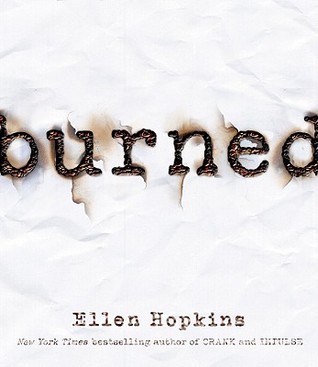
Cover-to-Cover Commuting: Burned, and Smoke, by Ellen Hopkins
I had intended to review these two books during Banned Books Week, or shortly thereafter. It's now two weeks later. Good heavens, I hope my readers don't actually expect me to be timely, or if you do, you forgive me. I'm a library director, and I have a second library job. Both jobs are a lot of work, and consume a lot of time and energy. Much as I'd love to blog more regularly, that's not going to happen.
Librarians are like teachers. Overworked and underpaid.
Enough of that, though. Let me tell you about these audiobooks! Burned was published in 2006, while its sequel, Smoke, came out last month.
Statistics
Checkouts: Both owned in print and audio format at the small public library
Typical reader: Teens, fans of the author
Source: Burned was interlibrary loaned; Smoke was cataloged and checked out to me the day it arrived, hehe
Synopses: In Burned, Pattyn von Stratten is the eldest daughter in a fundamentalist home with an abusive father and useless mother. Enraged by her really fairly typical teen actions, her father sends her away to his sister's ranch in rural Nevada. There, she finds happiness and hope - which she must leave when the school year begins. Smoke picks up not long after the cliffhanger ending of Burned, with Pattyn on the run and her sister Jackie picking up the pieces of their lives. Can they rebuild, despite the lies and pain?
My Goodreads ratings: 5 stars for Burned, 4 stars for Smoke
Pattyn (named for General Patton; her father named all his children for generals) is likely the sweetest protagonist you could possibly find in one of Ms. Hopkins' novels. The poor girl has a rough life, though, with a father who rules with an iron fist - which he often uses against his wife - and a fundamentalist church that looks the other way when its women need help.
When Pattyn gets into trouble with her father and at school due to a boy, she is shipped off to live with an aunt who has a ranch in rural Nevada. This is meant as punishment, but it turns out to be the exact opposite. There, she learns how it feels to be loved, both by her kind aunt and by a nice neighbor boy. Love is a double-edged sword, however, which she learns when she returns home to face reality. And man, can the consequences of love be disastrous.
The second book is narrated by both Pattyn and her sister, Jackie. Pattyn is on the run after a horrific series of events, and tries to rebuild her life posing as an illegal immigrant worker to become a nanny on a rural Californian ranch. (And that didn't come across as ridiculously in the book as it does when I type it.) Meanwhile, Jackie has her own demons to face, and must help her mother and sisters cope with all that's happened. It's a lot for a young teen girl.
Smoke is different from any other novel by Ms. Hopkins that I've read. It's filled with so much hope. Fans may find themselves torn between grabbing onto that hope and expecting everything to turn out okay for Pattyn and Jackie, and being cynical and waiting for it to all come crashing down, especially for Pattyn in her new life. Can there be a happy ending?
Librarians are like teachers. Overworked and underpaid.
Enough of that, though. Let me tell you about these audiobooks! Burned was published in 2006, while its sequel, Smoke, came out last month.
Statistics
Checkouts: Both owned in print and audio format at the small public library
Typical reader: Teens, fans of the author
Source: Burned was interlibrary loaned; Smoke was cataloged and checked out to me the day it arrived, hehe
Synopses: In Burned, Pattyn von Stratten is the eldest daughter in a fundamentalist home with an abusive father and useless mother. Enraged by her really fairly typical teen actions, her father sends her away to his sister's ranch in rural Nevada. There, she finds happiness and hope - which she must leave when the school year begins. Smoke picks up not long after the cliffhanger ending of Burned, with Pattyn on the run and her sister Jackie picking up the pieces of their lives. Can they rebuild, despite the lies and pain?
My Goodreads ratings: 5 stars for Burned, 4 stars for Smoke
Pattyn (named for General Patton; her father named all his children for generals) is likely the sweetest protagonist you could possibly find in one of Ms. Hopkins' novels. The poor girl has a rough life, though, with a father who rules with an iron fist - which he often uses against his wife - and a fundamentalist church that looks the other way when its women need help.
When Pattyn gets into trouble with her father and at school due to a boy, she is shipped off to live with an aunt who has a ranch in rural Nevada. This is meant as punishment, but it turns out to be the exact opposite. There, she learns how it feels to be loved, both by her kind aunt and by a nice neighbor boy. Love is a double-edged sword, however, which she learns when she returns home to face reality. And man, can the consequences of love be disastrous.
The second book is narrated by both Pattyn and her sister, Jackie. Pattyn is on the run after a horrific series of events, and tries to rebuild her life posing as an illegal immigrant worker to become a nanny on a rural Californian ranch. (And that didn't come across as ridiculously in the book as it does when I type it.) Meanwhile, Jackie has her own demons to face, and must help her mother and sisters cope with all that's happened. It's a lot for a young teen girl.
Smoke is different from any other novel by Ms. Hopkins that I've read. It's filled with so much hope. Fans may find themselves torn between grabbing onto that hope and expecting everything to turn out okay for Pattyn and Jackie, and being cynical and waiting for it to all come crashing down, especially for Pattyn in her new life. Can there be a happy ending?
Labels:
banned_books,
banned_books_week,
ccc_audiobooks,
contemporary,
ellen_hopkins,
realistic_fiction,
reviews,
ya
Saturday, September 28, 2013
Banned Books Week: The Absolutely True Diary of a Part-Time Indian
I must say, I am shocked at how well Banned Books Week went over at my library. Pleasantly shocked, certainly. But still, I am in awe of just how positively the community responded to it. People were curious, and asked questions. And they checked out the books. Of the Top Ten Banned Books of 2012, only The Kite Runner and Beloved were left on the shelf when I closed up this afternoon. There seems to have been a reluctance to take the books with the pink slips on them, but hopefully those will go out next year. Hopefully by then, the library will be in its new home (just down the street) and I'll have more room to make displays.
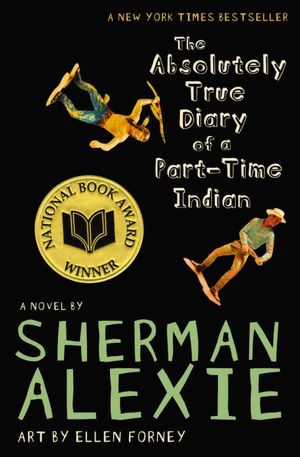
I also celebrated Banned Books Week by listening to book number two on the 2012 list, The Absolutely True Diary of a Part-Time Indian by Sherman Alexie. The author himself read the book.
Statistics
Checkouts: audiobook not owned by either library
Typical reader: teens, Native Americans, fans of the author, fans of banned books
Source: my hometown library
Synopsis: Arnold "Junior" Spirit is a 14-year-old Spokane boy who lives on a reservation. At the encouragement of a teacher, he transfers to a better school 22 miles away, where the only non-Caucasian is its Indian mascot.
My Goodreads rating: 4 stars
Banned/challenged for: offensive language, racism, sexually explicit, unsuited for age group
This is a slice-of-life story of a teen boy who changes his own life by upsetting all norms of his tribe and going to a school off the "rez." It follows roughly a year of Junior's life, as he navigates his freshman year, friendships, racism and ostracism, loss, and basketball.
In listening to the audiobook version of this novel, I missed out on the art. However, I gained the hilarious narration of Mr. Alexie. I stuck the first CD in my car's player before I left the library parking lot, and proceeded to laugh all the way home. The humor is deadpan and dry, a lot of the time. But also, the voice the author uses for Junior's voice and internal monologue has an amazingly familiar accent. Apparently, a brain-damaged teen Spokane boy from a reservation in Washington State sounds like a Finlander Yooper. Seriously. He sounds like my dad's Uncle Reino. If you don't know what a thick Yooper accent sounds like, watch the movie Fargo and listen, particularly to the women in the bar ... or listen to this audiobook.
I loved this book. It covers a wide range of emotions and life experiences. Pretty much any teen could read it and recognize something for his or her life. It's humorous, and it also has plenty of hyperbole. Many of the stories remind me of American tall tales.
Does this book deserve its negative acclaim? Let's break it down.
What did you read for Banned Books Week?
I also celebrated Banned Books Week by listening to book number two on the 2012 list, The Absolutely True Diary of a Part-Time Indian by Sherman Alexie. The author himself read the book.
Statistics
Checkouts: audiobook not owned by either library
Typical reader: teens, Native Americans, fans of the author, fans of banned books
Source: my hometown library
Synopsis: Arnold "Junior" Spirit is a 14-year-old Spokane boy who lives on a reservation. At the encouragement of a teacher, he transfers to a better school 22 miles away, where the only non-Caucasian is its Indian mascot.
My Goodreads rating: 4 stars
Banned/challenged for: offensive language, racism, sexually explicit, unsuited for age group
This is a slice-of-life story of a teen boy who changes his own life by upsetting all norms of his tribe and going to a school off the "rez." It follows roughly a year of Junior's life, as he navigates his freshman year, friendships, racism and ostracism, loss, and basketball.
In listening to the audiobook version of this novel, I missed out on the art. However, I gained the hilarious narration of Mr. Alexie. I stuck the first CD in my car's player before I left the library parking lot, and proceeded to laugh all the way home. The humor is deadpan and dry, a lot of the time. But also, the voice the author uses for Junior's voice and internal monologue has an amazingly familiar accent. Apparently, a brain-damaged teen Spokane boy from a reservation in Washington State sounds like a Finlander Yooper. Seriously. He sounds like my dad's Uncle Reino. If you don't know what a thick Yooper accent sounds like, watch the movie Fargo and listen, particularly to the women in the bar ... or listen to this audiobook.
I loved this book. It covers a wide range of emotions and life experiences. Pretty much any teen could read it and recognize something for his or her life. It's humorous, and it also has plenty of hyperbole. Many of the stories remind me of American tall tales.
Does this book deserve its negative acclaim? Let's break it down.
- Offensive language. Everyone has a different definition of this. But yes, there is a sentence where a character not only drops the F-bomb, but also uses the N-word. It's a pretty knockout use, too, that really covers ...
- Racism. Yup. The sentence with the aforementioned words was definitely racist. And there's also racism between Native Americans and Caucasians. There's also a sort of racism within an ethnic people, as demonstrated by how other reservation inhabitants called Junior an "apple:" red on the outside, white on the inside. But it's intrinsic to the story. If everybody got along, if the US government had not discriminated against Native Americans and pushed many onto reservations, if ethnic groups did not stick together and create out-groups and outcasts, then maybe we wouldn't need stories that deal with racism. People that complain about racism in this book need a reality check.
- Sexually explicit. This isn't 50 Shades. The most Junior does with a girl is kiss. There are "gay" jokes. The most sexually explicit thing would have to be his admissions that he masturbates.
- Unsuited for age group. Because teens don't read about teens? Sure, it's not what you might want to hand to a child in elementary school, but that's not its intended audience. Teens are. And teens can and should read it, and they can and should handle the book just fine.
What did you read for Banned Books Week?
Labels:
award-winners,
banned_books,
banned_books_week,
ccc_audiobooks,
contemporary,
multicultural,
reviews,
ya
Friday, September 6, 2013
Yay for YA: Fire & Ash
At last, Jonathan Maberry's fourth installment in the Rot & Ruin quartet has been released! After Flesh & Bone, I really wasn't sure where this series was going to go. I'm glad I stuck around to find out.
I've reviewed the previous three books on this blog.
Rot & Ruin
Dust & Decay
Flesh & Bone
Statistics
Checkouts: Coming soon to the school library; has one hold.
Series checkouts: 29
Typical reader: Fans of the series
Source: Snowbound Books
Synopsis: It's the conclusion of Rot & Ruin! If you've read the previous three books, you'll need to find out how it's wrapped up. And that's all I have to say on that.
My Goodreads rating: 5 stars
Hmm, that cover. It's my one little quibble. The first three covers are awesome. This one? I'm not sure what the artist was going for. The guy on the left looks too old, really, to be Benny. The ... woman? ... on the right is a mystery. Is that a zombie? While grey skin makes sense, the clown-like accents are weird.
But anyway. We're not here to judge a book by its cover, right?
The conclusion of a series is hard to critique, and remain spoiler-free. Therefore, this will be a short review. Let's make bullet points.
I've reviewed the previous three books on this blog.
Rot & Ruin
Dust & Decay
Flesh & Bone
Statistics
Checkouts: Coming soon to the school library; has one hold.
Series checkouts: 29
Typical reader: Fans of the series
Source: Snowbound Books
Synopsis: It's the conclusion of Rot & Ruin! If you've read the previous three books, you'll need to find out how it's wrapped up. And that's all I have to say on that.
My Goodreads rating: 5 stars
Hmm, that cover. It's my one little quibble. The first three covers are awesome. This one? I'm not sure what the artist was going for. The guy on the left looks too old, really, to be Benny. The ... woman? ... on the right is a mystery. Is that a zombie? While grey skin makes sense, the clown-like accents are weird.
But anyway. We're not here to judge a book by its cover, right?
The conclusion of a series is hard to critique, and remain spoiler-free. Therefore, this will be a short review. Let's make bullet points.
- The excellent storytelling still holds up.
- The action had me on the edge of my seat.
- Most story threads get tied up. (Hey, it's not an omniscient narration; not everything can be known. That's fine.)
- If you were missing the rogue's gallery of the Rot & Ruin, particularly old friends, you'll probably be satisfied with what this installment offers.
- Grimm is an awesome dog.
- And Joe Ledger in this series makes me curious about Mr. Maberry's other books. If the other Ledger books of the same continuity, I'll definitely have to read them at some point.
- As with many science fiction and dystopian series, there's a bit of social commentary. I particularly liked this quote, and what else Ledger had to say: "Sure, governments need to keep some secrets, but too often the people inside the government create for themselves the illusion that because they know things nobody else does, it makes them more powerful. That kind of thinking creates a kind of contempt for anyone on the outside." (Page 275, hardcover edition)
Thursday, September 5, 2013
Yay for YA: Aristotle and Dante Discover the Secrets of the Universe
I've gushed over books that have received the Michael L. Printz Award, or have been honor winners of the award, before, so I'll spare you the swooning with this review. On the other hand, this book (a Printz honor recipient) won a Stonewall Book Award, as well as the Pura Belpre Award, and probably others but the copy I had access to only had so much cover space for award stickers. And it has a great title.
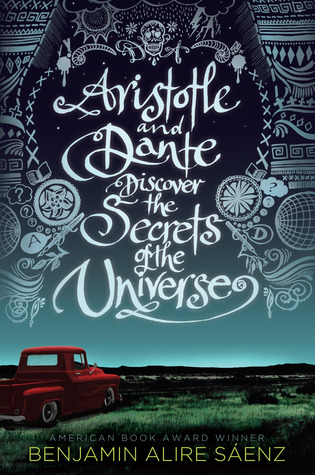
Today I shall tell you about Aristotle and Dante Discover the Secrets of the Universe. Doesn't it just sound grand?
Statistics
Checkouts: 1 at the small public library
Typical reader: Teens drawn to literature that isn't heteronormative (I'm not trying for the acronym that keeps growing ...), fans of the author and/or award-winning books
Source: My small public library
Synopsis: In this slice-of-life tale set in the late 1980s, two Mexican-American teen boys become friends and try to find their places in life.
My Goodreads rating: 4 stars
For having such a grandiose name harkening back to a well-known Ancient Greek philosopher, Aristotle (Ari) does not have many far-reaching ambitions. He feels like his life is someone else's idea. And in the summer of 1987, he was not aspiring to much beyond lazing about for the summer, perhaps at the pool despite not knowing how to swim. But at the pool, he meets Dante, another Mexican-American teen boy with a lofty name, who offers to teach him how to swim and thus ignites a friendship.
This is a pretty pedestrian story, very slice-of-life, without goals. Nothing exciting or thrilling happens for the first hundred pages. (Then something potentially life-changing does. But you know me, I don't do spoilers.) Yet it has so much heart. Plot is secondary to character and relationship growth and development. Self-discovery and the complexities of friendships are the key elements of this book, and they really shine.
One part I had problem with was the resolution of the story. I didn't particularly believe it. Since I don't give away spoilers, it's hard to explain, but it didn't ring true for me. While I've been known to be a poor judge of a certain characteristic pivotal to the end of the book, I also don't believe I was led as a reader to reach the conclusion that Ari did. Your mileage may vary.
Today I shall tell you about Aristotle and Dante Discover the Secrets of the Universe. Doesn't it just sound grand?
Statistics
Checkouts: 1 at the small public library
Typical reader: Teens drawn to literature that isn't heteronormative (I'm not trying for the acronym that keeps growing ...), fans of the author and/or award-winning books
Source: My small public library
Synopsis: In this slice-of-life tale set in the late 1980s, two Mexican-American teen boys become friends and try to find their places in life.
My Goodreads rating: 4 stars
For having such a grandiose name harkening back to a well-known Ancient Greek philosopher, Aristotle (Ari) does not have many far-reaching ambitions. He feels like his life is someone else's idea. And in the summer of 1987, he was not aspiring to much beyond lazing about for the summer, perhaps at the pool despite not knowing how to swim. But at the pool, he meets Dante, another Mexican-American teen boy with a lofty name, who offers to teach him how to swim and thus ignites a friendship.
This is a pretty pedestrian story, very slice-of-life, without goals. Nothing exciting or thrilling happens for the first hundred pages. (Then something potentially life-changing does. But you know me, I don't do spoilers.) Yet it has so much heart. Plot is secondary to character and relationship growth and development. Self-discovery and the complexities of friendships are the key elements of this book, and they really shine.
One part I had problem with was the resolution of the story. I didn't particularly believe it. Since I don't give away spoilers, it's hard to explain, but it didn't ring true for me. While I've been known to be a poor judge of a certain characteristic pivotal to the end of the book, I also don't believe I was led as a reader to reach the conclusion that Ari did. Your mileage may vary.
Labels:
award-winners,
contemporary,
not_heteronormative,
reviews,
ya
Monday, July 22, 2013
Manga Monday/Graphic Is Great: Kurosagi Corpse Delivery Service
Ah, summer reading programs. Love them or hate them, anticipate them or fear them, if you're in the business of public library science, they are unavoidable. Personally, I embrace them, as they get people reading, enhance statistics, and are good publicity. At the little library where I'm director, the summer reading program has been going great, with more than 100 children signed up to read and earn prizes. There are smaller programs for high school students and adults, too, with the potential to win prizes from drawings at the end of the program.
My hometown library also has a robust summer reading program for adults, and since I don't work there, I can participate. Every checkout of books or audiobooks gets me an entry slip that I can fill out and put into a prize box of my choice.
And the easiest way to get in a lot of entry forms is reading manga. Which brings us to this review.
Statistics
Checkouts: N/A
Number of volumes available: 13 in English, 17 in Japanese (ongoing)
Typical reader: Adults who like dark, edgy manga
Source: My local library
Summary: Five students at a Buddhist university are united by unique skills - some mundane, some supernatural - involving the dead. They form a business of getting corpses to wherever they need to go to free the souls. Sometimes they profit from this.
My Goodreads rating: 4 to 5 stars
As I tend to review books for the school library setting, let me say this right off the bat: This series is not for children, or even most teens. It is a very adult horror series, with graphically portrayed dead bodies, full frontal nudity (mostly on corpses), violence, and occasional sex. The last couple of volumes available have "PARENTAL ADVISORY: EXPLICIT CONTENT" stickers on the covers. Get over the American idea that comic books are for children.
That said, if you're into dark horror with macabre humor and plenty of social commentary, that keeps things fresh and interesting, this is a great series. Thirteen volumes are available in English, with more to be translated, and the series is ongoing in its home country. I was a bit sad to finish volume 13, and hope that the fourteenth will soon be ready stateside.
Most volumes are filled with vignettes of cases that the team takes, which are often one to three chapters long. (Volume two is a single story arc.) The stories are influenced by a variety of sources, from traditional lore to urban legends, and from cultural quirks to ripped-from-headline sagas. The manner of storytelling, and the fact that many jobs do not actually lead to money, makes this series a bit reminiscent of the classic anime, Cowboy Bebop.
Don't miss the glossary and notes at the end of each volume! I had initially just skimmed the one in the first volume, until I got to one peculiar note. "196.1 FX: PAKIII - sound of a bolt falling through glasses at terminal velocity into eye socket." (Volume 1, page 215) Whoa, that's pretty specific. So I read the rest of the notes. They're worthwhile, for the humorous specificity as in the above quote, and also the interesting trivia they impart about aspects of Japanese culture, history, locations, and lore that I had previously known nothing of. You can really learn a lot from the notes.
Which brings me to a last aspect I want to bring up. While it's not to the level of Gantz for dark social commentary, Kurosagi Corpse Delivery Service definitely is -not- afraid to touch on taboo subjects. Not only does the team go searching for suicide victims in Aokigahara Forest, they also deal with the Iraq War, the remnants of the biological weapons research the Japanese committed in Occupied China during World War II, the Japanese justice system, illegal immigration, athlete doping, infanticide, and more.
In sum, if you like dark humor, social commentary, and vengeful reanimated corpses, check out this series.
Manga Mondays is a meme used by many book review blogs, and is sort of hosted by Alison Can Read.
My hometown library also has a robust summer reading program for adults, and since I don't work there, I can participate. Every checkout of books or audiobooks gets me an entry slip that I can fill out and put into a prize box of my choice.
And the easiest way to get in a lot of entry forms is reading manga. Which brings us to this review.
Statistics
Checkouts: N/A
Number of volumes available: 13 in English, 17 in Japanese (ongoing)
Typical reader: Adults who like dark, edgy manga
Source: My local library
Summary: Five students at a Buddhist university are united by unique skills - some mundane, some supernatural - involving the dead. They form a business of getting corpses to wherever they need to go to free the souls. Sometimes they profit from this.
My Goodreads rating: 4 to 5 stars
As I tend to review books for the school library setting, let me say this right off the bat: This series is not for children, or even most teens. It is a very adult horror series, with graphically portrayed dead bodies, full frontal nudity (mostly on corpses), violence, and occasional sex. The last couple of volumes available have "PARENTAL ADVISORY: EXPLICIT CONTENT" stickers on the covers. Get over the American idea that comic books are for children.
That said, if you're into dark horror with macabre humor and plenty of social commentary, that keeps things fresh and interesting, this is a great series. Thirteen volumes are available in English, with more to be translated, and the series is ongoing in its home country. I was a bit sad to finish volume 13, and hope that the fourteenth will soon be ready stateside.
Most volumes are filled with vignettes of cases that the team takes, which are often one to three chapters long. (Volume two is a single story arc.) The stories are influenced by a variety of sources, from traditional lore to urban legends, and from cultural quirks to ripped-from-headline sagas. The manner of storytelling, and the fact that many jobs do not actually lead to money, makes this series a bit reminiscent of the classic anime, Cowboy Bebop.
Don't miss the glossary and notes at the end of each volume! I had initially just skimmed the one in the first volume, until I got to one peculiar note. "196.1 FX: PAKIII - sound of a bolt falling through glasses at terminal velocity into eye socket." (Volume 1, page 215) Whoa, that's pretty specific. So I read the rest of the notes. They're worthwhile, for the humorous specificity as in the above quote, and also the interesting trivia they impart about aspects of Japanese culture, history, locations, and lore that I had previously known nothing of. You can really learn a lot from the notes.
Which brings me to a last aspect I want to bring up. While it's not to the level of Gantz for dark social commentary, Kurosagi Corpse Delivery Service definitely is -not- afraid to touch on taboo subjects. Not only does the team go searching for suicide victims in Aokigahara Forest, they also deal with the Iraq War, the remnants of the biological weapons research the Japanese committed in Occupied China during World War II, the Japanese justice system, illegal immigration, athlete doping, infanticide, and more.
In sum, if you like dark humor, social commentary, and vengeful reanimated corpses, check out this series.
Manga Mondays is a meme used by many book review blogs, and is sort of hosted by Alison Can Read.
Sunday, March 24, 2013
Yay for YA: Born Wicked
Here is the first in my series of catch-up reviews. This is a book that I read January 27-February 3. Now it's almost the end of March. Shame on me.
What's even worse about delaying this review is that it was such a good book! Born Wicked by Jessica Spotswood is a historical fiction, with paranormal and romantic elements, that I thoroughly enjoyed. I can hardly wait for the sequel, which come out in June.
Statistics
Checkouts: New to the charter school library
Typical reader: Teen girls in need of sci-fi/fantasy books, or teen girls looking for paranormal romance
Source: Authors Are Rockstars! giveaway
Synopsis: In an alternative turn-of-the-twentieth-century New England, religious orders hold sway and accusing witches never went out of style. However, some girls and women actually are witches, such as Cate Cahill and her sisters. Cate is coming of age, and she will soon have to choose someone to be betrothed to, or the priests of the Brotherhood will. Luckily, her old childhood friend Paul McLeod is home and expressing interest in her hand in marriage - or there's the bookseller's son, Finn Belastra, who is the Cahill's gardener and oh-so-tempting. All the while, Cate must try to keep the family secret from ruining all she cares for.
My Goodreads rating: 5 stars
Be shocked! I have given a romance novel 5 stars, a top rating. What could make it so good that even I can applaud a romantic YA story?
First and foremost, there's the writing style. It charmed me quickly. Ms. Spotswood does a great job of introducing the characters straightaway, so that I soon knew them and could relate to and care about them. Also, there author has no fear of flexing a large vocabulary. I was scrambling to look up a new word on page 10 (barouche). I appreciate learning new words, which is difficult to do with YA literature and my already-ample lexicon. It's also appropriate for historical fiction, because educated people (such as Cate Cahill) actually did have decent vocabularies.
Second, there isn't just a love triangle! It's introduced a bit late in the book, but there's a third option. Cate learns some interesting tidbits about the Sisterhood from the governess her father has hired for her and her sisters. Joining the Sisterhood, which would offer more educational opportunities, delay or stave off marriage, and include other benefits that I'm not going to spoil, is something Cate must consider in addition to the young men that vie for her affection. Which will she choose?
Finally, there are some great twists to the plot. That's all I'm going to say about that!
What's even worse about delaying this review is that it was such a good book! Born Wicked by Jessica Spotswood is a historical fiction, with paranormal and romantic elements, that I thoroughly enjoyed. I can hardly wait for the sequel, which come out in June.
Statistics
Checkouts: New to the charter school library
Typical reader: Teen girls in need of sci-fi/fantasy books, or teen girls looking for paranormal romance
Source: Authors Are Rockstars! giveaway
Synopsis: In an alternative turn-of-the-twentieth-century New England, religious orders hold sway and accusing witches never went out of style. However, some girls and women actually are witches, such as Cate Cahill and her sisters. Cate is coming of age, and she will soon have to choose someone to be betrothed to, or the priests of the Brotherhood will. Luckily, her old childhood friend Paul McLeod is home and expressing interest in her hand in marriage - or there's the bookseller's son, Finn Belastra, who is the Cahill's gardener and oh-so-tempting. All the while, Cate must try to keep the family secret from ruining all she cares for.
My Goodreads rating: 5 stars
Be shocked! I have given a romance novel 5 stars, a top rating. What could make it so good that even I can applaud a romantic YA story?
First and foremost, there's the writing style. It charmed me quickly. Ms. Spotswood does a great job of introducing the characters straightaway, so that I soon knew them and could relate to and care about them. Also, there author has no fear of flexing a large vocabulary. I was scrambling to look up a new word on page 10 (barouche). I appreciate learning new words, which is difficult to do with YA literature and my already-ample lexicon. It's also appropriate for historical fiction, because educated people (such as Cate Cahill) actually did have decent vocabularies.
Second, there isn't just a love triangle! It's introduced a bit late in the book, but there's a third option. Cate learns some interesting tidbits about the Sisterhood from the governess her father has hired for her and her sisters. Joining the Sisterhood, which would offer more educational opportunities, delay or stave off marriage, and include other benefits that I'm not going to spoil, is something Cate must consider in addition to the young men that vie for her affection. Which will she choose?
Finally, there are some great twists to the plot. That's all I'm going to say about that!
Labels:
fantasy,
historical_fiction,
jessica_spotswood,
reviews,
ya
Saturday, February 9, 2013
Yay for YA: Between Shades of Gray
As any librarian can probably tell you, too often books have the same or similar titles. Sometimes books sharing names can even have similar premises or locations, such as A Superior Death by Nevada Barr (a mystery set on Isle Royale) and Superior Death by Matthew Williams (a mystery set in the U.P.). This can be a pain when trying to find the book that a patron is looking for.
In 2011, within two months of each other, two very different books with unfortunately similar titles were published. Between Shades of Gray, a historical fiction YA novel about Stalin's ethnic cleanings of the Baltic states during World War II, came out in March. Fifty Shades of Grey, an erotic, adult romance that had originally been Twilight fan-fiction, debuted in May. The latter is a bestseller with a movie in the works. The former has been the subject of many cases of mistaken identity (read an article about it).
So let me tell you about the lesser-known book, Between Shades of Gray by Ruta Sepetys. Ms. Sepetys is a Michigan native, by the way.
Statistics
Checkouts: 2 at the school/public library; 1 at the charter school library
Typical reader: Teens looking for historical fiction, a Michigan author's novel, or untold history
Source: I checked it out from the school/public library
Synopsis: Lina lived a happy life in Lithuania with her parents and brother until, one night in 1941, the Soviets arrest them all and ship them away in cattle cars to Siberia. Separated from her father, Lina and her mother and brother struggle to survive, first in an Altai village, and then north of the Arctic Circle. Lina finds solace in her art, and dreams of home and being reunited with her father.
My Goodreads rating: 5 stars (4.5, rounded up)
There are plenty of books about the Holocaust. They tell the tales of those hidden away, or who try to save those targeted, or those who survived, or those who died. But what about an extermination that was taking place at the same time? What information is there, either in the history books or in fiction, that tell the stories of what happened in the Baltic states that were annexed/overrun by the Soviet Union?
After finishing this novel, I looked. Believe me, there isn't much available, especially if you're looking for something that isn't scholarly. Cut out Jewish Lithuanians' tales of the Holocaust, and there's even less. If you include Finns in Karelia, you can find more books and information, but perhaps that situation is more known because Finnish-Americans and Finnish-Canadians emigrated there, only to be put into Soviet labor camps. (I need to read more into this.) And I honestly don't know if Aleksandr Solzhenitsyn's Gulag Archipelago touches on the Baltic citizens who were victims of the roundups and labor camps.
Between Shades of Gray might be a novel, but a lot of research went into making it. When one considers how little information is accessible about its subjects to the average American reader, this book is quite valuable. It's telling a piece of history that's rarely shared. When I was done, I passed it on to my father; he likes history, and had just finished reading The Book Thief. He also gave this book five stars.
Beyond the nerdy assessment, what can I tell you about this book? It's gripping. This is one of those novels that you cannot put down, because you must know how it turns out. It also speaks volumes on how powerful hope can be, even when life gives you the worst possible situations, such as winter above the Arctic Circle in Siberia without enough resources. It opens your eyes to see what terrible things went on under Josef Stalin - things not so different from what Adolf Hitler did - without being too devastating. This is heavy material, yet it is written at an appropriate level for teens.
I can appreciate the characters not only at face-value but also at an overarching level. They are realistic people, trying to cope with their situation or giving up hope, but they also represent larger themes. Ms. Sepetys gives us, in Lina's group, a cross-section of the sorts of people who were sent to Siberia to be worked to death: intellectuals like teachers, professors, and librarians; bourgeois dissenters; those who would not give information about their colleagues; Jews; and the families of any of these.
I would not use the wording about this novel that I saw at a Scholastic book fair - "If you liked The Diary of Anne Frank, you'll love this book!" (my word, how distasteful) - but I do have to say that it is good, it is important, it is touching, and it needs to be read. And then follow it with something light and fluffy, to make you feel better.
In 2011, within two months of each other, two very different books with unfortunately similar titles were published. Between Shades of Gray, a historical fiction YA novel about Stalin's ethnic cleanings of the Baltic states during World War II, came out in March. Fifty Shades of Grey, an erotic, adult romance that had originally been Twilight fan-fiction, debuted in May. The latter is a bestseller with a movie in the works. The former has been the subject of many cases of mistaken identity (read an article about it).
So let me tell you about the lesser-known book, Between Shades of Gray by Ruta Sepetys. Ms. Sepetys is a Michigan native, by the way.
Statistics
Checkouts: 2 at the school/public library; 1 at the charter school library
Typical reader: Teens looking for historical fiction, a Michigan author's novel, or untold history
Source: I checked it out from the school/public library
Synopsis: Lina lived a happy life in Lithuania with her parents and brother until, one night in 1941, the Soviets arrest them all and ship them away in cattle cars to Siberia. Separated from her father, Lina and her mother and brother struggle to survive, first in an Altai village, and then north of the Arctic Circle. Lina finds solace in her art, and dreams of home and being reunited with her father.
My Goodreads rating: 5 stars (4.5, rounded up)
There are plenty of books about the Holocaust. They tell the tales of those hidden away, or who try to save those targeted, or those who survived, or those who died. But what about an extermination that was taking place at the same time? What information is there, either in the history books or in fiction, that tell the stories of what happened in the Baltic states that were annexed/overrun by the Soviet Union?
After finishing this novel, I looked. Believe me, there isn't much available, especially if you're looking for something that isn't scholarly. Cut out Jewish Lithuanians' tales of the Holocaust, and there's even less. If you include Finns in Karelia, you can find more books and information, but perhaps that situation is more known because Finnish-Americans and Finnish-Canadians emigrated there, only to be put into Soviet labor camps. (I need to read more into this.) And I honestly don't know if Aleksandr Solzhenitsyn's Gulag Archipelago touches on the Baltic citizens who were victims of the roundups and labor camps.
Between Shades of Gray might be a novel, but a lot of research went into making it. When one considers how little information is accessible about its subjects to the average American reader, this book is quite valuable. It's telling a piece of history that's rarely shared. When I was done, I passed it on to my father; he likes history, and had just finished reading The Book Thief. He also gave this book five stars.
Beyond the nerdy assessment, what can I tell you about this book? It's gripping. This is one of those novels that you cannot put down, because you must know how it turns out. It also speaks volumes on how powerful hope can be, even when life gives you the worst possible situations, such as winter above the Arctic Circle in Siberia without enough resources. It opens your eyes to see what terrible things went on under Josef Stalin - things not so different from what Adolf Hitler did - without being too devastating. This is heavy material, yet it is written at an appropriate level for teens.
I can appreciate the characters not only at face-value but also at an overarching level. They are realistic people, trying to cope with their situation or giving up hope, but they also represent larger themes. Ms. Sepetys gives us, in Lina's group, a cross-section of the sorts of people who were sent to Siberia to be worked to death: intellectuals like teachers, professors, and librarians; bourgeois dissenters; those who would not give information about their colleagues; Jews; and the families of any of these.
I would not use the wording about this novel that I saw at a Scholastic book fair - "If you liked The Diary of Anne Frank, you'll love this book!" (my word, how distasteful) - but I do have to say that it is good, it is important, it is touching, and it needs to be read. And then follow it with something light and fluffy, to make you feel better.
Labels:
historical_fiction,
marvelous_michigan,
reviews,
ya
Sunday, January 27, 2013
Graphic is Great: Drama by Raina Telgemeier
It has been too long since I've reviewed a graphic novel! Let me share with you my thoughts on Drama by Raina Telgemeier.
Statistics
Checkouts: Coming soon to both libraries
Typical reader: Tween and teen girls and anyone else interested in theater or Ms. Telgemeier's works
Source: I couldn't pass up a signed copy that was available at Snowbound Books!
Synopsis: Callie loves theater, and she's thrilled when her middle school's drama production is announced to be the musical Moon Over Mississippi. Singing isn't her thing, but she'll still be happily busy backstage, making the set worthy of Broadway. But relationship drama of all sorts can be a bit distracting ...
My Goodreads rating: 4 stars
I read Smile by this author a couple years ago, when it showed up in a Scholastic book fair. That book is a nonfiction graphic novel, an autobiography of Raina and her teeth. It's both amusing and horrifying. I'd really recommend it for anyone who has suffered orthodontics or cosmetic dental work - but is not too squeamish.
Ms. Telgemeier has a great, unique art style. It's very expressive. Would you get what I mean if I say that it's cartoony yet realistic? Because that's what I feel it is. There's also great attention to detail, with foreshadowing that's handled well. For instance, Callie finds a dress in the theater's storage area that doesn't suit the play. But there will be some use for it later!
This graphic novel is a lot of fun. The characters are all so vivacious in their quirky, adolescent ways. They strike me as being older than middle school students - and I honestly don't know of any middle schools that can put on such large theatrical productions - but then again, I do find my 7th graders to be mature until hormones hit their brains and make them weird, haha. Anyway, the characters are quirky, trying to find their places in life, exploring the labyrinths of relationships, and pursuing their interests.
Callie is quite the adaptable protagonist. She's perhaps a little boy-crazy, but she can also roll with the punches. Through the play, she meets and befriends two brothers, Justin and Jesse. She crushes on Justin, but quickly finds out through talking with him that he's gay. (He's a bit stereotypically so, being flamboyant and into theater.) Callie has no problem with this, treating him just as nicely as ever and setting her sights on Jesse, the shyer, quieter brother who will be on stage crew with her.
This review was delayed last week due to inclement weather - or maybe just poor maintenance practices on the part of the local internet service provider. Anyway, I feel like this was meant to wait. Last night I saw the local youth theater's production of The Little Mermaid, Jr. (all actors 18 and under) and it was fantastic. It's fun to tie life's experiences in with a book you're currently reading, or have read. Both the cast of the real-life play and the one in this book are so talented. Plus, perhaps some of my students who were involved will want to continue thinking about theater, and read this book.
Statistics
Checkouts: Coming soon to both libraries
Typical reader: Tween and teen girls and anyone else interested in theater or Ms. Telgemeier's works
Source: I couldn't pass up a signed copy that was available at Snowbound Books!
Synopsis: Callie loves theater, and she's thrilled when her middle school's drama production is announced to be the musical Moon Over Mississippi. Singing isn't her thing, but she'll still be happily busy backstage, making the set worthy of Broadway. But relationship drama of all sorts can be a bit distracting ...
My Goodreads rating: 4 stars
I read Smile by this author a couple years ago, when it showed up in a Scholastic book fair. That book is a nonfiction graphic novel, an autobiography of Raina and her teeth. It's both amusing and horrifying. I'd really recommend it for anyone who has suffered orthodontics or cosmetic dental work - but is not too squeamish.
Ms. Telgemeier has a great, unique art style. It's very expressive. Would you get what I mean if I say that it's cartoony yet realistic? Because that's what I feel it is. There's also great attention to detail, with foreshadowing that's handled well. For instance, Callie finds a dress in the theater's storage area that doesn't suit the play. But there will be some use for it later!
This graphic novel is a lot of fun. The characters are all so vivacious in their quirky, adolescent ways. They strike me as being older than middle school students - and I honestly don't know of any middle schools that can put on such large theatrical productions - but then again, I do find my 7th graders to be mature until hormones hit their brains and make them weird, haha. Anyway, the characters are quirky, trying to find their places in life, exploring the labyrinths of relationships, and pursuing their interests.
Callie is quite the adaptable protagonist. She's perhaps a little boy-crazy, but she can also roll with the punches. Through the play, she meets and befriends two brothers, Justin and Jesse. She crushes on Justin, but quickly finds out through talking with him that he's gay. (He's a bit stereotypically so, being flamboyant and into theater.) Callie has no problem with this, treating him just as nicely as ever and setting her sights on Jesse, the shyer, quieter brother who will be on stage crew with her.
This review was delayed last week due to inclement weather - or maybe just poor maintenance practices on the part of the local internet service provider. Anyway, I feel like this was meant to wait. Last night I saw the local youth theater's production of The Little Mermaid, Jr. (all actors 18 and under) and it was fantastic. It's fun to tie life's experiences in with a book you're currently reading, or have read. Both the cast of the real-life play and the one in this book are so talented. Plus, perhaps some of my students who were involved will want to continue thinking about theater, and read this book.
Labels:
contemporary,
graphic_novels,
realistic_fiction,
reviews,
ya
Sunday, January 6, 2013
Yay for YA: Choke, by Diana Lopez
I seem to have been on a bit of a teen problem novel kick lately. Here's my review of a fairly new book called Choke by Diana Lopez.
Statistics
Checkouts: New to the charter school library
Typical reader: Middle school and teen girls
Source: Scholastic book fair, recommended for the collection by a high school student
Synopsis: Windy is a fairly typical eighth grade girl, in the "general population" of her school hierarchy, wishing she could change her appearance, improve her grades and her status, that sort of thing. She seems to hit a lucky break when a new girl, Nina, comes to school and befriends her. Nina even wants to be "breath sisters," but as Windy finds out what this means, she's not so sure she wants to be a breath sister.
My Goodreads rating: 4 stars
Let me start by saying that while this is written below the reading level of the intended audience, I understand why. The author is a teacher who encountered the problem dealt with in this book, and to get out the warning to everyone likely to be intrigued by "the choking game," she had to write it more simply than the grade level. It's like how newspaper articles are written approximately to the third grade reading level, so the largest literate audience can benefit from them. The struggling, reluctant reader can read an interesting, current novel that doesn't get too preachy, just as the top student in the class can.
So, don't expect the prose to be breathtaking. (Sorry, the pun just slipped out.) The plot is a bit predictable, too. The characters and the realism hold the book together, though. Windy is as quirky as any protagonist you'd find in a John Green novel, and is realistic and well-rounded. She has high and low points, interests that any middle school girl would have, and problems any could encounter as well. Middle school is a tumultuous time of establishing pecking order, and a plot of the story lines deal with that. And what teen or almost-teen doesn't want to fit in and be attractive? But self-image issues are not the exclusive territory of the young, and Windy's perception of herself is mirrored by her father's struggle to be less Latino to get a job as a TV weatherman.
I didn't find the book to be preachy in its message, which is an important message indeed. Asphyxiation is not something anyone should be experimenting with. It's hard to imagine why anyone would try it, but in middle school, there's plenty of peer pressure, and tweens and teens are risk-takers. People can end up with brain damage from it, or even die. Remember actor David Carradine's death a few years back? This isn't just something youngsters try.
On a happier subject, I've passed the 100 mark with GFC (Google Friends Connect) followers this weekend! How exciting! I'll be celebrating later this week with a giveaway. Stay tuned for details.
Statistics
Checkouts: New to the charter school library
Typical reader: Middle school and teen girls
Source: Scholastic book fair, recommended for the collection by a high school student
Synopsis: Windy is a fairly typical eighth grade girl, in the "general population" of her school hierarchy, wishing she could change her appearance, improve her grades and her status, that sort of thing. She seems to hit a lucky break when a new girl, Nina, comes to school and befriends her. Nina even wants to be "breath sisters," but as Windy finds out what this means, she's not so sure she wants to be a breath sister.
My Goodreads rating: 4 stars
Let me start by saying that while this is written below the reading level of the intended audience, I understand why. The author is a teacher who encountered the problem dealt with in this book, and to get out the warning to everyone likely to be intrigued by "the choking game," she had to write it more simply than the grade level. It's like how newspaper articles are written approximately to the third grade reading level, so the largest literate audience can benefit from them. The struggling, reluctant reader can read an interesting, current novel that doesn't get too preachy, just as the top student in the class can.
So, don't expect the prose to be breathtaking. (Sorry, the pun just slipped out.) The plot is a bit predictable, too. The characters and the realism hold the book together, though. Windy is as quirky as any protagonist you'd find in a John Green novel, and is realistic and well-rounded. She has high and low points, interests that any middle school girl would have, and problems any could encounter as well. Middle school is a tumultuous time of establishing pecking order, and a plot of the story lines deal with that. And what teen or almost-teen doesn't want to fit in and be attractive? But self-image issues are not the exclusive territory of the young, and Windy's perception of herself is mirrored by her father's struggle to be less Latino to get a job as a TV weatherman.
I didn't find the book to be preachy in its message, which is an important message indeed. Asphyxiation is not something anyone should be experimenting with. It's hard to imagine why anyone would try it, but in middle school, there's plenty of peer pressure, and tweens and teens are risk-takers. People can end up with brain damage from it, or even die. Remember actor David Carradine's death a few years back? This isn't just something youngsters try.
On a happier subject, I've passed the 100 mark with GFC (Google Friends Connect) followers this weekend! How exciting! I'll be celebrating later this week with a giveaway. Stay tuned for details.
Labels:
contemporary,
multicultural,
realistic_fiction,
reviews,
ya
Monday, December 31, 2012
Most Disappointing Books of 2012
As the year AD 2012 (or 2012 CE, if you prefer) ticks down its final hours, I need to get in an annual feature or two more. So let me tell you about the most disappointing books I read - or tried reading - this year.
*crickets chirp*
It was a pretty good year, really! I only had one physical book that I did not finish. That was Unraveling by Elizabeth Norris, which I talked about back in June.
There were certainly books that did not live up to my expectations of them, such as Bitterblue by Kristin Cashore. That was a letdown with a beautiful cover. My full review of it is available here.
Occasionally, I would pick up an audiobook from the public/school library where I work, and start it on the way home. Some of these were audio-duds, that I didn't even try for one CD. I might like them better in print form, so they're not truly disappointing; I just didn't like the vocals.
Room by Emma Donoghue was such a book. I didn't give it five minutes. The narrator is a five-year-old boy. Whoever voiced him (there were multiple cast members) was too high-pitched and shrill to be enjoyable, or five years old. I work with Kindergartners at the charter school, and they don't drive me up a wall just by talking.
I feel a bit embarrassed by this next one. "Read by the author" should be something you should feel privileged to listen to. Lord of the Flies by William Golding nearly put me to sleep, and that's never good while driving. The forward was captivating, when Mr. Golding was discussing the writing and influences of the book. But his soft, lovely British accent lulled me as he started narrating the story itself. Too bad.
What books disappointed you this year?
*crickets chirp*
It was a pretty good year, really! I only had one physical book that I did not finish. That was Unraveling by Elizabeth Norris, which I talked about back in June.
There were certainly books that did not live up to my expectations of them, such as Bitterblue by Kristin Cashore. That was a letdown with a beautiful cover. My full review of it is available here.
Occasionally, I would pick up an audiobook from the public/school library where I work, and start it on the way home. Some of these were audio-duds, that I didn't even try for one CD. I might like them better in print form, so they're not truly disappointing; I just didn't like the vocals.
Room by Emma Donoghue was such a book. I didn't give it five minutes. The narrator is a five-year-old boy. Whoever voiced him (there were multiple cast members) was too high-pitched and shrill to be enjoyable, or five years old. I work with Kindergartners at the charter school, and they don't drive me up a wall just by talking.
I feel a bit embarrassed by this next one. "Read by the author" should be something you should feel privileged to listen to. Lord of the Flies by William Golding nearly put me to sleep, and that's never good while driving. The forward was captivating, when Mr. Golding was discussing the writing and influences of the book. But his soft, lovely British accent lulled me as he started narrating the story itself. Too bad.
What books disappointed you this year?
Labels:
blogging,
disappointment,
reviews,
year_end
Subscribe to:
Posts (Atom)