Pages

Showing posts with label realistic_fiction. Show all posts

Wednesday, April 8, 2015

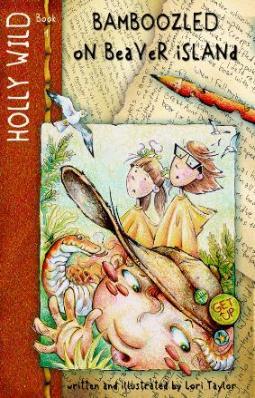
It's Elementary: Bamboozled on Beaver Island

Wow, I haven't written a book review since Banned Books Week, back in September.  Color me sheepish - especially since I'd promised a few authors reviews of their books.

It's spring break around here this week, so I'm only working one of my jobs this week.  (Still 40 hours over five days, but I get to sleep in most days and leave early a couple times.)  And I am actually making good on promises.

Today, let me tell you about the first book in the Holly Wild series by Michigan author Lori Taylor.


Statistics
Checkouts: Just talked a student into it last week!
Typical reader: Michigan middle elementary children
Source: The author, at the Outback Art Fair last summer

Synopsis: Holly Wild wants to do something heroic.  Will she have the opportunity to do so with her friends on a trip to Beaver Island?

My Goodreads rating: 5 stars

This is an illustrated novel in the vein of the ever-popular Diary of a Wimpy Kid or Dork Diaries, but significantly less "woe am I" than your average contemporary kids' fiction diary.  Sure, Holly is not necessarily popular, but she doesn't wallow in it.  This is a strong female character, with a healthy interest in adventure and science!  Holly likes squishy, icky, gross things, and can use the scientific method to figure things out.  Rejoice.

I am not big on mysteries, and I will say that I winced when I realized that there was a mystery to solve.  However, this won me over with how fun and adventurous the escapades of Holly, her grandmother, and her friends Sierra and Tierra (twins, obviously) are.  It also encourages the reader to get out and explore the natural world.

This is the first book in a series of at least three novels, all set in Michigan.  It's perfect for children in second through fourth grades.

Monday, August 4, 2014

Yay for YA: The Fault in Our Stars, by John Green

I haven't written in a couple weeks, despite having books to review.  I apologize.  It's because my review is of John Green's The Fault in Our Stars, which has been hugely popular and made into a movie.  That's very stressful, reviewing something familiar to the masses and something that could draw viewers to this blog.

But without further ado:

Statistics
Checkouts: New to both libraries
Typical reader: People curious about the hype/movie; fans of John Green
Source: Snowbound Books for the public library's copy; Scholastic for the school's

Synopsis: Hazel is a teen with terminal cancer.  At her support group, she meets Augustus Waters, who shakes up her existence.

My Goodreads rating: 4 stars

There are two reasons a teen book becomes immensely popular: either it's so horrible that it's incredibly accessible, or it's amazingly good, yet can have widespread appeal.  John Green, thankfully, is a good writer, and can hit nerves with many readers.  Overall, The Fault in Our Stars is a worthwhile book.

I enjoyed the fact that this book used its fictional bits and put them out into the real world.  You can find Hazel's favorite book, An Imperial Affliction, on Goodreads, which thrilled me.  Or ... at least it was on there while I was reading the book.  Alas, the link is now broken.

I also liked that the ending was not what I predicted.  It could matched a foreshadowing in An Imperial Affliction.  That would have been a little cliche, which this book is not beyond doing.  I knew a particular character's fate as soon as he was introduced.  Good heavens.  But some things did go past what I expected, and I was grateful for that.

The author, Peter Van Houten, is a great conversational piece, because he's such a jerk.  At least once while reading this, I put the book down, went to my partner (a budding author), and said, "Honey, don't ever be like this guy."  While Hazel and friends were engaging, Van Houten evoked the most emotions.

Fans of John Green's other books and interesting characters will delight in how quirky Augustus is.

This is a good, though not mind-blowing, book.

Wednesday, July 2, 2014

Yay for YA: My Basmati Bat Mitzvah, by Paula J. Freedman

I think that getting back into reviewing books with one of the best contemporary preteen books I've read in a while is a good way to do this.


Statistics
Checkouts: Not owned by either library ... yet
Typical reader: Preteens or teens interested in contemporary coming-of-age books, have ties to either ethnicity/religion portrayed in this book, or are attracted by the quirky, catchy title
Source: Advanced reading copy courtesy of Snowbound Books (It came out last October.  I'm behind in my reading.)

Synopsis: Tara Feinstein, an Indian-Jewish-American preteen girl living in New York City, is preparing for her bat mitzvah.  Being multicultural, she's not sure in how she fits in to either her mom's Indian culture or her dad's Jewish one, or what exactly she even believes.  Adding to her worries are the fact that her best friend Rebecca is spending more time with a snobbish girl from both their middle school and Hebrew school, and her other best friend Ben-O may or may not like her as more than a friend.  Oy vey!

My Goodreads rating: 5 stars

I really enjoyed reading this book.  Ever have a book that you're reading, that's so good that you slow down and try to drag out the last few chapters so it will last longer?  This book was like that for me.

It's well-written.  The dialogue and internal monologue are realistic and believable.  There was a decent balance of description - not so little that it would turn me off, and not too much for a preteen reader.  Characters are well-rounded.  The plot and subplots are interesting, yet resolvable by the end of the book.

And best of all, it has a glossary.

Don't worry, I am kidding when I say that a glossary is the best thing about a book.  But it helps!  Hardly anyone is going to be familiar with all the Yiddish, Hebrew, and Hindi words, much less the blended ones.  The glossary is also seasoned with the humor of the protagonist, making it part of the enjoyable read.

I'd be hard-pressed to nitpick and find little flaws with this book.  Sure, it's not perfect - nothing is - but this is really darned good.

Saturday, October 12, 2013

Cover-to-Cover Commuting: Burned, and Smoke, by Ellen Hopkins

I had intended to review these two books during Banned Books Week, or shortly thereafter.  It's now two weeks later.  Good heavens, I hope my readers don't actually expect me to be timely, or if you do, you forgive me.  I'm a library director, and I have a second library job.  Both jobs are a lot of work, and consume a lot of time and energy.  Much as I'd love to blog more regularly, that's not going to happen.

Librarians are like teachers.  Overworked and underpaid.

 Enough of that, though.  Let me tell you about these audiobooks!  Burned was published in 2006, while its sequel, Smoke, came out last month.

Statistics
Checkouts: Both owned in print and audio format at the small public library
Typical reader: Teens, fans of the author
Source: Burned was interlibrary loaned; Smoke was cataloged and checked out to me the day it arrived, hehe

Synopses: In Burned, Pattyn von Stratten is the eldest daughter in a fundamentalist home with an abusive father and useless mother.  Enraged by her really fairly typical teen actions, her father sends her away to his sister's ranch in rural Nevada.  There, she finds happiness and hope - which she must leave when the school year begins.  Smoke picks up not long after the cliffhanger ending of Burned, with Pattyn on the run and her sister Jackie picking up the pieces of their lives.  Can they rebuild, despite the lies and pain?

My Goodreads ratings: 5 stars for Burned, 4 stars for Smoke

Pattyn (named for General Patton; her father named all his children for generals) is likely the sweetest protagonist you could possibly find in one of Ms. Hopkins' novels.  The poor girl has a rough life, though, with a father who rules with an iron fist - which he often uses against his wife - and a fundamentalist church that looks the other way when its women need help.

When Pattyn gets into trouble with her father and at school due to a boy, she is shipped off to live with an aunt who has a ranch in rural Nevada.  This is meant as punishment, but it turns out to be the exact opposite.  There, she learns how it feels to be loved, both by her kind aunt and by a nice neighbor boy.  Love is a double-edged sword, however, which she learns when she returns home to face reality.  And man, can the consequences of love be disastrous.

The second book is narrated by both Pattyn and her sister, Jackie.  Pattyn is on the run after a horrific series of events, and tries to rebuild her life posing as an illegal immigrant worker to become a nanny on a rural Californian ranch.  (And that didn't come across as ridiculously in the book as it does when I type it.)  Meanwhile, Jackie has her own demons to face, and must help her mother and sisters cope with all that's happened.  It's a lot for a young teen girl.

Smoke is different from any other novel by Ms. Hopkins that I've read.  It's filled with so much hope.  Fans may find themselves torn between grabbing onto that hope and expecting everything to turn out okay for Pattyn and Jackie, and being cynical and waiting for it to all come crashing down, especially for Pattyn in her new life.  Can there be a happy ending?

Sunday, January 27, 2013

Graphic is Great: Drama by Raina Telgemeier

It has been too long since I've reviewed a graphic novel!  Let me share with you my thoughts on Drama by Raina Telgemeier.

Statistics
Checkouts: Coming soon to both libraries
Typical reader: Tween and teen girls and anyone else interested in theater or Ms. Telgemeier's works
Source: I couldn't pass up a signed copy that was available at Snowbound Books!

Synopsis: Callie loves theater, and she's thrilled when her middle school's drama production is announced to be the musical Moon Over Mississippi.  Singing isn't her thing, but she'll still be happily busy backstage, making the set worthy of Broadway.  But relationship drama of all sorts can be a bit distracting ...

My Goodreads rating: 4 stars

I read Smile by this author a couple years ago, when it showed up in a Scholastic book fair.  That book is a nonfiction graphic novel, an autobiography of Raina and her teeth.  It's both amusing and horrifying.  I'd really recommend it for anyone who has suffered orthodontics or cosmetic dental work - but is not too squeamish.

Ms. Telgemeier has a great, unique art style.  It's very expressive.  Would you get what I mean if I say that it's cartoony yet realistic?  Because that's what I feel it is.  There's also great attention to detail, with foreshadowing that's handled well.  For instance, Callie finds a dress in the theater's storage area that doesn't suit the play.  But there will be some use for it later!

This graphic novel is a lot of fun.  The characters are all so vivacious in their quirky, adolescent ways.  They strike me as being older than middle school students - and I honestly don't know of any middle schools that can put on such large theatrical productions - but then again, I do find my 7th graders to be mature until hormones hit their brains and make them weird, haha.  Anyway, the characters are quirky, trying to find their places in life, exploring the labyrinths of relationships, and pursuing their interests.

Callie is quite the adaptable protagonist.  She's perhaps a little boy-crazy, but she can also roll with the punches.  Through the play, she meets and befriends two brothers, Justin and Jesse.  She crushes on Justin, but quickly finds out through talking with him that he's gay.  (He's a bit stereotypically so, being flamboyant and into theater.)  Callie has no problem with this, treating him just as nicely as ever and setting her sights on Jesse, the shyer, quieter brother who will be on stage crew with her.


This review was delayed last week due to inclement weather - or maybe just poor maintenance practices on the part of the local internet service provider.  Anyway, I feel like this was meant to wait.  Last night I saw the local youth theater's production of The Little Mermaid, Jr. (all actors 18 and under) and it was fantastic.  It's fun to tie life's experiences in with a book you're currently reading, or have read.  Both the cast of the real-life play and the one in this book are so talented.  Plus, perhaps some of my students who were involved will want to continue thinking about theater, and read this book.

Thursday, January 10, 2013

It's Elementary: In Our Mothers' House

It's been a while since I've written a review of a children's picture book!  What I have chosen to talk about today is interesting on many levels.  It's by a Michigan author.  And it's been challenged and banned in several school libraries in various places across the country.  That always makes for an attention-getting topic.

Let me tell you about In Our Mothers' House by Patricia Polacco, and why it's caused a fuss.


Statistics
Checkouts: Not owned by charter school library; own, but not yet checked out at the public/school library
Typical reader: People interested in banned books; fans of Ms. Polacco's works; families that are different
Source: I read it while I was cataloging it at the public/school library.  I admit that I've polished off a few picture books that way, while waiting for files to load or whatnot.  Guilty as charged!

Synopsis: Two women adopt three children and raise them in what seems to the children to be a perfectly normal, happy household.  Some neighbors don't accept them for some reason, but in this house, different does not mean wrong.

My Goodreads rating: 4 stars

This is a pleasant story about a family that adopts three ethnically diverse children and raises them in a warm, fun, loving home.  It follows the family from when the first daughter (the narrator) is adopted, through to the mothers' passing and how the son's family now lives in the house.  It's a very feel-good tale.

The real world, before and after the book, has not been so kind.  Ms. Polacco wrote this book after visiting a class and being inspired by the children she met.  That might sound sweet, but this story was pretty reactionary.  The children in the class she was visiting was reading essays to her, about their families.  One girl got up to read her essay, but was immediately asked by an aide to sit down.

"No dear...you don't come from a real family...sit down!" said the aide.

The girl came from a family of two mothers and two adopted siblings.

Ms. Polacco went back to her hotel room and wrote In Our Mothers' House that night.  (The account is taken from a guest post by Ms. Polacco on the American Civil Liberties Union's "Blog of Rights."  Read the full article here.)

There are apparently plenty of people who feel the same way the aide does.  The book has been pulled from library shelves in Texas and Utah.  The Davis School District in Utah kept the book behind the circulation counter and required parental permission for checkout; there has been a news-making lawsuit filed against the school district.  Parents there had complained that the book normalizes a lifestyle that they don't agree with.

Everyone is entitled to their own opinion, and parents have every right to say what their underage children can and cannot read.  But they should not infringe upon others' rights to read what they please.  The librarians in the district had bought the book for the collection because there are students that come from homes with two mommies or two daddies.  Yet the community continues to treat the children as if they do not have the right to feel normal or happy.

Does your local library offer books to make everyone feel like they are a welcome part of society?  Or do you have a tale of a locally banned book, that could have possibly helped someone feel better about themselves?


Don't forget to enter my drawing for a $25 Biblio gift card!  You'll find the entry form here.  The giveaway ends January 31.

Sunday, January 6, 2013

Yay for YA: Choke, by Diana Lopez

I seem to have been on a bit of a teen problem novel kick lately.  Here's my review of a fairly new book called Choke by Diana Lopez.


Statistics
Checkouts: New to the charter school library
Typical reader: Middle school and teen girls
Source: Scholastic book fair, recommended for the collection by a high school student

Synopsis: Windy is a fairly typical eighth grade girl, in the "general population" of her school hierarchy, wishing she could change her appearance, improve her grades and her status, that sort of thing.  She seems to hit a lucky break when a new girl, Nina, comes to school and befriends her.  Nina even wants to be "breath sisters," but as Windy finds out what this means, she's not so sure she wants to be a breath sister.

My Goodreads rating: 4 stars

Let me start by saying that while this is written below the reading level of the intended audience, I understand why.  The author is a teacher who encountered the problem dealt with in this book, and to get out the warning to everyone likely to be intrigued by "the choking game," she had to write it more simply than the grade level.  It's like how newspaper articles are written approximately to the third grade reading level, so the largest literate audience can benefit from them.  The struggling, reluctant reader can read an interesting, current novel that doesn't get too preachy, just as the top student in the class can.

So, don't expect the prose to be breathtaking.  (Sorry, the pun just slipped out.)  The plot is a bit predictable, too.  The characters and the realism hold the book together, though.  Windy is as quirky as any protagonist you'd find in a John Green novel, and is realistic and well-rounded.  She has high and low points, interests that any middle school girl would have, and problems any could encounter as well.  Middle school is a tumultuous time of establishing pecking order, and a plot of the story lines deal with that.  And what teen or almost-teen doesn't want to fit in and be attractive?  But self-image issues are not the exclusive territory of the young, and Windy's perception of herself is mirrored by her father's struggle to be less Latino to get a job as a TV weatherman.

I didn't find the book to be preachy in its message, which is an important message indeed.  Asphyxiation is not something anyone should be experimenting with.  It's hard to imagine why anyone would try it, but in middle school, there's plenty of peer pressure, and tweens and teens are risk-takers.  People can end up with brain damage from it, or even die.  Remember actor David Carradine's death a few years back?  This isn't just something youngsters try.


On a happier subject, I've passed the 100 mark with GFC (Google Friends Connect) followers this weekend!  How exciting!  I'll be celebrating later this week with a giveaway.  Stay tuned for details.

Thursday, December 27, 2012

Yay for YA: Things Change

I found a contemporary teen book set in Michigan, written by a Michigan author!  Let me tell you about Things Change by Patrick Jones.


Statistics
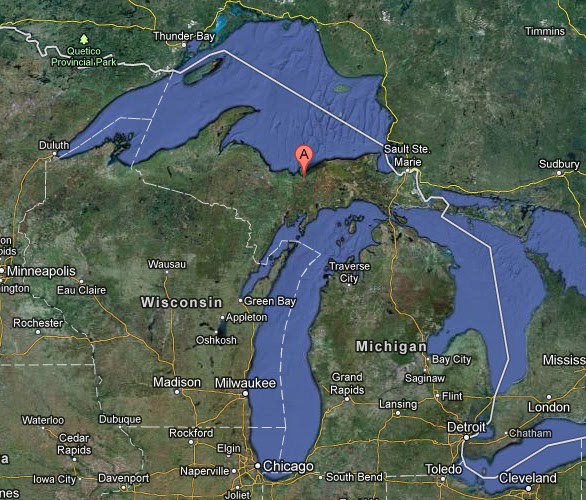
Michigan connection: Patrick Jones grew up in Flint.  Things Change is set in Pontiac, which is between Flint and Detroit.  (See?  I don't just read books set in the U.P. for "Marvelous Michigan.)
"A" is for Pontiac. Image taken from Google Maps.
Checkouts: Not owned by either library
Typical reader: Teens, mainly girls
Source: My hometown public library

Synopsis: Johanna is a high school junior under a lot of pressure to be perfect, from her strict parents and admiring teachers.  Maybe that's why she shakes up her life by telling the wild, class-clown, student council president Paul to kiss her.  They end up going out, and Johanna finds that she's added another high-maintenance facet to her life.  Paul changes a lot about Johanna's life - but can she change him for the better?

My Goodreads rating: 4 stars

Can a leopard change its spots, a skunk its stripe?  A smart girl can fall from her pedestal and get in trouble with a bad boy, but can that bad boy change for the good, to please the girl?

This is a book about a relationship, but it's not a romance.  (If you've been reading my blog a while, you know I don't do romance novels.)  It's what I call a "problem novel," a fictional piece, typically written for teens (or kids, to a lesser extent), about a social issue.  Crank by Ellen Hopkins, which I previously reviewed, is such a book; it deals with the dangers of methamphetamine.  Things Change is about abusive relationships.

Can Johanna succeed in keeping Paul happy so that he doesn't leave bruises when he pokes her?  Will leaving her best friend, Pam, ease his jealousy and keep him from slandering Pam?  Can Paul work to control his temper, or will the abuse escalate?

The novel is mostly told from Johanna's perspective, with a few chapters narrated by Paul thrown in.  They aren't labeled, but Paul's chapters always begin with a typed note to his father, who the reader quickly learns had left Paul and his mother several years ago, and died a couple years back.  It's easy enough to follow.  The prose is at a good reading level - not too simplistic as to be too dumbed-down for the perspective of a top student, but not too complex or adult, either.  There are sexual situations in the story, but anything beyond kissing and petting is "off-camera."

What I appreciated most about this book was that it wasn't cliche.  It surprised me at times, and I liked that.  The characters don't always make the right decisions, but they're very realistic.

Thursday, October 18, 2012

Marvelous Michigan Month: Prairie Evers

I am particularly excited about today's review for Marvelous Michigan Month.  This is one of the books that inspired putting together this feature, along with Haylee's Treasure (among others).  This author is actually one of my patrons!  I have not had the opportunity to meet her yet, as her local library is one of our rural branches/outposts.  I do look forward to doing so sometime, though, be it at a library or at the cafe she and her husband operate.

Let me tell you about Prairie Evers by Ellen Airgood.


Statistics
Michigan connection: Ms. Airgood is a Michigan author.
Checkouts: Coming soon to both libraries
Typical reader: Farm-raised, home-schooled, and previously home-schooled children would likely get the most enjoyment out of this novel.  It's also great for kids who have had to, or will have to, move to a new town and school.
Source: Snowbound Books

Synopsis: This is the story of a tumultuous year in the life of young Prairie Evers, who moved to a farm in upstate New York and will no longer be home-schooled by her beloved grandmother, a former school teacher.  She feels like her chickens: cooped up and subject to the pecking order of the school her parents send her to.  But she will make a friend, and learn much about life.

My Goodreads rating: 5 stars

This is such a nice, sweet book.  If you're looking for a feel-good book that still does have problems for the characters to face, this is a good choice.

The eponymous protagonist of the novel is smart, kind, thoughtful, and spunky.  She's pretty resistant to change, though.  This provides the conflict of the novel, when her grandmother, who has been her teacher and closest friend, decides that life on the farm in New York isn't for her, and moves back to North Carolina.  Her parents are willing to finish out the school year at home before sending Prairie to school, but between needing to make ends meet and some wicked town gossip, Prairie must face the music and go to the dreaded public school instead of staying home all day with her new flock of chickens.

This is a good book for both sides of the argument on homeschooling versus conventional schooling.  There are pros and cons to each, and even young Prairie can see and contemplate that.  She had a good case for homeschooling in North Carolina, being far from the school and having a trained teacher available to educate her.  But in New York, she will learn that going to school has such benefits as being part of society and making friends.

The friendship with Ivy is the real adventure.  Prairie never really had an opportunity to make friends her own age before, so this is totally new to her.  There are ups and downs, and Ivy certainly has problems of her own to deal with, but Prairie is a determined optimist who wants everything to turn out right.

This is a great book for upper elementary students.


UPDATE: A few hours after I posted this review, I cataloged and processes two copies of this book for the school/public library.  When I said it was coming soon, I didn't think I meant today!  :)

Tuesday, October 16, 2012

Marvelous Michigan Month: The Disappearance of Dinosaur Sue

Wow, this month is just flying by!  I hope I'll get through all the books I have planned for Marvelous Michigan Month.  Whether I do or not, I think I'll make this a regular feature once a month.  It's good to be familiar with Michigan books for my jobs, and it's fun to share these books with a broader audience who might not otherwise find these wonderful works.

Today, I would like to tell you about the first in a series of mysteries for children, written by a very knowledgeable person.  This book is The Disappearance of Dinosaur Sue, the premiere book in PaleoJoe's Dinosaur Detective Club series by PaleoJoe (Paleontologist Joe Kchodl) and Wendy Caszatt-Allen.

Statistics
Michigan connection: PaleoJoe is a Michigan author.
Checkouts: Coming soon to the charter school library
Typical reader: Elementary students interested in dinosaurs
Source: The author, when he visited the school/public library!

PaleoJoe holds a replica tooth of a Tyrannosaurus rex.
Photo credit: the school/public library where I work.

Synopsis: Junior paleontologist Shelly Brooks, a lively, enthusiastic eleven-year-old, helps PaleoJoe investigate the disappearance of Dinosaur Sue from the Field Museum of Natural History in Chicago.  Dinosaur Sue is the most complete skeleton of a Tyrannosaurus Rex ever found.

My Goodreads rating: 5 stars

This is a work of fiction, though PaleoJoe is a real paleontologist, and Dinosaur Sue really is the most complete skeleton of a Tyrannosaurus Rex ever found, and is really on display in the Field Museum of Natural History in Chicago.  A lot of the facts about her in the book are true.  But she has never been stolen.

I had initially given this book a 4-star rating, but upon reflection, bumped it up to five stars.  This is a very readable, fun, informational story.  I'm happy that the protagonist is a girl interested in paleontology, even if she is a bit annoying.  And for a mystery, I liked it.  This, and the other four books in the series, will be great additions to the library collection.

PaleoJoe has been traveling across the state and the Midwest to schools and libraries, offering educational programs about paleontology and dinosaurs.  If you have the opportunity to take in one of his programs - or book one, if you work for a school or library - do so!  He is very informative, if fast-paced.  I learned a lot, ranging from how small a Tyrannosaurus rex's brain really was, to how "dinosaurs" are really only the ones that walked on land; pterodactyls were flying lizards, and plesiosaurs were aquatic lizards.  For more information about PaleoJoe, his work, and his programs, please visit his web site.

Wednesday, October 3, 2012

Marvelous Michigan Month: Haylee's Treasure

Welcome to my Marvelous Michigan Month, where I'll discuss books of all sorts dealing with my home state!  There will be books about Michigan, books set in Michigan, and books by Michigan authors.  Some will be for little kids, others will be for older kids or teens, and some will even be for adults.  I might even treat you to a movie - at least, a review of one.

Let's start with a book for upper elementary students.  It's called Haylee's Treasure, written by Mara MacKay.  It recently won a State History Award from the Historical Society of Michigan for its informative and engaging story based on the history of the Upper Peninsula’s Munising area.


Statistics
Michigan connections: Ms. MacKay lives in Michigan, as does illustrator Stephanie Bajema.  Haylee's Treasure takes place mainly in Munising, Michigan.
"A" points to Munising. Screenshot of Google Maps.
Checkouts: Coming next spring to the charter school library, when the second edition comes out!
Typical reader: Upper elementary students looking for a Michigan story
Source: The author!

Synopsis: Haylee and her dad take a summer trip north to visit his parents (her grandparents) in rural Upper Michigan.  Despite her early trepidation, Haylee enjoys finding treasures of all kinds in the small town of Munising.

My Goodreads rating: 4 stars (5 when the second edition comes out!)

As you'll read more about in the upcoming interview with Ms. MacKay, there is a really great idea behind this book, and the sequels to come.  Haylee's Treasure focuses on parts of the history, art, culture, scenery, and artifacts of Munising.  Inspired by an heirloom Munising bowl from her grandmother, Ms. MacKay researched the bowl and found herself wanting to write about the bowl factory and the surrounding area.  Creating the book was also a collaborative effort, with many people contributing to the art, knowledge, and much more.

This novel is a gentle read, very much a slice-of-life exploration of what a remote Michigan town offers.  Haylee learns a lot, and readers of all ages can as well.  It is written for about a 3rd or 4th grade reading level, but would appeal to a wide audience.  The art is beautiful and realistic.  There are even historical photos included.

Let me explain my rating, and why it will change when the second edition comes out (expected Spring 2013).  When I read the first edition, I came across a bit of a stumbling block in trying to read it.  The writing was a bit unpolished and needed proofreading.  For example, verb tenses would change in the middle of a paragraph, or even in a sentence.  But I knew this had a great story and idea at its base, and deserved to be improved.  Having met Ms. MacKay this summer at a summer reading event, I dropped her a line, offering to help edit.  I received a "Yes!" and then my boyfriend and I took on the task of proofreading and editing.  He deserves the credit on editing the book for the second printing.  :)  I'm looking forward to seeing the revised edition in a few months, and sharing it with my students.  See what a collaborative effort this is?

Haylee's Treasure is independently published.  There are places all over Michigan where you can find this book for sale, as well as in a couple of Minnesotan stores.  For a store carrying the book, click here.  Otherwise, the book can be ordered directly from Old Wood Press at the web site.

Sunday, September 30, 2012

Banned Books Week: Crank, by Ellen Hopkins

Unlike last year, I'm taking Banned Books Week seriously here and reviewing a book that has been banned and challenged.  I recently listened to the audiobook version of Crank by Ellen Hopkins, and realized that it was perfect for this feature.  It has been challenged for drugs, offensive language, and being sexually explicit.  This has happened all over the country, often with the worst result possible: it's been banned.  It was #4 on the American Library Association's most frequently challenged book list for 2010.  The author, who has had many of her books challenged or banned, has even been repeatedly dis-invited from speaking events.

That's particularly sad because Crank is semi-biographical, about Ms. Hopkins' own daughter's descent into drug use.

So let's take a look at this book.


Statistics
Checkouts: not owned by the charter school; 6 checkouts of the paperback at the school/public; no statistics available for audiobook (interlibrary loan)
Typical reader: curious teens, and drug users
Source: Interlibrary loan

Synopsis: Kristina Snow was the perfect daughter and student.  Then she went to visit her father one summer, where she tried crank - the monster, methamphetamine.  At first, it was great.  But then it led her into a special sort of hell.

My Goodreads rating: 4 stars

I went with the audiobook for this one because it's written in free verse.  Between my dislike for that form of poetry, and the fact that I just can't read poetry (blaming high school English for that), it seemed like a good choice.  And it is, just for time's sake - the audiobook is 4 discs long, whereas the paperback is a whopping 537 pages.  But it's also good for the quality of narration.  Laura Flanagan delivers the story well, with feeling and a teen-sounding voice.  She handles the verse format better than I ever could, making it more lyrical and less cumbersome.

Crank is a rough book, any which way you read it.  It deals with some very hard subjects.  Kristina gets into a lot of trouble due to her drug use.  This includes trouble at home with her family, with her finances, at school, with her friends, and with boys.  Some of that is very serious.

This book has been banned and challenged for drugs, offensive language, and being sexually explicit.  Well, yes, it does have all of that.  Sometimes people challenge books for the oddest perceived faults; this time, they're right.  The book is about drug use.  Is it glamorized?  Hardly.  There's offensive language, but that seems superfluous.  As for being sexually explicit, let me give you some spoilers.  Kristina gets raped, and that is described a bit.  It's worth cringing over.  She talks with a fellow female drug user about it, and finds out that it's happened to the friend as well.  Girls that use drugs often get raped by dealers, or by guys that offer to help them get high.  And as a final lesson in what bad things can happen when a girl uses drugs, she discovers that she's pregnant, and it's the rapist's baby.

Is this appropriate for young children?  No, but I doubt anyone found it in an elementary collection.  Is it appropriate for teens?  That's a good question.  It's written for teens, about a teen, based on a real teen girl.  But parents should certainly be aware that their teen is reading it.  This is a novel that needs discussion.  Don't take it away, just because of a fear that it might make them curious or lead them astray.  The consequences of Kristina's drug-addled actions become clear enough by the end of the book.  Discuss it with them.  Talk about how drugs can mess up their lives.

I really have to give kudos to Ms. Hopkins for writing this book and its direct sequel, Glass.  She was struggling with how and why her daughter could go down the path of meth use, and this book explores what happened, or may have happened.  She's been praised by people who have used meth, for accurately portraying what it's like.  Some have even told her how the books have helped them clean up.

If that's not a reason to keep the book on the shelf, what is?


Have a good Banned Book Week, everyone.  Enjoy your freedom to read.  Do you have a favorite challenged book, or one that you're reading in honor of this week?


On to a lighter subject.  Tomorrow is the first day of October.  October shall be a special month here, where a librarian moonlights as a librarian.   I'm going to take the month to focus on books of Marvelous Michigan!  I'll be exploring new and old books for all ages, that are by Michigan authors, or are set in Michigan, or are about this state of pleasant peninsulas.  I might even have an author interview or two.  Stay tuned - I hope you'll love it.
Monday, September 10, 2012

Cover-to-Cover Commuting: Looking for Alaska

I am a fan of the Printz Awards.  If you're into young adult literature, or are involved in librarian-like pursuits, you're probably familiar with them.  Akin to the Caldecott and Newbery Awards for younger audiences, the Michael L. Printz Award is the American Library Association's award for a book that "exemplifies literary excellence in young adult literature."  For more information, visit the ALA's page about it.

I've previously read other Printz winners, such as the gritty Ship Breaker by Paolo Bacigalupi (review available here), the quirky graphic novel American Born Chinese by Gene Luen Yang, the heartbreaking The First Part Last by Angela Johnson (that was for a class), and the bleak Monster by Walter Dean Myers.  All of those have been very good.  The book I want to share with you now is also an outstanding Printz winner, called Looking for Alaska by John Green.  I listened to the audiobook version.


Statistics
Checkouts (School/public audiobook): 30
Checkouts (Charter school print):5
Typical reader: Mature teens
Source: School/public library, on audio CD

Synopsis: Miles decides to leave home and attend his junior year of high school at his father's alma mater, a boarding school in Alabama, hoping to find more to life and discover his "Great Perhaps" (a reference to the last words of Francois Rabelais).  There, he makes friends with interesting classmates, most notably the beautiful, clever, sultry Alaska Young.  This comes across as a great "slice of life" tale, until one night ...

My Goodreads rating: 4 stars

Does Looking for Alaska exemplify literary excellence in YA lit?  Oh, yes.  It's genuine, edgy, unafraid to look at teen issues.  While the Printz Awards can go to any genre of book, provided that the intended audience is teen/YA, this is lovably contemporary, realistic fiction.  As much as I like fantasy and dystopian novels, this had great appeal for the realism: in the characters, in the events, in the setting.

This is character-driven, and the people in Miles' life are quirky and interesting.  Miles himself, or "Pudge," as he is known at school since he's skinny,  has the unique trait of being obsessed with last words of famous people.  Alaska is extremely multifaceted, from being sweet and funny, to railing against the "patriarchal paradigm," to withdrawing into deep melancholia.  Even the allegedly one-lunged religious studies professor has his idiosyncrasies.

This is a hard book to discuss without getting into spoilers, though.  There's definitely a turning point in the novel, and the chapters/sections are even marked with "eleven days before" or "one day after."  Certainly, something momentous happens, but if you've been reading my reviews for a while, you know I try to steer clear of letting things slip if I can help it.  My advice: if you want to read this, just jump into it, and don't look at the reviews on Goodreads.  I made that mistake, and was not happy.

The audiobook version of this was good.  Not outstanding, but good.  There's a part where Miles, narrating the story, comments on someone's Southern drawl, and that most people at school didn't have such an accent.  *sigh*  Maybe it's just my acclimation to how people in the upper Midwest talk, but I swear a lot of the characters had a bit of a Southern accent.  Nice to listen to, but inaccurate.

This novel is certainly for more mature readers.  Miles and his friends live boarding school life to its fullest.  They pull pranks, smoke, drink, explore their sexuality, and examine the meaning of life, be it in pursuit of the "Great Perhaps" or a way "out of the Labyrinth."  There are also mature themes.

Thursday, December 22, 2011

Yay for YA: Five Flavors of Dumb

I read this novel, Five Flavors of Dumb by Antony John, back in March, before I'd decided to start reviewing books here.  In an effort to keep posting every weekday in these last two weeks of the year, and in order to share a good book with you, I present to you a review.
Statistics
Checkouts: I probably should donate it to the library.
Typical reader: Teens with interest in music or disabilities
Source: Personally purchased from Snowbound Books

Synopsis: Piper is witness to a hot new band's impromptu performance on her high school's front steps, and later has the guts to tell them they're crap. The three-person band decides to challenge her in return - become their manager and get them a paying gig within a month. She accepts this potentially impossible task. It's not just hard because they're a new band that needs improvement - it's hard because Piper is deaf.

My Goodreads rating: 4 stars

I couldn't be in the same room as the book if I wanted to do something besides pick it up and continue reading.  This book is an intriguing compilation of hard rock history, the story of a band, teen romance and friendships in many forms, family dynamics, and a tale of coping with what many would consider a disability. Piper is an excellent, strong protagonist who brings together an eclectic band of five very different flavors of people (hence the title) while dealing with a family that doesn't always support her - her parents dip into her college savings, earmarked for a university for the hearing impaired, to buy her deaf little sister a cochlear implant.

The characters are excellent, for the most part.  Piper and her brother Finn have an interesting, complex relationship of sibling love, rivalry, and dependance - while Piper can read lips and speak, it's much easier to communicate with sign language while he serves as an interpreter.  The one character that I felt was a bit flat was the father.  While he does become more supportive as the story progresses, he comes across mostly as obtuse.

I picked up this entertaining book from a sea of teen fiction that was mostly either paranormal/paranormal romance or catty clique novels. It stood out as different, and it was.  If you're looking for an antidote for the common teen novel, this is it.

Monday, December 19, 2011

Yay for YA: Ugly to Start With review

Last week I got a comment requesting that I review a book, complete with an offer to send me a PDF file of the book so that I could do so.  From an author.  After flailing around excitedly, I accepted my very first book review request.

So here is my review of Ugly to Start With by John Michael Cummings.  I'd prefer to be nicer, but honesty is the best policy; it's not a five-star book.
Statistics
Checkouts: Not owned by the library
Typical reader: High school boys
Source: Direct from the author via email (Squee!)

Synopsis: Jason Stevens is a teen growing up in historic Harper's Ferry, West Virginia, in the 1970s.  This is a collection of short, fictional stories about his less-than-ideal life.

My Goodreads rating: 3 stars

This book exemplifies the differences between middle-grade novels and those for young adults.  While the writing style and vocabulary are suitable for a younger audience, the subject matter certainly is not.  There are a lot of mature situations in this book, ranging from race relations to infidelity, from exploring sexuality to cruelty to animals.  This book is perfectly acceptable material for a public library, but my school library serves mostly K-8.  It doesn't belong there.

I liked the simple, honest prose.  Jason isn't the greatest person, particularly in the title story (I'll get to that later), but he provides quality narration to his stories.  The short story format left me a bit wanting at times, because some vignettes ended without a sense of conclusion, but that's a drawback to the confines of short stories.  On the other hand, the end of a short story is not the end of Jason's overall tale.  There are pros and cons; your mileage may vary on this.

My favorite story was "The Scratchboard Project."  In this, Jason visits a classmate's house to sketch her for an art assignment.  It's a story that gives a lot of depth to Jason's dream of being an artist, as well as the world in which he lives.  The classmate he visits is a black girl in a different part of town, and both of them, as well as her family, have to deal with prejudices in the fullest sense of the word.  Jason and Shanice have to get past their presuppositions about each other as she poses for him and he sketches her, and their interactions break down the icy barriers.

My least favorite story was the title one.  A little cat comes to Jason's house and his family takes her in, marveling at her soft, beautiful coat.  But in the summer, she gets into fights with other cats in the neighborhood and returns home with bloody sores and scratches.  The family refuses to let her in or care for her.  Jason goes so far to even shoot at her with a BB gun to chase her off.  You can imagine how well this sat with a cat-lover such as myself!  The story does well at illustrating how the family values only that which is beautiful, and has no love for what's ugly - either "to start with" or what becomes so through circumstance.  It also shows their hypocrisy, considering how run-down their house is and how ugly within the father can be.
(To be honest, this story almost made me put the book down completely, but as Mr. Cummings' web site mentions that he has a cat, I gave him the benefit of the doubt and continued.)

I have one thing to nitpick about this book.  In one story, Jason is looking at a board in his school with editorials pasted to it, and two phrases jumped out at me.  These were references to "Raiders of the Lost Ark" and "the X-Files."  This book is set in the 1970s.  The movie "Raiders of the Lost Ark" came out in 1981.  "The X-Files" TV show ran from 1993 to 2002.  There's another story that mentions the basketball skills of Magic Johnson, who played for the L.A. Lakers starting in 1979.  Please, fact-check.  I don't appreciate historical inaccuracies.

Thursday, December 8, 2011

Palate Cleanser: The Not-So-Star-Spangled Life of Sunita Sen

Today I am unveiling a new feature on my blog: Palate Cleansers.  These will be gentle reads that I could hand to anyone capable of reading them, and not worry.  If you're unfamiliar with the concept of a gentle read, it's a term librarians use to describe a genre that contains feel-good books, ones with no strong language, sex, or violence, and typically have happy-endings.  Before you yawn, though, these books can be very interesting without relying on edgy topics or breathtaking action.  They can often offer delightful new worlds.

The Not-So-Star-Spangled Life of Sunita Sen by Mitali Perkins is a book I would consider a gentle read.  Let me tell you about it.
Statistics
Checkouts: Coming soon to the library
Typical reader: Aimed at teen girls, but suitable for anyone capable of reading it
Source: Bought on clearance at Scholastic Book Fair

Synopsis: Sunita Sen was living a normal life in California, attending middle school, becoming closer with one of her male friends, and hanging out with her best friend.  Then her grandparents from India come to visit for a year, and turn her world upside-down as her mother takes leave from her teaching position at a university and tries to be the perfect Indian woman.  How will Sunita ever cope?

My Goodreads rating: 4 stars

This book could be of interest to sociologists studying the lives of second-generation Americans in fiction.  That's what this novel is.  Sunita's parents immigrated to the United States from India, found employment, and are working on raising three children with a mixture of traditional Indian and contemporary American cultures.  Our protagonist, known to classmates as Sunni, is the youngest child, still at home and attending eighth grade.  Her life was what she considered to be normal.  But then she got culture shock when her grandparents came for a visit.  Her mother took a year off from work and started wearing sarees, and forbade Sunita to have any male friends over.  Oh noes!  What ever shall she do?

I was expecting something along those lines when I picked out this novel, and I got what I anticipated.  I enjoy these slice-of-life books that highlight different ethnic lifestyles.  A book about an Indian-American girl also goes well with leftovers from my local Middle Eastern/Indian restaurant.  (Sadly, the Rubaiyat is closing at the end of the year.  Upper Michigan's cuisine scene shall greatly suffer for the loss!)

The characters are fun and believable.  Sunita's best friend Liz is particularly notable.  She's a bespectacled bookworm who Sunni thought wasn't into boys, but has a lot more going on in her head than her best friend realizes.  I liked her a lot.  Sunni also becomes close with her Dadu, or grandfather, with his tales of life in India (particularly the story of how he met his wife) and his hard work in her family's backyard.

This book is older than I thought when I bought it.  The current title was published in 2005.  Originally, it dates back to 1993, under the title The Sunita Experiment.  Still, it's an excellent book, which I could recommend to anyone interested in the immigrant experience or middle school life.

Thursday, September 22, 2011

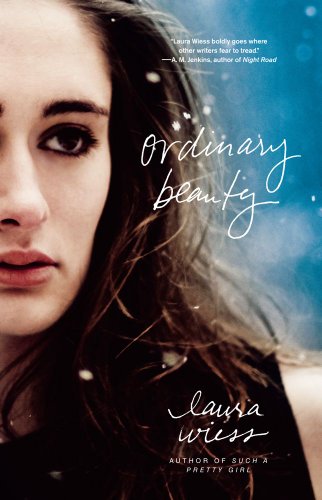
Yay for YA: Ordinary Beauty. Also, a memorial.

I feel like I shouldn't be titling this "Yay for YA."  Ordinary Beauty by Laura Wiess is a hard-hitting problem novel that really doesn't inspire a person to make a happy noise (except over the prose).  Furthermore, my reading of this novel was punctuated by a horribly sad tragedy within my family.  Just a few hours after my review of Hoot, my beloved companion of 16 years, Cleocatra (known to most as Cleo), passed away on my lap after a short battle with chronic renal failure.
She always loved Christmas.
Sometimes we read books at just the right times.  I had put down a biographical fiction about my cat's namesake's daughter (Cleopatra Selene, daughter of the famous Queen Cleopatra VII), Cleopatra's Moon by Vicky Alvear Shecter after the point in the book where the queen had died, and picked up Ordinary Beauty, a heart-rending tale about a neglected teenager facing the death of the drug-addicted mother who never wanted her.  In working my way through this novel in the final days before my cherished cat died and afterward during sleepless nights, it seems like life softened the blow of the story - while the story emphasized just how lucky we were.

I suppose I should get to the review.
Statistics
Checkouts: I'll probably donate it to the school library.
Typical reader: Mature teen girls

Synopsis: Sayre (pronounced "Say-er," much thanks to the author for answering my email to clarify that!) Bellavia was unplanned, unwanted, and unloved by her mother.  Now, on New Year's Eve, Sayre gets word that her mother is dying from the effects of all the years of drug abuse and alcoholism, and looks to see her one last time.  The journey is hard, both physically as she nearly gets hit by a car and then tries to rescue the driver when the car swerves off the road, and mentally as she looks back on all the memories of her 17 1/2 years of life.

My Goodreads rating: 4 stars

Like I said earlier, this is a hard-hitting problem novel.  It's hard to not get choked up over all the tragedy in Sayre's life.  Her mother never even tried to give her a good life, and preferred to just get high.  All the good in Sayre's childhood had to be colored by the drama and decadence her mother and her mother's friend Candy brought into it.  She lived with her grandma until she was eight and the grandmother passed away; her mother and Candy squandered everything that was left until the house foreclosed.  After Candy's family farm was raided for its meth lab and the women went into rehab, Sayre enjoyed life with a foster family - then, after she was reunited with a sober mother, the foster mother was murdered.  The happiest time of their lives was when the mother met someone wonderful, a man Sayre had met in foster care, and moved in with him.  Even that had to end in the most horrible way possible.

The prose is solid, and the delivery is never preachy.  This novel would make a good book club or class discussion topic, with all its social and familial problems.  Sayre's mother was a pregnant teenager and high school dropout, a meth addict, an alcoholic, and an abusive/neglectful parent.  Candy dated a sex offender who violated parole by living under the same roof as Sayre, came after Sayre with a hammer when she saw the girl with her boyfriend, was a constant bad influence on Sayre's mother, and left Sayre and the injured driver of the crashed vehicle out in the cold, dark night in the middle of nowhere.  After Sayre walked out on her mother shortly before the start of the story, she was living with a convicted murderer.

Is all that starting to sound a bit unreal?  In Ordinary Beauty, it never felt that way.  Everything came across as believable.  It's a story that some girl like Sayre could well be living out, somewhere in the real world.  Also, for all the thorns that we can easily dwell upon in this tale, there are quite a few roses.  As much as her life was overshadowed by her terrible mother, Sayre did have good people in her life, and good experiences that helped shape her into a decent young woman.

Thursday, September 15, 2011

Reading what the students read: Hoot

It's been a while since I did a "Reading what the students read" column.  There have just been too many eye-catching new books available!  But here is my review of Hoot by Carl Hiaasen.
Statistics
Checkouts: 11 between two copies
Checkouts for Hoot/Flush/Scat: 42*
Typical reader: Upper elementary, both genders

Synopsis: Mother Paula's All-American Pancake House is coming to Coconut Cove, Florida.  But someone has been pulling up the stakes, putting alligators in the portable toilets, and committing other acts of vandalism.  Meanwhile, newcomer Roy Eberhardt, a middle school student, notices a barefoot boy running through town and takes interest.

My Goodreads rating: 4 stars

I'll be honest.  Carl Hiaasen is known for being a very funny mystery writer, and his children's books are supposed to be just as humorous.  This book just didn't hit my funny bone, though.  The kids love these books however, so it's probably just my sense of humor that didn't connect.

That said, this is a very engaging read.  It reminded me of my all-time favorite book from my childhood, Maniac Magee by Jerry Spinelli, in both the adventures the characters have and in the social commentary.  There are two excellent reasons to read this book: the outstanding characters and the plot.

Roy is one of the best characters I've read this summer.  He's got a lot of spunk, and stands up for himself and his beliefs.  He takes on a bully, stands up to an intimidating soccer star and then befriends her, and questions the legality of a corporation's actions.  Supporting characters such as Officer David Delinko, Beatrice Leep, and Beatrice's stepbrother "Mullet Fingers" (so nicknamed for his fishing abilities) are sympathetic and well-written.  "Mullet Fingers" contributes to the Maniac Magee air, running everywhere and living as a vagabond, doing what he feels is right.

What he feels is right is protecting the burrowing owls that live in the lot where the pancake house is scheduled to be built.  He is willing to do that through any means necessary.  Can he and the others somehow save the owls' habitat?  Or will the cute little birds be buried by the bulldozers?  These are awesome plot hooks for budding environmentalists and animal-lovers, as well as readers who like kids that take initiative to change their world.


*: The author's book Scat has the most checkouts of the three books, but I'd picked up this one since I thought the books were part of a series.  They are not.  You can read any of them without any knowledge of the others.  Whoops.

Thursday, September 1, 2011

Yay for YA: Want to Go Private?

I had heard about Want to Go Private? from another blog, YA Librarian Tales, which also hosted an interview with the author, Sarah Darer Littman.  The topic struck me as horrible, and the book as a must-read.  Statistics and data might not dissuade teens from chatting with strangers online and potentially becoming victims of internet predators, but maybe a novel written for them will.  When I found a copy of this at the preview center, I pounced.
Statistics
Checkouts: New to the library, but already on hold before the school year starts!
Typical reader: Hopefully teens, but nearly every teacher I've mentioned this book to wants to read it

Synopsis: Abby Johnston dreads starting high school.  Then she meets a nice older guy online named Luke, who shares her interests and understands her problems.  As time passes, he wins her trust and they start doing things via webcam she wouldn't dream of doing with a boy she could really meet.  Her grades start to fall, her parents get mad, and Luke suggests that she run away with him for a few days.  She ditches school the next day and gets into his car.

My Goodreads rating: 4 stars

This has to be one of the toughest books I've read in a long time.  There are parts where I just had to put the book down because of how horrible the topic is, and how despicable the actions of Luke are.  Nothing is too graphically spelled out, but that doesn't make it any easier.  Ms. Littman has done a very good job with this, though.  She's obviously done her research into what exactly internet predators do to "groom" their victims into a false sense of security and love, and the legal systems in place to deal with these perpetrators when things go bad.

Abby is an amazing character, who might be incredibly book-smart but is only 14 and lacks the emotional maturity to know that she's being manipulated by this predator pretending to be her perfect friend.  In parts 2 and 3 of the novel, where the narration is picked up by Abby's friends and little sister while she's missing, we get some well-rounded characters in Faith, the best-friend, and Billy, the boy Abby dated once.  They are so torn between their concern and compassion for Abby and dealing with not knowing why she got in the car, what their classmates are saying, and in the case of Billy, coping with the fact that his parents and the police seem to think that he did something to her.  Billy is easily the most sympathetic character in the novel.  He's such a sweet boy, who likes/likes Abby in spite of her actions, and stands up for her against her classmates.  On the flip side, the little sister, Lily, is too immature to be a believable seventh-grader.  She's just so bratty and childish.

I think there's a lot of hope surrounding this book.  While definitely a cautionary tale, there's certainly hope within the story and within the characters.  In the aforementioned interview, the author said that she hopes teenagers gain an understanding - that they're not alone or isolated, and how something like this could happen.  Teachers, librarians, and parents are likely going to hope that this book opens teens' eyes to the issue and how it could easily happen to them.

One neat touch in the marketing of this book is that the site Abby meets Luke on, http://www.chezteen.com, is a real site - one promoting the book as well as providing information on internet predators and how to prevent teens from becoming victims.

Saturday, August 27, 2011

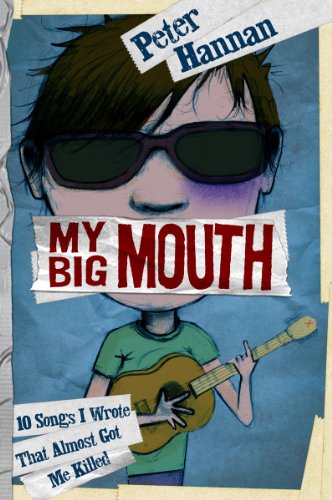
Yay for YA: My Big Mouth review

As requested by a reader back on my entry about all the new books I got from the Superiorland Preview Center, I have perused My Big Mouth by Peter Hannan for review.
Statistics
Checkouts: new to the library, courtesy of the Superiorland Preview Center
Typical reader: Students who have read the Diary of a Wimpy Kid series (first book reviewed) will greatly enjoy this!

Synopsis: Davis Delaware moves with his father after his mother's death and starts a new school in the spring of his freshman year.  He meets a beautiful girl named Molly, and overhears her say that it would be cool to start a band - so he invites her and another student to do just that.  He also constantly enrages the school bully - who happens to be Molly's boyfriend.

My Goodreads rating: 4 stars (It was almost 5 ...)

If I were to describe this book in one word, it would be "Fun."  This was a genuinely enjoyable novel to read.  Davis' voice is clear and real, and the drawings are great.  Peter Hannan, also known for the show "Catdog," is a great illustrator for a book like this.  The sketches come across as something a high school student really would draw.  They're more sophisticated than the drawings in Diary of a Wimpy Kid, but definitely something I could imagine being idly sketched in a teen's notebook.

The format of the book is that of the popular "diary" genre that kids are loving these days.  With a more complex story and a higher word count, My Big Mouth is a natural pick for students that have graduated from the well-known Diary of a Wimpy Kid series.  While the book is aimed at the teen/YA crowd, there is no reason why an older elementary student shouldn't read this.  There's no language problem or sexual situations.

The story is pretty good.  Davis moves to a new school, makes some friends, and tries not to be destroyed by the school bully.  He gets noticed for his poetry skills by his English teacher and becomes a bit of a celebrity.  He starts a band to get close to Molly, the object of his secret interest.  The book's climax comes in the form of a band concert, where his band "The Amazing Dweebs" is competing against "The Butchers," which consists of the bully Gerald "the Butcher" Boggs and his goons.  And there's a twist, which left me blinking in confusion by the end of the book.  I'm really not sure what to make of it!  That's why the rating for this is 4 stars.  I don't want to give anything away, but the outcome seemed a bit out of left field.  Your mileage may vary.