What's this? Two book reviews within a month?
Let me tell you about Curses and Smoke, by Vicky Alvear Shecter! (I previously reviewed another of her books, Cleopatra's Moon, in 2011.)
Statistics
Checkouts: 2
Typical reader: Teens interested in historical fiction and/or Pompeii
Source: The author generously donated this and another of her books to the school library!
Synopsis: Lucia is the daughter of the owner of a gladiatorial school, and is being sold off in marriage to an old man to better her father's status. Tag is a medical slave owned by her father, and dreams of becoming a gladiator and winning his freedom. These two childhood friends reconnect and plan to escape Pompeii and Lucia's father, while strange things are happening in nature on the slopes of Mt. Vesuvius ...
My Goodreads rating: 4 stars
First of all, I would like to thank the author very much for contacting me and offering to donate this and Hades Speaks! to one of my libraries. I hope I'm not too far behind in writing this honest review.
This is a wonderfully researched novel set at the time of the unexpected, catastrophic eruption in AD 79 that destroyed, yet preserved, the ancient Roman city of Pompeii. I enjoyed the look into the customs and culture of this ancient civilization, as shown through the novel. The extensive author's note at the end delighted me. Curses and Smoke taught me a lot about Pompeii, Mt. Vesuvius, and some aspects of ancient Roman life. As with Cleopatra's Moon, Ms. Shecter has worked magic with what resources were available.
For the most part, I enjoyed the story. There were times when I felt that it had too many similarities to James Cameron's Titanic, particularly in some ways the couples' escapes were thwarted. The situations both dragged on. Overall, though, it was a pretty good plot, with well-developed characters.
I didn't entirely hate the love polygon. Yes, it was a polygon, not a triangle; there were a lot of relationships intertwined. There were a few pleasant twists, however, and for those, I could accept the relationship intrigues at work.
Overall, this was an enjoyable novel. I would recommend it to teens, or middle school students looking for a book for their historical fiction book report assignment.
I'm a librarian moonlighting as a librarian. I'm currently working at two Michigan libraries: a small town public library, where I am now the director, and a K-12 public charter school. I write reviews of YA and juvenile fiction, and books set in Michigan and/or written by Michigan authors. I also occasionally discuss libraries and library science.
Showing posts with label historical_fiction. Show all posts
Saturday, April 25, 2015
Yay for YA: Curses and Smoke
Labels:
from_author,
historical_fiction,
reviews,
vicky_alvear_shecter,
ya
Saturday, September 20, 2014
Yay for YA: Sisters' Fate by Jessica Spotswood
It's probably worth repeating something I said earlier this year in another YA review: I don't typically indulge in reading to completion. So when I actually do finish a trilogy, you can bet that the author impressed me enough that I felt it worth my time to see it through to the end.
There was no way I was going to let Sisters' Fate, the third and final book in the Cahill Witch Chronicles trilogy by Jessica Spotswood, slip by me. That twist at the end of the second book! Oh, my word! I actually squawked when I read what happened, and wanted to throw something at the perpetrating character. So, I just had to know how things resolved in this book.
Not to mention, does the prophecy that one of the three sisters kills another come true? Or can fate be changed?
(For my review of the first book, Born Wicked, click here.)
Statistics
Checkouts: The book is new to the school library; the series surprisingly hasn't been checked out at all. I need to talk it up more, apparently.
Typical reader: Teen girls looking for paranormal romance
Source: Snowbound Books
Synopsis: As a fever ravages the city of New London, Cate must deal with what happened at the end of Star Cursed, the prophecy and what it could mean, her little sister Tess's own prophecies, her middle sister Maura's conniving ways, and regaining Finn's trust.
My Goodreads rating: 5 stars
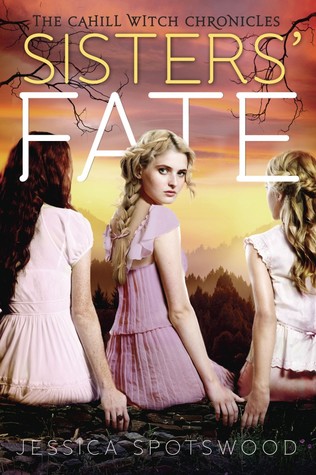
First, I must comment on the cover art. It's an improvement over the first book's hardcover printing, where Cate (presumably) looks all come-hither and wonton. The paperback edition of the first book, and the printings of the subsequent books, fit the stories much better. The three girls on this cover look like they could be Maura, Cate, and Tess.
On to the book itself. It was everything I wanted, and more. The end of the trilogy answered questions, left a few tasty dangling threads, and overall satisfied me. There's also a tremendous climax - multi-tiered, even - that is action-packed and far-reaching.
What I loved most about this book is that while there's romance, it surpasses what is the norm in teen literature. Cate benefits from her beau, but does not rely on him. He's a support, not a crutch. She can love, without being codependent. This is absolutely marvelous, and well-written. We need more strong females in YA fiction like her! Really, many of us could learn a bit from Cate.
I look forward to more of Ms. Spotswood's works in the future. (Also, thank you for the bookmarks.)
There was no way I was going to let Sisters' Fate, the third and final book in the Cahill Witch Chronicles trilogy by Jessica Spotswood, slip by me. That twist at the end of the second book! Oh, my word! I actually squawked when I read what happened, and wanted to throw something at the perpetrating character. So, I just had to know how things resolved in this book.
Not to mention, does the prophecy that one of the three sisters kills another come true? Or can fate be changed?
(For my review of the first book, Born Wicked, click here.)
Statistics
Checkouts: The book is new to the school library; the series surprisingly hasn't been checked out at all. I need to talk it up more, apparently.
Typical reader: Teen girls looking for paranormal romance
Source: Snowbound Books
Synopsis: As a fever ravages the city of New London, Cate must deal with what happened at the end of Star Cursed, the prophecy and what it could mean, her little sister Tess's own prophecies, her middle sister Maura's conniving ways, and regaining Finn's trust.
My Goodreads rating: 5 stars
First, I must comment on the cover art. It's an improvement over the first book's hardcover printing, where Cate (presumably) looks all come-hither and wonton. The paperback edition of the first book, and the printings of the subsequent books, fit the stories much better. The three girls on this cover look like they could be Maura, Cate, and Tess.
On to the book itself. It was everything I wanted, and more. The end of the trilogy answered questions, left a few tasty dangling threads, and overall satisfied me. There's also a tremendous climax - multi-tiered, even - that is action-packed and far-reaching.
What I loved most about this book is that while there's romance, it surpasses what is the norm in teen literature. Cate benefits from her beau, but does not rely on him. He's a support, not a crutch. She can love, without being codependent. This is absolutely marvelous, and well-written. We need more strong females in YA fiction like her! Really, many of us could learn a bit from Cate.
I look forward to more of Ms. Spotswood's works in the future. (Also, thank you for the bookmarks.)
Labels:
fantasy,
historical_fiction,
jessica_spotswood,
reviews,
ya
Monday, September 15, 2014
Guilty Pleasures: The Clockwork Dagger, by Beth Cato
The book I'd like to tell you about today comes out tomorrow (Tuesday, Sept. 16). I read the ARC two months ago. Oops! Not to say I've been busy or anything.
Here's my review of The Clockwork Dagger by Beth Cato.
Statistics
Checkouts: Comes out tomorrow - none! Having copies on the shelf before the release date is unethical, if not illegal.
Typical reader: Fans of steampunk, perhaps particularly the Parasol Protectorate series by Gail Carriger (I actually agree with a read-alike on the back cover of an ARC, for once)
Source: Advanced reading copy, courtesy of Snowbound Books
Synopsis: Trained as a medician (medical magician, if you will), Octavia Leander sets off into the world to take her first job in a rural town. But there is much intrigue and adventure to be had on her journey by airship.
My Goodreads rating: 5 stars
I fell in love with this book within the first dozen pages. This is no small feat, but I was extremely impressed. In that short amount of text, I learned more about the protagonist, why we should like her, how magic works, and the world she lives in than in some entire books.
And the book kept my love throughout. This is one that I resisted finishing as long as I could, to savor it longer. It depressed me at the end to know that I was reading an ARC, and I would have to wait even longer for the sequel (and it sounds like there will be one!)
How did I adore this book? Let me count the ways.
Here's my review of The Clockwork Dagger by Beth Cato.
Statistics
Checkouts: Comes out tomorrow - none! Having copies on the shelf before the release date is unethical, if not illegal.
Typical reader: Fans of steampunk, perhaps particularly the Parasol Protectorate series by Gail Carriger (I actually agree with a read-alike on the back cover of an ARC, for once)
Source: Advanced reading copy, courtesy of Snowbound Books
Synopsis: Trained as a medician (medical magician, if you will), Octavia Leander sets off into the world to take her first job in a rural town. But there is much intrigue and adventure to be had on her journey by airship.
My Goodreads rating: 5 stars
I fell in love with this book within the first dozen pages. This is no small feat, but I was extremely impressed. In that short amount of text, I learned more about the protagonist, why we should like her, how magic works, and the world she lives in than in some entire books.
And the book kept my love throughout. This is one that I resisted finishing as long as I could, to savor it longer. It depressed me at the end to know that I was reading an ARC, and I would have to wait even longer for the sequel (and it sounds like there will be one!)
How did I adore this book? Let me count the ways.
- It has a plucky, unique heroine with a well-rounded support cast.
- The magic is unlike any other I've read about, coming closest to a cross between a Dragonlance mystic and a druid with a penchant for healing.
- It's an interracial romance! How common is that?! For all the diversity in romance in literature, you'd forget that Loving v. Virginia made it legal in the U.S nearly 50 years ago. Eleanor & Park by Rainbow Rowell gets a lot of its attention because it's a love story between an overweight redhead girl and a half-Korean boy. I'd honestly like to see more books like these.
- Speaking of the romance, it isn't overbearing. And in a Victorian-style steampunk setting, that's to be expected. Flirting and wooing is very cordial.
- The plot has plenty of twists, turns, and intrigue.
- The worldbuilding is exquisite. It has a Dickensian feel, particularly in the cities. There wasn't much interaction between Octavia and the poor, but one particular scene made me sit back and say, "Whoa." Outside the cities, the author has constructed an interesting, different world with a mixture of magic and mechanisms, spirituality and science.
Labels:
fantasy,
guilty,
historical_fiction,
reviews,
steampunk
Sunday, March 24, 2013
Yay for YA: Born Wicked
Here is the first in my series of catch-up reviews. This is a book that I read January 27-February 3. Now it's almost the end of March. Shame on me.
What's even worse about delaying this review is that it was such a good book! Born Wicked by Jessica Spotswood is a historical fiction, with paranormal and romantic elements, that I thoroughly enjoyed. I can hardly wait for the sequel, which come out in June.
Statistics
Checkouts: New to the charter school library
Typical reader: Teen girls in need of sci-fi/fantasy books, or teen girls looking for paranormal romance
Source: Authors Are Rockstars! giveaway
Synopsis: In an alternative turn-of-the-twentieth-century New England, religious orders hold sway and accusing witches never went out of style. However, some girls and women actually are witches, such as Cate Cahill and her sisters. Cate is coming of age, and she will soon have to choose someone to be betrothed to, or the priests of the Brotherhood will. Luckily, her old childhood friend Paul McLeod is home and expressing interest in her hand in marriage - or there's the bookseller's son, Finn Belastra, who is the Cahill's gardener and oh-so-tempting. All the while, Cate must try to keep the family secret from ruining all she cares for.
My Goodreads rating: 5 stars
Be shocked! I have given a romance novel 5 stars, a top rating. What could make it so good that even I can applaud a romantic YA story?
First and foremost, there's the writing style. It charmed me quickly. Ms. Spotswood does a great job of introducing the characters straightaway, so that I soon knew them and could relate to and care about them. Also, there author has no fear of flexing a large vocabulary. I was scrambling to look up a new word on page 10 (barouche). I appreciate learning new words, which is difficult to do with YA literature and my already-ample lexicon. It's also appropriate for historical fiction, because educated people (such as Cate Cahill) actually did have decent vocabularies.
Second, there isn't just a love triangle! It's introduced a bit late in the book, but there's a third option. Cate learns some interesting tidbits about the Sisterhood from the governess her father has hired for her and her sisters. Joining the Sisterhood, which would offer more educational opportunities, delay or stave off marriage, and include other benefits that I'm not going to spoil, is something Cate must consider in addition to the young men that vie for her affection. Which will she choose?
Finally, there are some great twists to the plot. That's all I'm going to say about that!
What's even worse about delaying this review is that it was such a good book! Born Wicked by Jessica Spotswood is a historical fiction, with paranormal and romantic elements, that I thoroughly enjoyed. I can hardly wait for the sequel, which come out in June.
Statistics
Checkouts: New to the charter school library
Typical reader: Teen girls in need of sci-fi/fantasy books, or teen girls looking for paranormal romance
Source: Authors Are Rockstars! giveaway
Synopsis: In an alternative turn-of-the-twentieth-century New England, religious orders hold sway and accusing witches never went out of style. However, some girls and women actually are witches, such as Cate Cahill and her sisters. Cate is coming of age, and she will soon have to choose someone to be betrothed to, or the priests of the Brotherhood will. Luckily, her old childhood friend Paul McLeod is home and expressing interest in her hand in marriage - or there's the bookseller's son, Finn Belastra, who is the Cahill's gardener and oh-so-tempting. All the while, Cate must try to keep the family secret from ruining all she cares for.
My Goodreads rating: 5 stars
Be shocked! I have given a romance novel 5 stars, a top rating. What could make it so good that even I can applaud a romantic YA story?
First and foremost, there's the writing style. It charmed me quickly. Ms. Spotswood does a great job of introducing the characters straightaway, so that I soon knew them and could relate to and care about them. Also, there author has no fear of flexing a large vocabulary. I was scrambling to look up a new word on page 10 (barouche). I appreciate learning new words, which is difficult to do with YA literature and my already-ample lexicon. It's also appropriate for historical fiction, because educated people (such as Cate Cahill) actually did have decent vocabularies.
Second, there isn't just a love triangle! It's introduced a bit late in the book, but there's a third option. Cate learns some interesting tidbits about the Sisterhood from the governess her father has hired for her and her sisters. Joining the Sisterhood, which would offer more educational opportunities, delay or stave off marriage, and include other benefits that I'm not going to spoil, is something Cate must consider in addition to the young men that vie for her affection. Which will she choose?
Finally, there are some great twists to the plot. That's all I'm going to say about that!
Labels:
fantasy,
historical_fiction,
jessica_spotswood,
reviews,
ya
Saturday, February 9, 2013
Yay for YA: Between Shades of Gray
As any librarian can probably tell you, too often books have the same or similar titles. Sometimes books sharing names can even have similar premises or locations, such as A Superior Death by Nevada Barr (a mystery set on Isle Royale) and Superior Death by Matthew Williams (a mystery set in the U.P.). This can be a pain when trying to find the book that a patron is looking for.
In 2011, within two months of each other, two very different books with unfortunately similar titles were published. Between Shades of Gray, a historical fiction YA novel about Stalin's ethnic cleanings of the Baltic states during World War II, came out in March. Fifty Shades of Grey, an erotic, adult romance that had originally been Twilight fan-fiction, debuted in May. The latter is a bestseller with a movie in the works. The former has been the subject of many cases of mistaken identity (read an article about it).
So let me tell you about the lesser-known book, Between Shades of Gray by Ruta Sepetys. Ms. Sepetys is a Michigan native, by the way.
Statistics
Checkouts: 2 at the school/public library; 1 at the charter school library
Typical reader: Teens looking for historical fiction, a Michigan author's novel, or untold history
Source: I checked it out from the school/public library
Synopsis: Lina lived a happy life in Lithuania with her parents and brother until, one night in 1941, the Soviets arrest them all and ship them away in cattle cars to Siberia. Separated from her father, Lina and her mother and brother struggle to survive, first in an Altai village, and then north of the Arctic Circle. Lina finds solace in her art, and dreams of home and being reunited with her father.
My Goodreads rating: 5 stars (4.5, rounded up)
There are plenty of books about the Holocaust. They tell the tales of those hidden away, or who try to save those targeted, or those who survived, or those who died. But what about an extermination that was taking place at the same time? What information is there, either in the history books or in fiction, that tell the stories of what happened in the Baltic states that were annexed/overrun by the Soviet Union?
After finishing this novel, I looked. Believe me, there isn't much available, especially if you're looking for something that isn't scholarly. Cut out Jewish Lithuanians' tales of the Holocaust, and there's even less. If you include Finns in Karelia, you can find more books and information, but perhaps that situation is more known because Finnish-Americans and Finnish-Canadians emigrated there, only to be put into Soviet labor camps. (I need to read more into this.) And I honestly don't know if Aleksandr Solzhenitsyn's Gulag Archipelago touches on the Baltic citizens who were victims of the roundups and labor camps.
Between Shades of Gray might be a novel, but a lot of research went into making it. When one considers how little information is accessible about its subjects to the average American reader, this book is quite valuable. It's telling a piece of history that's rarely shared. When I was done, I passed it on to my father; he likes history, and had just finished reading The Book Thief. He also gave this book five stars.
Beyond the nerdy assessment, what can I tell you about this book? It's gripping. This is one of those novels that you cannot put down, because you must know how it turns out. It also speaks volumes on how powerful hope can be, even when life gives you the worst possible situations, such as winter above the Arctic Circle in Siberia without enough resources. It opens your eyes to see what terrible things went on under Josef Stalin - things not so different from what Adolf Hitler did - without being too devastating. This is heavy material, yet it is written at an appropriate level for teens.
I can appreciate the characters not only at face-value but also at an overarching level. They are realistic people, trying to cope with their situation or giving up hope, but they also represent larger themes. Ms. Sepetys gives us, in Lina's group, a cross-section of the sorts of people who were sent to Siberia to be worked to death: intellectuals like teachers, professors, and librarians; bourgeois dissenters; those who would not give information about their colleagues; Jews; and the families of any of these.
I would not use the wording about this novel that I saw at a Scholastic book fair - "If you liked The Diary of Anne Frank, you'll love this book!" (my word, how distasteful) - but I do have to say that it is good, it is important, it is touching, and it needs to be read. And then follow it with something light and fluffy, to make you feel better.
In 2011, within two months of each other, two very different books with unfortunately similar titles were published. Between Shades of Gray, a historical fiction YA novel about Stalin's ethnic cleanings of the Baltic states during World War II, came out in March. Fifty Shades of Grey, an erotic, adult romance that had originally been Twilight fan-fiction, debuted in May. The latter is a bestseller with a movie in the works. The former has been the subject of many cases of mistaken identity (read an article about it).
So let me tell you about the lesser-known book, Between Shades of Gray by Ruta Sepetys. Ms. Sepetys is a Michigan native, by the way.
Statistics
Checkouts: 2 at the school/public library; 1 at the charter school library
Typical reader: Teens looking for historical fiction, a Michigan author's novel, or untold history
Source: I checked it out from the school/public library
Synopsis: Lina lived a happy life in Lithuania with her parents and brother until, one night in 1941, the Soviets arrest them all and ship them away in cattle cars to Siberia. Separated from her father, Lina and her mother and brother struggle to survive, first in an Altai village, and then north of the Arctic Circle. Lina finds solace in her art, and dreams of home and being reunited with her father.
My Goodreads rating: 5 stars (4.5, rounded up)
There are plenty of books about the Holocaust. They tell the tales of those hidden away, or who try to save those targeted, or those who survived, or those who died. But what about an extermination that was taking place at the same time? What information is there, either in the history books or in fiction, that tell the stories of what happened in the Baltic states that were annexed/overrun by the Soviet Union?
After finishing this novel, I looked. Believe me, there isn't much available, especially if you're looking for something that isn't scholarly. Cut out Jewish Lithuanians' tales of the Holocaust, and there's even less. If you include Finns in Karelia, you can find more books and information, but perhaps that situation is more known because Finnish-Americans and Finnish-Canadians emigrated there, only to be put into Soviet labor camps. (I need to read more into this.) And I honestly don't know if Aleksandr Solzhenitsyn's Gulag Archipelago touches on the Baltic citizens who were victims of the roundups and labor camps.
Between Shades of Gray might be a novel, but a lot of research went into making it. When one considers how little information is accessible about its subjects to the average American reader, this book is quite valuable. It's telling a piece of history that's rarely shared. When I was done, I passed it on to my father; he likes history, and had just finished reading The Book Thief. He also gave this book five stars.
Beyond the nerdy assessment, what can I tell you about this book? It's gripping. This is one of those novels that you cannot put down, because you must know how it turns out. It also speaks volumes on how powerful hope can be, even when life gives you the worst possible situations, such as winter above the Arctic Circle in Siberia without enough resources. It opens your eyes to see what terrible things went on under Josef Stalin - things not so different from what Adolf Hitler did - without being too devastating. This is heavy material, yet it is written at an appropriate level for teens.
I can appreciate the characters not only at face-value but also at an overarching level. They are realistic people, trying to cope with their situation or giving up hope, but they also represent larger themes. Ms. Sepetys gives us, in Lina's group, a cross-section of the sorts of people who were sent to Siberia to be worked to death: intellectuals like teachers, professors, and librarians; bourgeois dissenters; those who would not give information about their colleagues; Jews; and the families of any of these.
I would not use the wording about this novel that I saw at a Scholastic book fair - "If you liked The Diary of Anne Frank, you'll love this book!" (my word, how distasteful) - but I do have to say that it is good, it is important, it is touching, and it needs to be read. And then follow it with something light and fluffy, to make you feel better.
Labels:
historical_fiction,
marvelous_michigan,
reviews,
ya
Wednesday, October 24, 2012
Marvelous Michigan Month: Living on Sisu
One nice thing about historical fiction is that it can be objectively assessed. Is it historically accurate? If it changes events, is it still realistic? Does the author do a good job of weaving fact and fiction together to create a story that is both enjoyable and informative?
With these criteria in mind, I am very happy to tell you about Living on Sisu: The 1913 Union Copper Strike Tragedy by Deborah K. Frontiera.
Statistics
Michigan connection: The story takes place in Red Jacket (Calumet), Michigan. Ms. Frontiera is a Michigan author.
Checkouts: Coming soon to the charter school library
Typical reader: Fans of the Dear America series; students looking for an historical fiction.
Source: The author
Synopsis: Twelve-year-old Emma Niemi has a good life with her immigrant parents in the mining town of Calumet, Michigan. But then a workers' strike changes everything for her and those in the area, culminating in unimaginable tragedy.
My Goodreads rating: 5 stars
This book is basically the perfect example of an historical fiction for juvenile readers. It is realistic, captivating, historically accurate, and sprinkled with pertinent ethnic vocabulary. There is a map of the area, with points of interest marked. There are a glossary, a list of historical people mentioned or featured in the book, historical notes, and a bibliography. I don't think I could ask for more.
But you could ask for more of a review than that.
This novel is presented in a diary format. Emma is given a journal for her birthday, and she records the events of the following year. And what a year it is. The Calumet area, which was home to nearly 90,000 people at the time, is torn asunder by a workers' strike. Underground copper mining was, and is, a very dangerous operation, and it has taken many lives over the years. The workers demanded less hours per day, better working conditions, and more pay. The companies owned much of the town, and felt that giving workers housing, a library, schools, hospitals, and other amenities was already generous. I'm oversimplifying, but the main thing is, trouble brewed to the boiling point.
Emma is a strong, persevering narrator. To help the family, she starts offering help at a store in exchange for a little food or money. Later, she finds employment as a housekeeper, and gives all her money to her mother. She attends night classes in order to continue her seventh grade studies. Can you imagine a middle school student doing that now, labor laws aside? She becomes involved in strike parades, interacting with the historical figure "Big Annie," Anne Clemenc of the Western Federation of Miners Women's Auxiliary, and is witness to the horrific tragedy at the Italian Hall on Christmas Eve, when dozens of children and adults lost their lives.
I can't recommend this book highly enough. You can find it in bookstores across Upper Michigan (especially in the Keweenaw), on Amazon, or from the author at her web site.
With these criteria in mind, I am very happy to tell you about Living on Sisu: The 1913 Union Copper Strike Tragedy by Deborah K. Frontiera.
Statistics
Michigan connection: The story takes place in Red Jacket (Calumet), Michigan. Ms. Frontiera is a Michigan author.
![]() |
| "A" marks Calumet. Screenshot of Google Maps. |
Checkouts: Coming soon to the charter school library
Typical reader: Fans of the Dear America series; students looking for an historical fiction.
Source: The author
Synopsis: Twelve-year-old Emma Niemi has a good life with her immigrant parents in the mining town of Calumet, Michigan. But then a workers' strike changes everything for her and those in the area, culminating in unimaginable tragedy.
My Goodreads rating: 5 stars
This book is basically the perfect example of an historical fiction for juvenile readers. It is realistic, captivating, historically accurate, and sprinkled with pertinent ethnic vocabulary. There is a map of the area, with points of interest marked. There are a glossary, a list of historical people mentioned or featured in the book, historical notes, and a bibliography. I don't think I could ask for more.
But you could ask for more of a review than that.
This novel is presented in a diary format. Emma is given a journal for her birthday, and she records the events of the following year. And what a year it is. The Calumet area, which was home to nearly 90,000 people at the time, is torn asunder by a workers' strike. Underground copper mining was, and is, a very dangerous operation, and it has taken many lives over the years. The workers demanded less hours per day, better working conditions, and more pay. The companies owned much of the town, and felt that giving workers housing, a library, schools, hospitals, and other amenities was already generous. I'm oversimplifying, but the main thing is, trouble brewed to the boiling point.
Emma is a strong, persevering narrator. To help the family, she starts offering help at a store in exchange for a little food or money. Later, she finds employment as a housekeeper, and gives all her money to her mother. She attends night classes in order to continue her seventh grade studies. Can you imagine a middle school student doing that now, labor laws aside? She becomes involved in strike parades, interacting with the historical figure "Big Annie," Anne Clemenc of the Western Federation of Miners Women's Auxiliary, and is witness to the horrific tragedy at the Italian Hall on Christmas Eve, when dozens of children and adults lost their lives.
I can't recommend this book highly enough. You can find it in bookstores across Upper Michigan (especially in the Keweenaw), on Amazon, or from the author at her web site.
Labels:
from_author,
historical_fiction,
local,
marvelous_michigan,
multicultural,
reviews,
ya
Wednesday, September 26, 2012
Cover-to-Cover Commuting: Sharpe's Tiger
In listening to audiobooks this summer, I rediscovered my love of historical fiction. I read it often as a child, and there's a lot of great historical fiction available for all ages. It's also something that I can use to relate to my adult patrons at the school/public library with; many enjoy historical fiction. And it's something that appeals to both genders. Many genres attract a certain demographic: romances are read mostly by women, thrillers by men, and so on. There's less of that divide with novels based on historical events or set in past time periods. True, a woman might be more likely to pick up a queenly novel by Philippa Gregory, and a man would probably gravitate toward a Civil War tome by Jeff Shaara, but many people across the span of ages and genders feel drawn to stories set in olden days.
Let me share with you a historical audiobook I recently had the pleasure of hearing. It's Sharpe's Tiger by Bernard Cornwell, and is the first in the series about a man in the British army, beginning in southern India in 1799.
Statistics
Checkouts: not owned by either library
Typical reader: Men interested in historical war fiction
Source: Interlibrary loan
Synopsis: It's 1799, and Richard Sharpe is a young private in the British army, stationed in India and marching to battle the Tippoo Sultan of Mysore and his French allies at Seringapatam. He is rescued from the flogging post to go on a secret mission behind enemy lines to free a captured general, or at least glean vital knowledge from him to aid in the coming conflict. Accompanying him on this quest are Lieutenant William Lawford and Sharpe's lady friend, the widowed Mary Bickerstaff.
My Goodreads rating: 5 stars
I have one little quibble with this book in audio format, so let me get that out of the way first. As you may have noticed in the synopsis above, there are a lot of names involved that are difficult to spell. An audiobook is not going to spell those out for you. Nor is there a map to look at while you're listening, as there would be in the physical book. Much thanks to the other reviewers on Goodreads who actually mentioned stuff by name. (Also, Seringapatam is under a different name these days, like many other Indian cities; thankfully, Google maps recognizes that Seringapatam of old is now Srirangapatna.)
The flip side of this problem is something that really made the listening experience great: the voice actor. Physical books don't have voice actors, of course, and do not give the readers the full flavor of the various accents and tones encountered in a given tale. Sharpe's Tiger on audio, narrated by Frederick Davidson, takes the listener around the British Empire and then some. Mr. Davidson manages English, Irish, Scottish, French, and Indian accents, as well as different voices for the various and sundry cast. I particularly loved the Scottish generals: "Mah name is David Baird. B-A-I-RRRRRR-D."
Mr. Cornwell did a lot of research into the Siege of Seringapatam, and it shows in more than just the historical notes at the end of the novel. Details are meticulously accurate, with a mixture of real people - the Tippoo Sultan, Major General Baird, Colonel Arthur Wellesley, and others - and fictional - our hero Richard Sharpe, the French Colonel Gudin (much thanks to Sharpe's Compendium, as I thought it was Gouda before I looked it up), and the nefarious Sergeant Obadiah Hakeswill. The novel stays true to most events, with some liberties to make Sharpe the British Forrest Gump of the conquest of India and the Napoleonic Wars.
This book has some memorable characters. The most notable is Sergeant Obadiah Hakeswill. He's worth swearing over, despite the fact that my parents read this blog (Hi!). This sergeant is a complete rat bastard, the lowest of low. He is at once utterly despicable and amazing. Sergeant Hakeswill hates Sharpe and will do anything to bring him down, if not outright kill him. And that just scratches the surface of this wretched man. This is more than just a crusty sergeant that bellows at his subordinates and makes their lives miserable; he takes pleasure in doing so. He has a complex, to put it mildly. In his youth, he had survived a hanging, and he believes that he cannot be killed. He also follows many of his orders and opinions of how things should be with, "Says so in the Scriptures." Clearly, the man has never read the Bible. It was downright glorious when a superior officer points this out to him. He is horrible, but he's also one of the best-written villains I've ever read. This man deserves an award.
If I base my reviews and ratings of audiobooks on this one, there will be far fewer 5-star books. This is one that I can rave over (as shown above) and highly recommend. I'm eagerly awaiting the next audiobook through interlibrary loan.
Let me share with you a historical audiobook I recently had the pleasure of hearing. It's Sharpe's Tiger by Bernard Cornwell, and is the first in the series about a man in the British army, beginning in southern India in 1799.
Statistics
Checkouts: not owned by either library
Typical reader: Men interested in historical war fiction
Source: Interlibrary loan
Synopsis: It's 1799, and Richard Sharpe is a young private in the British army, stationed in India and marching to battle the Tippoo Sultan of Mysore and his French allies at Seringapatam. He is rescued from the flogging post to go on a secret mission behind enemy lines to free a captured general, or at least glean vital knowledge from him to aid in the coming conflict. Accompanying him on this quest are Lieutenant William Lawford and Sharpe's lady friend, the widowed Mary Bickerstaff.
My Goodreads rating: 5 stars
I have one little quibble with this book in audio format, so let me get that out of the way first. As you may have noticed in the synopsis above, there are a lot of names involved that are difficult to spell. An audiobook is not going to spell those out for you. Nor is there a map to look at while you're listening, as there would be in the physical book. Much thanks to the other reviewers on Goodreads who actually mentioned stuff by name. (Also, Seringapatam is under a different name these days, like many other Indian cities; thankfully, Google maps recognizes that Seringapatam of old is now Srirangapatna.)
The flip side of this problem is something that really made the listening experience great: the voice actor. Physical books don't have voice actors, of course, and do not give the readers the full flavor of the various accents and tones encountered in a given tale. Sharpe's Tiger on audio, narrated by Frederick Davidson, takes the listener around the British Empire and then some. Mr. Davidson manages English, Irish, Scottish, French, and Indian accents, as well as different voices for the various and sundry cast. I particularly loved the Scottish generals: "Mah name is David Baird. B-A-I-RRRRRR-D."
Mr. Cornwell did a lot of research into the Siege of Seringapatam, and it shows in more than just the historical notes at the end of the novel. Details are meticulously accurate, with a mixture of real people - the Tippoo Sultan, Major General Baird, Colonel Arthur Wellesley, and others - and fictional - our hero Richard Sharpe, the French Colonel Gudin (much thanks to Sharpe's Compendium, as I thought it was Gouda before I looked it up), and the nefarious Sergeant Obadiah Hakeswill. The novel stays true to most events, with some liberties to make Sharpe the British Forrest Gump of the conquest of India and the Napoleonic Wars.
![]() |
| Much thanks to IX_of_Swords for the art. |
If I base my reviews and ratings of audiobooks on this one, there will be far fewer 5-star books. This is one that I can rave over (as shown above) and highly recommend. I'm eagerly awaiting the next audiobook through interlibrary loan.
Labels:
ccc_audiobooks,
guilty,
historical_fiction,
multicultural,
reviews
Sunday, April 15, 2012
Reading to the students: Tonight on the Titanic review
A couple months ago, I started visiting the elementary classrooms during non-library time to read to the students. Since I'm only at the school in my role as librarian one day a week, most of this is voluntary. But, it's important to read to kids, and I hope to get them interested in other books they might not otherwise read. I started off with something everyone could love, James Herriot's Treasury for Children, and moved on to reading books that complement the teachers' lesson plans. Sometimes, it's a bit of a losing battle, like when teaching Kindergartners about transportation and attempting to give the "princesses" positive female role models by reading a book about Amelia Earhart - they were quite nonplussed - but other times, I find winners.
In December, I reviewed the first in the Magic Tree House series by Mary Pope Osborne. I'm currently revisiting the series in honor of the tragedy that struck in the North Atlantic Ocean 100 years ago today. Last week I read it to the Kindergartners and third graders; I'll read it to most of the other classes in the next few days.
Statistics
Checkouts: 3
Series checkouts (30 books owned): 125
Source: Local library sale
Synopsis: One rainy night, Jack and Annie visit the tree house and find a little bewitched terrier. To break the spell, they need four gifts. The first is from a ship lost at sea. This brings them to the R.M.S. Titanic on the night it sank.
My Goodreads rating: 5 stars
I've said it before and I'll say it again: this is a great series. It's a great mix of adventure and history. And the kids love the books. To paraphrase the Kix cereal commercials, "Kid tested, librarian approved."
In reading this story to the students, I was impressed by their knowledge of the Titanic disaster. Kindergartners knew that most of a glacier is below water. A third grader knew that other ships nearby had ignored the Titanic's distress flares because the ship often had parties with fireworks. I'm looking forward to what the other classes will already know.
There's a funny coincidence between this book and pop culture. One of our protagonists here is named Jack - just like the character played by Leonardo DiCaprio in the 1990s movie about the famous disaster by James Cameron. It's hard to keep from laughing when you're half-expecting little Annie to tell her big brother, "I'll never let you go, Jack!"
In December, I reviewed the first in the Magic Tree House series by Mary Pope Osborne. I'm currently revisiting the series in honor of the tragedy that struck in the North Atlantic Ocean 100 years ago today. Last week I read it to the Kindergartners and third graders; I'll read it to most of the other classes in the next few days.
Statistics
Checkouts: 3
Series checkouts (30 books owned): 125
Source: Local library sale
Synopsis: One rainy night, Jack and Annie visit the tree house and find a little bewitched terrier. To break the spell, they need four gifts. The first is from a ship lost at sea. This brings them to the R.M.S. Titanic on the night it sank.
My Goodreads rating: 5 stars
I've said it before and I'll say it again: this is a great series. It's a great mix of adventure and history. And the kids love the books. To paraphrase the Kix cereal commercials, "Kid tested, librarian approved."
In reading this story to the students, I was impressed by their knowledge of the Titanic disaster. Kindergartners knew that most of a glacier is below water. A third grader knew that other ships nearby had ignored the Titanic's distress flares because the ship often had parties with fireworks. I'm looking forward to what the other classes will already know.
There's a funny coincidence between this book and pop culture. One of our protagonists here is named Jack - just like the character played by Leonardo DiCaprio in the 1990s movie about the famous disaster by James Cameron. It's hard to keep from laughing when you're half-expecting little Annie to tell her big brother, "I'll never let you go, Jack!"
![]() |
| I had a glacier from the local ice cream stand on April 14, in honor of the Titanic. |
Labels:
elementary,
historical_fiction,
magic_tree_house,
reading_to
Thursday, March 8, 2012
Graphic Is Great: Laika review
Welcome to the newest feature on my blog, "Graphic Is Great!" After much deliberation, I decided that this simple title summed up my intentions best. Many graphic novels are great, and they are often unappreciated or overlooked. They are challenged for their content by parents, and yet deemed unchallenging by teachers because they have pictures. This week I sought the opinion of the middle school literature teacher on graphic novel biographies like Maus and Persepolis, to see if she would allow her students to write book reports on them. The answer was a firm "No." It's the same as when a student wants to write a paper based on an abridged version of a classic - except graphic novels offer the complete story with the use of different media.
I wonder how these teachers would feel about audiobooks.
Anyway. Here's my review of Laika by Nick Abadzis.
Statistics
Checkouts: New to the library
Typical reader: Graphic novel fans and animal lovers
Source: Donation
Synopsis: This is a fictionalized account of the life of Laika, the first living being sent into space during the Cold War.
My Goodreads rating: 5 stars
This is one of the saddest stories I've read in a while. Since this is based on history, I don't feel that spoilers are possible; you can verify it on Wikipedia or whatever source you prefer. Laika was sent up by the Soviet Union's space program just a month after Sputnik went beeping across the night's sky. Because of the time crunch in the schedule, those designing the space vessel did not make preparations for retrieval: the little dog was doomed to die in orbit. When this plan was announced, I put down the book with tears in my eyes.
The story takes liberties with Laika's back story, and with the space program's dog handler, Yelena Dubrovsky. Comrade Dubrovsky is a fictional character, as far as I can find, but she gives the dogs a loving voice. She has the most conscience among the team about the dogs and their well-being, though one scientist did take Laika home to play with his children after she was chosen to be the dog sent up in Sputnik 2, and the book ends with a remorseful quote from scientist Oleg Gazenko about how the mission did not provide enough data to warrant the death of the dog.
This book is amazing, though. It transmits the story of the star-crossed dog's fate (yes, pun intended). A written narrative would not have offered the same portrayal of so many different points of view so well, without delving into fantasy. We see Laika's actions, and Yelena pretends the dogs talk to her. To cover this story in a different medium would have been difficult.
I'm honestly not sure what to make of the art. While it does portray the story very well, I don't think I completely warmed to the style. The dogs often look extremely emaciated, and clothing is rumpled and frumpy. I'm also used to the trend of large eyes in Japanese works, which this certainly does not have. At other times, the style worked fantastically. Judging sequential art is very subjective.
Laika could not have been written before the fall of the Soviet Union, because the details of the Sputnik 2 mission and how the dear little dog died were not released until afterward. I do wonder how much of an impact this story will have on today's youth, though. The Berlin Wall came down when I was in elementary school; my students are even further removed from the Cold War. The significance of the Space Race may be lost on them. On the other hand, children do enjoy learning about space exploration, and animals will probably always be popular.
I wonder how these teachers would feel about audiobooks.
Anyway. Here's my review of Laika by Nick Abadzis.
Statistics
Checkouts: New to the library
Typical reader: Graphic novel fans and animal lovers
Source: Donation
Synopsis: This is a fictionalized account of the life of Laika, the first living being sent into space during the Cold War.
My Goodreads rating: 5 stars
This is one of the saddest stories I've read in a while. Since this is based on history, I don't feel that spoilers are possible; you can verify it on Wikipedia or whatever source you prefer. Laika was sent up by the Soviet Union's space program just a month after Sputnik went beeping across the night's sky. Because of the time crunch in the schedule, those designing the space vessel did not make preparations for retrieval: the little dog was doomed to die in orbit. When this plan was announced, I put down the book with tears in my eyes.
The story takes liberties with Laika's back story, and with the space program's dog handler, Yelena Dubrovsky. Comrade Dubrovsky is a fictional character, as far as I can find, but she gives the dogs a loving voice. She has the most conscience among the team about the dogs and their well-being, though one scientist did take Laika home to play with his children after she was chosen to be the dog sent up in Sputnik 2, and the book ends with a remorseful quote from scientist Oleg Gazenko about how the mission did not provide enough data to warrant the death of the dog.
This book is amazing, though. It transmits the story of the star-crossed dog's fate (yes, pun intended). A written narrative would not have offered the same portrayal of so many different points of view so well, without delving into fantasy. We see Laika's actions, and Yelena pretends the dogs talk to her. To cover this story in a different medium would have been difficult.
I'm honestly not sure what to make of the art. While it does portray the story very well, I don't think I completely warmed to the style. The dogs often look extremely emaciated, and clothing is rumpled and frumpy. I'm also used to the trend of large eyes in Japanese works, which this certainly does not have. At other times, the style worked fantastically. Judging sequential art is very subjective.
![]() |
| Panel three of this sequence is particularly fine. |
| The real Laika |
Labels:
graphic_novels,
historical_fiction,
reviews
Tuesday, December 20, 2011
Yay for YA: Cleopatra's Moon review
I'd originally started reading this book, Cleopatra's Moon by Vicky Alvear Shecter, back in September. Then my own Queen Cleo got really sick and died, and I had to put it down. Last week, I finally picked it back up. Here's my review.
Statistics
Checkouts: New to the library
Typical reader: Students forced to do book reports on historical fiction. And hopefully girls who like history and strong female figures.
Source: Superiorland Preview Center
Synopsis: Cleopatra Selene, daughter of the last queen of Egypt and the Roman Marcus Antonius, tells of her life from her idyllic days as a child, through her captivity in Rome in the household of her conqueror, to arriving in Mauritania to marry the client-king of that country.
My Goodreads rating: 4 stars
What's the nice thing about reviewing a book about a historical figure's life? No spoilers! Unless you're picking up this book or reading my review of it with no prior knowledge of the life of Cleopatra Selene, you probably know the basic facts.
One thing I particularly liked about the novel was how Rome was portrayed. Roman history was most often written by the Romans, since they were the victors. As this is from Selene's perspective, we get a view of Rome that was probably just as accurate as the grand records of the likes of Plutarch and Seneca. To Selene, Rome is filthy, abhorrent, and barbaric in comparison to her fair Alexandria, with its Library and Great Lighthouse. We're also treated to a view of the most famous and infamous queen of the ancient world from her daughter's adoring perspective. Today we know that Queen Cleopatra VII was extremely intelligent, and had written many treatises on a variety of matters; she was not just the cunning seductress both Rome and Hollywood made her out to be. Cleopatra Selene's account offers a view of just how awesome the queen likely was, but with a touch of motherly love.
I will say that the beginning of the book was slow. Some of the Egyptian mythology that she learned is interesting, but for the most part, Celopatra Selene's placid life was ... dull. The pace really does not pick up until Marcus Antonius kills himself. But the novel after that is quite worth a read.
Oh, and the cats included in the novel are awesome. As well they should be.
My cat had been named Cleocatra, after Cleopatra Selene's mother. My dog is named Jubatus, as in the genus name for a cheetah; he looked a bit like a baby cheetah when we adopted him, and I'm a nerd like that. We call him Juba for short.
A couple years after getting Juba, I read a biography on Cleopatra ... and learned that Cleopatra Selene married a King Juba. This is really a great joke in the household. King Juba of Mauritania was a scholar king. Juba the dog is not particularly bright.
Also,
Statistics
Checkouts: New to the library
Typical reader: Students forced to do book reports on historical fiction. And hopefully girls who like history and strong female figures.
Source: Superiorland Preview Center
Synopsis: Cleopatra Selene, daughter of the last queen of Egypt and the Roman Marcus Antonius, tells of her life from her idyllic days as a child, through her captivity in Rome in the household of her conqueror, to arriving in Mauritania to marry the client-king of that country.
My Goodreads rating: 4 stars
What's the nice thing about reviewing a book about a historical figure's life? No spoilers! Unless you're picking up this book or reading my review of it with no prior knowledge of the life of Cleopatra Selene, you probably know the basic facts.
- Cleopatra Selene was the only daughter of Queen Cleopatra VII, the last monarch of Egypt
- Her father was Marcus Antonius, otherwise known as Mark Antony (the Roman triumvir who features in two of Shakespeare's works, not the Latin pop singer)
- She had a twin brother, Alexandros Helios, and a younger brother, Ptolemy Philadelphus
- They had an older half-brother, Caesarion, whose father was Julius Caesar
- She, Alexandros, and Ptolemy were taken after their parents' defeat and deaths to Rome and marched in Octavian's Triumph
- Little or nothing is written about her brothers after that
- She married Juba, the king of Mauritania, who was also raised in Rome by his people's conquerors
One thing I particularly liked about the novel was how Rome was portrayed. Roman history was most often written by the Romans, since they were the victors. As this is from Selene's perspective, we get a view of Rome that was probably just as accurate as the grand records of the likes of Plutarch and Seneca. To Selene, Rome is filthy, abhorrent, and barbaric in comparison to her fair Alexandria, with its Library and Great Lighthouse. We're also treated to a view of the most famous and infamous queen of the ancient world from her daughter's adoring perspective. Today we know that Queen Cleopatra VII was extremely intelligent, and had written many treatises on a variety of matters; she was not just the cunning seductress both Rome and Hollywood made her out to be. Cleopatra Selene's account offers a view of just how awesome the queen likely was, but with a touch of motherly love.
I will say that the beginning of the book was slow. Some of the Egyptian mythology that she learned is interesting, but for the most part, Celopatra Selene's placid life was ... dull. The pace really does not pick up until Marcus Antonius kills himself. But the novel after that is quite worth a read.
Oh, and the cats included in the novel are awesome. As well they should be.
My cat had been named Cleocatra, after Cleopatra Selene's mother. My dog is named Jubatus, as in the genus name for a cheetah; he looked a bit like a baby cheetah when we adopted him, and I'm a nerd like that. We call him Juba for short.
A couple years after getting Juba, I read a biography on Cleopatra ... and learned that Cleopatra Selene married a King Juba. This is really a great joke in the household. King Juba of Mauritania was a scholar king. Juba the dog is not particularly bright.
Also,

unlike in the novel and likely in real history, my Cleo and Juba were better off ignoring each other.
Labels:
historical_fiction,
reviews,
vicky_alvear_shecter,
ya
Wednesday, July 27, 2011
Guilty Pleasure: A review of Heartless, by Gail Carriger
I am in need of another category of reviews, for today I finished a book that I greatly enjoyed, but does not fall into the realm of school library material. A school librarian cannot always restrict herself to books for a younger audience, and needs to indulge in a little guilty pleasure now and then. Thus, I bring you the first installment of "Guilty Pleasures," with Gail Carriger's fourth Parasol Protectorate novel, Heartless.
Synopsis: Lady Alexia Maccon, soulless, is back for a fourth adventure in the supernatural/steampunk series, the Parasol Protectorate. This time, she must investigate and hopefully stop a threat to the queen, while dealing with a suffragette sister, zombie porcupines, a werewolf pup who cannot grasp his new life, and much more, including being eight months pregnant.
My Goodreads rating: 5 stars (4.5 really, but there aren't half-stars there)
This book could almost be considered for my "Yay for YA" reviews. My local public library does in fact shelve the series in the teen/YA section. Frankly, though, there's just too much bodice-ripping in the first novel in the saga for it to be in a school library.
That said, I adore this series! It is incredibly witty, in a proper Victorian British manner. And it is appropriately witty too, perfectly capable of being serious in tone as needed. The humor in the descriptions are probably the biggest attraction the Parasol Protectorate offers. I often find myself tittering over some passage or other as I indulge in these tomes.
The mythology of the supernatural/preternatural beings is great. Ms. Carriger put a lot of effort into planning what exactly vampires, werewolves, and ghosts are in her world, as well as that special being called a preternatural that the heroine Alexia Maccon, nee Tarabotti, is. To sum it up, vampires and werewolves are undead creatures that had enough excess of soul to survive the transformation upon death. Ghosts are the spirits of the deceased who also had an excess of soul, and whose bodies are reasonably preserved (or newly dead). Preternatural beings are born, on the other hand, and are soulless. Alexia, like her father before her, is apparently nature's way of balancing out the supernatural - at her touch, vampires and werewolves are made human and ghosts are exorcised.
This well-concocted mythology is a deep spring, flowing with potential plot lines for the series. And the depths are plumbed with fantastic results, ranging from little side-plots with clavigers and drones (werewolf and vampire servants, respectively, who wish to be eventually changed) to the running metaplot of what happens when a preternatural and a werewolf marry. It may be a bit of a series spoiler to have already mentioned the fact that our heroine is eight months pregnant in this book, but believe me, there's a lot of drama surrounding that little "infant-inconvenience" than just impeding movement.
The characters are enjoyable and well-rounded. In this fourth book, we learn more about several characters who had previously been minor, including Alexia's half-sister Felicity - who is quite not the blonde airhead Alexia thought she grew up with. I enjoyed learning more about the indefatigable butler, Floote, and the werewolf pack's Beta, Professor Lyall.
This episode of the life of Alexia (Tarabotti) Maccon is my favorite! There is so much going on, with ample doses of mystery, intrigue, action scenes, and tea-drinking. A couple little points seemed far too nicely tied up, but otherwise it was a wonderful yarn.
Now if only the covers matched the books! The backdrops are lovely, but the damsel as pictured above is obviously not eight months pregnant and in possession of a healthy appetite.
Synopsis: Lady Alexia Maccon, soulless, is back for a fourth adventure in the supernatural/steampunk series, the Parasol Protectorate. This time, she must investigate and hopefully stop a threat to the queen, while dealing with a suffragette sister, zombie porcupines, a werewolf pup who cannot grasp his new life, and much more, including being eight months pregnant.
My Goodreads rating: 5 stars (4.5 really, but there aren't half-stars there)
This book could almost be considered for my "Yay for YA" reviews. My local public library does in fact shelve the series in the teen/YA section. Frankly, though, there's just too much bodice-ripping in the first novel in the saga for it to be in a school library.
That said, I adore this series! It is incredibly witty, in a proper Victorian British manner. And it is appropriately witty too, perfectly capable of being serious in tone as needed. The humor in the descriptions are probably the biggest attraction the Parasol Protectorate offers. I often find myself tittering over some passage or other as I indulge in these tomes.
The mythology of the supernatural/preternatural beings is great. Ms. Carriger put a lot of effort into planning what exactly vampires, werewolves, and ghosts are in her world, as well as that special being called a preternatural that the heroine Alexia Maccon, nee Tarabotti, is. To sum it up, vampires and werewolves are undead creatures that had enough excess of soul to survive the transformation upon death. Ghosts are the spirits of the deceased who also had an excess of soul, and whose bodies are reasonably preserved (or newly dead). Preternatural beings are born, on the other hand, and are soulless. Alexia, like her father before her, is apparently nature's way of balancing out the supernatural - at her touch, vampires and werewolves are made human and ghosts are exorcised.
This well-concocted mythology is a deep spring, flowing with potential plot lines for the series. And the depths are plumbed with fantastic results, ranging from little side-plots with clavigers and drones (werewolf and vampire servants, respectively, who wish to be eventually changed) to the running metaplot of what happens when a preternatural and a werewolf marry. It may be a bit of a series spoiler to have already mentioned the fact that our heroine is eight months pregnant in this book, but believe me, there's a lot of drama surrounding that little "infant-inconvenience" than just impeding movement.
The characters are enjoyable and well-rounded. In this fourth book, we learn more about several characters who had previously been minor, including Alexia's half-sister Felicity - who is quite not the blonde airhead Alexia thought she grew up with. I enjoyed learning more about the indefatigable butler, Floote, and the werewolf pack's Beta, Professor Lyall.
This episode of the life of Alexia (Tarabotti) Maccon is my favorite! There is so much going on, with ample doses of mystery, intrigue, action scenes, and tea-drinking. A couple little points seemed far too nicely tied up, but otherwise it was a wonderful yarn.
Now if only the covers matched the books! The backdrops are lovely, but the damsel as pictured above is obviously not eight months pregnant and in possession of a healthy appetite.
Labels:
guilty,
historical_fiction,
paranormal,
reviews,
steampunk
Thursday, July 14, 2011
Yay for YA: Wildthorn
Today I would like to discuss a recent YA historical fiction by Jane Eagland, titled Wildthorn.
Statistics
Checkouts: Not owned by the school
Typical reader: Teens and young adult women
Synopsis: Louisa Cosgrove just wanted to become a doctor like her father. Instead, she finds herself locked away in an asylum called Wildthorn Hall, stripped of her dignity and name. How did she come to be here? Will she ever be free?
My Goodreads rating: 4 stars
This novel is set in Victorian England, when young women were supposed to be content with learning no more than what was needed for being a good wife and mother, and were supposed to be happy with that lot in life. However, it was also the time of Florence Nightengale, and the period that saw the first medical schools for women opening in place like London.
This book is the story of Louisa Cosgrove, a 17-year-old young lady who has her sights set on becoming a doctor like her father. Through the bolded, past-tense narratives, we learn about her childhood, her friendship with her cousin Grace, and her idolization of her father. However, they also show us the loss of her father to typhoid and what happens to her dreams after his passing. These are intermixed with sections of present-tense prose as Louisa is taken to Wildthorn Hall, an asylum, where she is given a new identity and cruel treatment. She tries to piece together what happened. Was she kidnapped? Did someone in her family commit her?
That's the first part of the novel. After that, with the knowledge of how she came to be at the asylum, she copes with the awful life within its walls and dreams of escaping. Can she? Will the friendly young staff member named Eliza help her?
Ms. Eagland did her research into the lives of women incarcerated in asylums in nineteenth century England, and it shows. This wonderfully paced novel is full of evidence of how awful those institutions were - and how many women within them were not crazy, but merely unwanted by their families. Other women were committed by well-meaning families who didn't realize that they were only shown the best living areas, and had no idea what their wives, daughters, sisters, and nieces really experienced.
Louisa is a strong narrator throughout. Her spirit is nearly broken by the horrors she lives through in Wildthorn Hall, but perseveres. She remains a lady of fine bearing even when she is able to face the truths of what brought her to the terrible place. Through her eyes we also meet several supporting cast members, to be loved or reviled, or to even be shocked by.
Edited to add: This book really triggered a lot of emotions for me. You can really get angry, even furious, at what happens to Louisa, and at those who betrayed her trust. Parts brought tears to my eyes as well. Kudos to the author for writing something that can strike such strong emotion.
The romance is what drops this otherwise excellent book down to 4 stars rather than a full 5. I felt that it detracted from the force of the story. This novel won the Lambda Literary Foundation Award for LGBT Children's/Young Adult (2011). As you might surmise from that, Louisa falls in love with another woman. Here are my problems with that. First, the only men in the story of any circumstance are Louisa's brother and father (and occasionally the owner of the asylum); she has only women to interact with. If it were not for the occasional kiss, her relationships with other ladies would have all been warmly platonic and nothing more. It came across as though the author needed to work in some romance to the story, and since Louisa was surrounded by women, well, she had to love a woman. Second, it comes across as a stereotype. Louisa is a willful tomboy who wants to pursue a man's profession. Therefore, she -must- be a lesbian! ... What?
I hope that doesn't come across as being anti-lesbian. Truthfully, I picked up the book because it won that award. Coming-of-age stories with the extra struggle of being different are very appealing, and these days, being different is typically a matter of orientation. But this book didn't need it.
This is, save for the romance (I could have done without the epilogue), a very good historical fiction that offers both a strong heroine and a hard look at the treatment of women and the social problems that were asylums in the late nineteenth century.
Statistics
Checkouts: Not owned by the school
Typical reader: Teens and young adult women
Synopsis: Louisa Cosgrove just wanted to become a doctor like her father. Instead, she finds herself locked away in an asylum called Wildthorn Hall, stripped of her dignity and name. How did she come to be here? Will she ever be free?
My Goodreads rating: 4 stars
This novel is set in Victorian England, when young women were supposed to be content with learning no more than what was needed for being a good wife and mother, and were supposed to be happy with that lot in life. However, it was also the time of Florence Nightengale, and the period that saw the first medical schools for women opening in place like London.
This book is the story of Louisa Cosgrove, a 17-year-old young lady who has her sights set on becoming a doctor like her father. Through the bolded, past-tense narratives, we learn about her childhood, her friendship with her cousin Grace, and her idolization of her father. However, they also show us the loss of her father to typhoid and what happens to her dreams after his passing. These are intermixed with sections of present-tense prose as Louisa is taken to Wildthorn Hall, an asylum, where she is given a new identity and cruel treatment. She tries to piece together what happened. Was she kidnapped? Did someone in her family commit her?
That's the first part of the novel. After that, with the knowledge of how she came to be at the asylum, she copes with the awful life within its walls and dreams of escaping. Can she? Will the friendly young staff member named Eliza help her?
Ms. Eagland did her research into the lives of women incarcerated in asylums in nineteenth century England, and it shows. This wonderfully paced novel is full of evidence of how awful those institutions were - and how many women within them were not crazy, but merely unwanted by their families. Other women were committed by well-meaning families who didn't realize that they were only shown the best living areas, and had no idea what their wives, daughters, sisters, and nieces really experienced.
Louisa is a strong narrator throughout. Her spirit is nearly broken by the horrors she lives through in Wildthorn Hall, but perseveres. She remains a lady of fine bearing even when she is able to face the truths of what brought her to the terrible place. Through her eyes we also meet several supporting cast members, to be loved or reviled, or to even be shocked by.
Edited to add: This book really triggered a lot of emotions for me. You can really get angry, even furious, at what happens to Louisa, and at those who betrayed her trust. Parts brought tears to my eyes as well. Kudos to the author for writing something that can strike such strong emotion.
The romance is what drops this otherwise excellent book down to 4 stars rather than a full 5. I felt that it detracted from the force of the story. This novel won the Lambda Literary Foundation Award for LGBT Children's/Young Adult (2011). As you might surmise from that, Louisa falls in love with another woman. Here are my problems with that. First, the only men in the story of any circumstance are Louisa's brother and father (and occasionally the owner of the asylum); she has only women to interact with. If it were not for the occasional kiss, her relationships with other ladies would have all been warmly platonic and nothing more. It came across as though the author needed to work in some romance to the story, and since Louisa was surrounded by women, well, she had to love a woman. Second, it comes across as a stereotype. Louisa is a willful tomboy who wants to pursue a man's profession. Therefore, she -must- be a lesbian! ... What?
I hope that doesn't come across as being anti-lesbian. Truthfully, I picked up the book because it won that award. Coming-of-age stories with the extra struggle of being different are very appealing, and these days, being different is typically a matter of orientation. But this book didn't need it.
This is, save for the romance (I could have done without the epilogue), a very good historical fiction that offers both a strong heroine and a hard look at the treatment of women and the social problems that were asylums in the late nineteenth century.
Subscribe to:
Posts (Atom)