Pages

Showing posts with label guilty. Show all posts

Monday, September 15, 2014

Guilty Pleasures: The Clockwork Dagger, by Beth Cato

The book I'd like to tell you about today comes out tomorrow (Tuesday, Sept. 16).  I read the ARC two months ago.  Oops!  Not to say I've been busy or anything.

Here's my review of The Clockwork Dagger by Beth Cato.

Statistics
Checkouts: Comes out tomorrow - none!  Having copies on the shelf before the release date is unethical, if not illegal.
Typical reader: Fans of steampunk, perhaps particularly the Parasol Protectorate series by Gail Carriger (I actually agree with a read-alike on the back cover of an ARC, for once)
Source: Advanced reading copy, courtesy of Snowbound Books

Synopsis: Trained as a medician (medical magician, if you will), Octavia Leander sets off into the world to take her first job in a rural town.  But there is much intrigue and adventure to be had on her journey by airship.

My Goodreads rating: 5 stars

I fell in love with this book within the first dozen pages.  This is no small feat, but I was extremely impressed.  In that short amount of text, I learned more about the protagonist, why we should like her, how magic works, and the world she lives in than in some entire books.

And the book kept my love throughout.  This is one that I resisted finishing as long as I could, to savor it longer.  It depressed me at the end to know that I was reading an ARC, and I would have to wait even longer for the sequel (and it sounds like there will be one!)

How did I adore this book?  Let me count the ways.
  • It has a plucky, unique heroine with a well-rounded support cast.
  • The magic is unlike any other I've read about, coming closest to a cross between a Dragonlance mystic and a druid with a penchant for healing.
  • It's an interracial romance!  How common is that?!  For all the diversity in romance in literature, you'd forget that Loving v. Virginia made it legal in the U.S nearly 50 years ago.  Eleanor & Park by Rainbow Rowell gets a lot of its attention because it's a love story between an overweight redhead girl and a half-Korean boy.  I'd honestly like to see more books like these.
  • Speaking of the romance, it isn't overbearing.  And in a Victorian-style steampunk setting, that's to be expected.  Flirting and wooing is very cordial.
  • The plot has plenty of twists, turns, and intrigue.
  • The worldbuilding is exquisite.  It has a Dickensian feel, particularly in the cities.  There wasn't much interaction between Octavia and the poor, but one particular scene made me sit back and say, "Whoa."  Outside the cities, the author has constructed an interesting, different world with a mixture of magic and mechanisms, spirituality and science.
Go out tomorrow and buy this book.  It could well be the best fiction I read all year.

Tuesday, August 20, 2013

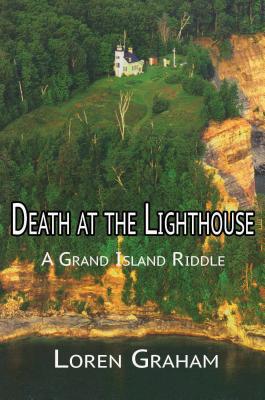
No-Nonsense Nonfiction: Death at the Lighthouse

Reading local books is always cool because the reader can recognize the places mentioned or alluded to, or perhaps knows the people in the book (when nonfiction) or people that inspired characters (when fiction).

The book I would like to tell you about today, Death at the Lighthouse by Loren Graham, is set on Grand Island, near Pictured Rocks National Lakeshore and the small town of Munising.  While I have not visited Grand Island, I saw it six days a week during the past year.  Now that I am no longer working there, I will tell you that I was a library assistant at the library in Munising.  So there were locations in this book that I knew, and family names that I recognized.  I admit, that makes it more interesting.


Statistics
Checkouts: 2 at the small public library where I am the director
Typical reader: True crime fans, fans of the author, residents and tourists of the area
Do the Dewey: 364.15 (true crime)
Source: Snowbound Books

Synopsis: In the early 1970s, the author and his wife bought the Old North Light on Grand Island, Michigan, as a summer home.  During the early renovations, they discovered that the lighthouse keeper and his assistant were allegedly murdered in 1908.  Graham spent years researching what had transpired, and this book is the result.

My Goodreads rating: 3 stars

In June 1908, the assistant lighthouse keeper from North Light of Grand Island turned up dead in a battered boat, looking like he'd been beaten to death and set afloat.  The lighthouse keeper himself was missing, and turned up weeks later, dead on a beach.  What happened?

Good question.  The author delves deep into not only the deaths of the men, but also the history of the Upper Peninsula and Munising, the clashing, multi-ethnic cultures of the denizens, and the lives of the imperious tycoons that established industries and towns.  This is a fascinating read, if you like a bit of true crime in your history, rather than the other way around.

But was there a crime, and whodunnit?  The conclusion the author drew took me by surprise.  Maybe it's accurate.  Maybe not.  If you read this book, please let me know what you think.

Monday, July 22, 2013

Manga Monday/Graphic Is Great: Kurosagi Corpse Delivery Service

Ah, summer reading programs.  Love them or hate them, anticipate them or fear them, if you're in the business of public library science, they are unavoidable.  Personally, I embrace them, as they get people reading, enhance statistics, and are good publicity.  At the little library where I'm director, the summer reading program has been going great, with more than 100 children signed up to read and earn prizes.  There are smaller programs for high school students and adults, too, with the potential to win prizes from drawings at the end of the program.

My hometown library also has a robust summer reading program for adults, and since I don't work there, I can participate.  Every checkout of books or audiobooks gets me an entry slip that I can fill out and put into a prize box of my choice.

And the easiest way to get in a lot of entry forms is reading manga.  Which brings us to this review.

Statistics
Checkouts: N/A
Number of volumes available: 13 in English, 17 in Japanese (ongoing)
Typical reader: Adults who like dark, edgy manga
Source: My local library

Summary: Five students at a Buddhist university are united by unique skills - some mundane, some supernatural - involving the dead.  They form a business of getting corpses to wherever they need to go to free the souls.  Sometimes they profit from this.

My Goodreads rating: 4 to 5 stars

As I tend to review books for the school library setting, let me say this right off the bat: This series is not for children, or even most teens.  It is a very adult horror series, with graphically portrayed dead bodies, full frontal nudity (mostly on corpses), violence, and occasional sex.  The last couple of volumes available have "PARENTAL ADVISORY: EXPLICIT CONTENT" stickers on the covers.  Get over the American idea that comic books are for children.

That said, if you're into dark horror with macabre humor and plenty of social commentary, that keeps things fresh and interesting, this is a great series.  Thirteen volumes are available in English, with more to be translated, and the series is ongoing in its home country.  I was a bit sad to finish volume 13, and hope that the fourteenth will soon be ready stateside.

Most volumes are filled with vignettes of cases that the team takes, which are often one to three chapters long.  (Volume two is a single story arc.)  The stories are influenced by a variety of sources, from traditional lore to urban legends, and from cultural quirks to ripped-from-headline sagas.  The manner of storytelling, and the fact that many jobs do not actually lead to money, makes this series a bit reminiscent of the classic anime, Cowboy Bebop.

Don't miss the glossary and notes at the end of each volume!  I had initially just skimmed the one in the first volume, until I got to one peculiar note.  "196.1 FX: PAKIII - sound of a bolt falling through glasses at terminal velocity into eye socket." (Volume 1, page 215)  Whoa, that's pretty specific.  So I read the rest of the notes.  They're worthwhile, for the humorous specificity as in the above quote, and also the interesting trivia they impart about aspects of Japanese culture, history, locations, and lore that I had previously known nothing of.  You can really learn a lot from the notes.

Which brings me to a last aspect I want to bring up.  While it's not to the level of Gantz for dark social commentary, Kurosagi Corpse Delivery Service definitely is -not- afraid to touch on taboo subjects.  Not only does the team go searching for suicide victims in Aokigahara Forest, they also deal with the Iraq War, the remnants of the biological weapons research the Japanese committed in Occupied China during World War II, the Japanese justice system, illegal immigration, athlete doping, infanticide, and more.

In sum, if you like dark humor, social commentary, and vengeful reanimated corpses, check out this series.


Manga Mondays is a meme used by many book review blogs, and is sort of hosted by Alison Can Read.

Sunday, December 9, 2012

Guilty Pleasure: A Game of Thrones (the book)

Hello, I'm back!  I hope you didn't miss me too much during my hiatus.  While I did not get much writing done, I did do a lot of reading - 835 pages worth in one book alone.  Let me tell you about this behemoth, known as A Game of Thrones in the Song of Ice and Fire series by George R. R. Martin.

(Note: video, screenshots, and music of A Game of Thrones from HBO, all rights and such are theirs.  Please don't eat me.)

Statistics
Checkouts: Not owned by the charter school library
Typical reader: Fantasy aficionados who are not daunted by reading a paper brick; fans of the show on HBO
Source: Birthday present

Synopsis: ... You want me to summarize a book that's more than 800 pages?  A lot happens!  The main plot involves the Stark family of the north, as their lord Eddard is invited south by his old friend, King Robert Baratheon, to be the Hand of the King; political intrigue and dark family secrets abound.  Meanwhile, his illegitimate son, Jon Snow, goes north to the Wall to nobly protect the Seven Kingdoms from whatever lies in the frozen wastelands beyond.  Finally, an exiled, deposed princess struggles to find her place in the world.

My Goodreads rating: 5 stars

I believe I've mentioned before that I really enjoy fantasy, but it's a turnoff that so many adult fantasy novels are massive tomes.  Several of my friends rave about this series, though, and with them I've watched the first two seasons of A Game of Thrones on HBO.  The show, which is very good (though very adult), swayed me to read what it was all about.

Kudos to everyone that made the first season of A Game of Thrones happen.  It followed the book very well, giving superb visualizations to the text.  Some scenes are even on Youtube, and worth revisiting from time to time, like Tyrion the Imp smacking his nephew, Prince Joffrey.  (The video below loops the slapping, because it's just that satisfying.)


What could the show have done better, to be more accurate?  It needed more dire wolves and less prostitutes.  While there is certainly sex in the book, the show added plenty more, of many varieties, to meet a sort of cleavage quota or something.
In the book, Tyrion liked to read.
In the show, Tyrion liked bed sport.
To focus on the novel itself, this masterfully crafted brick of a book is told from multiple third-person-limited vantage points to paint the wide world and intricate plots from the eyes of those involved.  Many of the Stark household are focused on, as well as Tyrion the Imp, brother-in-law to the king, and Daenerys Targaryen, the last descendant of the former ruling house.  Fall in love with them or revile them, these main characters and the dozens of supporting cast are well-rounded, deep, flawed, and utterly exquisite.

Do you like complex plots, with plenty of intertwining stories and facets?  This is an excellent book for these reasons.  A myriad of events, dealings, scandals, mysteries, magic, schemes, and dreams occur.  If you like a well-described world, it can be found here.

I could go on and on about this book, but maybe I'll just dance about it instead.


Monday, October 29, 2012

Marvelous Michigan Month: Guest review of Infected

Welcome, readers, to my first ever guest review!  Today's guest reviewer is my boyfriend.  He has a blog that reviews comic books, games, and movies.  Please visit him.  :)


Hello, Internet.  I'm IX_of_Swords, and today I'm going to offer up something different from what you normally find on Moonlit Librarian's blog.  The book I'm going to review is most certainly not for kids, but it does fit in nicely with the Michigan month she has going, so without further ado, I'm happy to recommend Infected, by Scott Sigler.


While Scott Sigler currently resides in California, he was born in Cheboygan, Michigan, and most of his novels take place somewhere in the state.  Infected is set mainly in Ann Arbor, where signs of a strange plague have been showing up.  People who end up infected quickly develop violent psychotic, and paranoid tendencies, frequently killing themselves and those around them before they can be taken in for treatment or questioning.  To make matters even more disturbing, their bodies decay to nothing but skeletons, black sludge, and a strange green mold in a matter of days, if not hours after death.  The handful of victims that have been observed before they've rotted away have all exhibited strange, blue, triangular growths on their bodies--the only known symptom before they turn violent.

Something is obviously going terribly, terribly wrong, and while the government has been able to cover up the disease so far, time is clearly running out.  Infected is the story of a race against time to diagnose and combat an unnatural parasite, as well as the tale of one poor bastard named Perry Dawsey who's found himself afflicted with the Triangles.

This book falls solidly into the genre known as "body horror."  If you're unfamiliar with the term, it's when a story centers around not monsters, serial killers, or any external threat, but on something going wrong with (and often inside) your own body.  While you can run from a savage beast out to kill you, that isn't an option when there's something horrible growing inside you, feeding off your very flesh.  It's that lack of an escape option that makes this genre particularly terrifying, and Sigler takes it to a whole new level in Infected (and its sequel, Contagious).  As the Triangles slowly start to take over not only Perry's body, but also his mind, you will likely find yourself by turns cheering for him as he struggles against them, and hating him at the times when he gives in to their influence.  Sigler weaves a story that is tense, suspenseful, and that will definitely have you squirming at points (who would have thought the words "chicken scissors" could hold such a sense of foreboding?).  If you have a strong stomach, and you like your horror on the visceral side, I can't recommend Infected highly enough.

Monday, October 8, 2012

Marvelous Michigan Month: A Cold Day in Paradise

Welcome to my Marvelous Michigan Month!  Today I would like to tell you about an adult book, which I listened to on CD.  It is A Cold Day in Paradise by Steve Hamilton, a mystery novel set in a little town in the Upper Peninsula of Michigan.

Statistics
Michigan connections: Mr. Hamilton is a Detroit native (currently living in New York state), and the book - as with most of the series it kicked off - is set in Paradise, Michigan.

"A" points to Paradise. Screenshot of Google Maps.

Checkouts, charter school: no checkouts of the paperback yet
Checkouts, school/public: 28 audio, 80 physical
Series checkouts, school/public: Too many, don't ask. LOL
Typical reader: Adult mystery lovers, adults looking for local fiction
Source: School/public library

Synopsis: Former Detroit police officer Alex McKnight has settled into a quiet life in a cozy cabin in the woods near Paradise, Michigan, but a lawyer friend in the Soo (Sault Ste. Marie) talks him into becoming a private investigator.  That isn't so bad, until it gets McKnight involved in a series of murders in the area that have more than just a little reminder of why he retired.

My Goodreads rating: 4 stars

A coworker strongly recommended this book, and it's hard to escape the fact that this is an incredibly popular series around here.  If I were to focus instead on adult patrons and what they read, I'd have to include this.  The Alex McKnight series currently includes nine books, all of which circulate heavily.  And it's like that all across the U.P.  I'm sure my middle school students will start checking it out later this school year, when they need Michigan-related books to write reports on.

That said, I have mixed feelings about this book.  The first half was good, and I began to think that maybe there are mystery novels out there that I might actually enjoy.  But then it began to drag, and I thought the mystery was solved with two CDs left to go.  I was wrong, but still.  While having the protagonist of a mystery be someone actually capable of solving crimes is something that makes a mystery novel more tolerable, McKnight was still making stupid mistakes.  That irritated me.

The audio version of this is quite enjoyable.  Dan John Miller, the reader, offers a good mixture of tones and accents.  The Yooper accent is not played up too heavily.  We Yoopers don't all sound like we're straight out of the movie Fargo, and we appreciate it when we're not portrayed as such.  I gather some later books in the series are narrated by someone different, who does make us sound completely ridiculous.

This is a good book to review this month, as the story begins in late October.  If you're not from around here, you'll learn a bit about our November weather, and the storms Lake Superior gets that time of year.  (See also Gordon Lightfoot's song, The Wreck of the Edmund Fitzgerald.)  By the way, we had our first snowfall of the season last weekend.

Wednesday, September 26, 2012

Cover-to-Cover Commuting: Sharpe's Tiger

In listening to audiobooks this summer, I rediscovered my love of historical fiction.  I read it often as a child, and there's a lot of great historical fiction available for all ages.  It's also something that I can use to relate to my adult patrons at the school/public library with; many enjoy historical fiction.  And it's something that appeals to both genders.  Many genres attract a certain demographic: romances are read mostly by women, thrillers by men, and so on.  There's less of that divide with novels based on historical events or set in past time periods.  True, a woman might be more likely to pick up a queenly novel by Philippa Gregory, and a man would probably gravitate toward a Civil War tome by Jeff Shaara, but many people across the span of ages and genders feel drawn to stories set in olden days.

Let me share with you a historical audiobook I recently had the pleasure of hearing.  It's Sharpe's Tiger by Bernard Cornwell, and is the first in the series about a man in the British army, beginning in southern India in 1799.

Statistics
Checkouts: not owned by either library
Typical reader: Men interested in historical war fiction
Source: Interlibrary loan

Synopsis: It's 1799, and Richard Sharpe is a young private in the British army, stationed in India and marching to battle the Tippoo Sultan of Mysore and his French allies at Seringapatam.  He is rescued from the flogging post to go on a secret mission behind enemy lines to free a captured general, or at least glean vital knowledge from him to aid in the coming conflict.  Accompanying him on this quest are Lieutenant William Lawford and Sharpe's lady friend, the widowed Mary Bickerstaff.

My Goodreads rating: 5 stars

I have one little quibble with this book in audio format, so let me get that out of the way first.  As you may have noticed in the synopsis above, there are a lot of names involved that are difficult to spell.  An audiobook is not going to spell those out for you.  Nor is there a map to look at while you're listening, as there would be in the physical book.  Much thanks to the other reviewers on Goodreads who actually mentioned stuff by name.  (Also, Seringapatam is under a different name these days, like many other Indian cities; thankfully, Google maps recognizes that Seringapatam of old is now Srirangapatna.)

The flip side of this problem is something that really made the listening experience great: the voice actor.  Physical books don't have voice actors, of course, and do not give the readers the full flavor of the various accents and tones encountered in a given tale.  Sharpe's Tiger on audio, narrated by Frederick Davidson, takes the listener around the British Empire and then some.  Mr. Davidson manages English, Irish, Scottish, French, and Indian accents, as well as different voices for the various and sundry cast.  I particularly loved the Scottish generals: "Mah name is David Baird.  B-A-I-RRRRRR-D."

Mr. Cornwell did a lot of research into the Siege of Seringapatam, and it shows in more than just the historical notes at the end of the novel.  Details are meticulously accurate, with a mixture of real people - the Tippoo Sultan, Major General Baird, Colonel Arthur Wellesley, and others - and fictional - our hero Richard Sharpe, the French Colonel Gudin (much thanks to Sharpe's Compendium, as I thought it was Gouda before I looked it up), and the nefarious Sergeant Obadiah Hakeswill.  The novel stays true to most events, with some liberties to make Sharpe the British Forrest Gump of the conquest of India and the Napoleonic Wars.

Much thanks to IX_of_Swords for the art.
This book has some memorable characters.  The most notable is Sergeant Obadiah Hakeswill.  He's worth swearing over, despite the fact that my parents read this blog (Hi!).  This sergeant is a complete rat bastard, the lowest of low.  He is at once utterly despicable and amazing.  Sergeant Hakeswill hates Sharpe and will do anything to bring him down, if not outright kill him.  And that just scratches the surface of this wretched man.  This is more than just a crusty sergeant that bellows at his subordinates and makes their lives miserable; he takes pleasure in doing so.  He has a complex, to put it mildly.  In his youth, he had survived a hanging, and he believes that he cannot be killed.  He also follows many of his orders and opinions of how things should be with, "Says so in the Scriptures."  Clearly, the man has never read the Bible.  It was downright glorious when a superior officer points this out to him.  He is horrible, but he's also one of the best-written villains I've ever read.  This man deserves an award.

If I base my reviews and ratings of audiobooks on this one, there will be far fewer 5-star books.  This is one that I can rave over (as shown above) and highly recommend.  I'm eagerly awaiting the next audiobook through interlibrary loan.

Wednesday, July 25, 2012

Cover-to-Cover Commuting: Sex on the Moon

As I said before, I'm on a bit of a true crime kick this summer.  Sex on the Moon by Ben Mezrich has a catchy title and quite the different premise from the usual murders that are found in the 364 Dewey section.

Unfortunately, as I was writing this review, I happened upon some information that made me feel duped.  While this is no Million Little Pieces, it is an embellished tale.  Entertaining, yes; entirely factual, no.  The author did not do his homework for this book, which seems mostly based on interviews with the criminal behind the caper.  It drops my rating.

(As Wikipedia puts it, "Testimony given [for a National Geographic show] is at odds with some of the key claims made in Ben Mezrich's account.)

Statistics
Checkouts: Information unavailable
Typical reader: True crime fans and those drawn by the title
Source: Checked out from my local library

Synopsis: Thad Roberts, a daredevil and an up-and-coming fellow in a prestigious NASA program, risks it all to perform a most audacious heist - stealing moon rocks gathered by the Apollo missions.

My Goodreads rating: 3 stars

Thad Roberts is an idiot of a genius.  After a rough and rocky start to adulthood, allegedly getting kicked out of the Latter-Day Saints' missionary training as well his family, and marrying young and penniless, he decided to be an astronaut and set about achieving that goal.  He managed to land an internship several years in a row at the Johnson Space Center in Texas.  It was there that he came up with a wild, extravagant heist to impress his girlfriend - the liberation of moon rocks from a secure safe in one of NASA's most secure buildings.  Then he went and promptly got caught in a sting operation by the FBI.

The book is exciting in parts, particularly the execution of the theft itself, and dry and dull in others.  It lacks the complete story; apparently Mr. Mezrich only interviewed Roberts and Axel Emmermann, the Belgian rock collector who contacted the FBI about someone trying to sell moon rocks.  From what I've read elsewhere, both men are portrayed as greater than they really were.  The characterizations of those involved are actually quite the caricatures.  If you go by this book, the other interns had dull lives before Roberts spiced things up with camping trips, skydiving, and such.  And all the female interns were blonde and buxom beauties.  (Speaking of the female interns, I don't know why his girlfriend and other accomplice's names were changed, considering they also were charged in the heist and their names are matters of public record.)

I did not particularly enjoy the audiobook's narration.  Casey Affleck has a rather gravelly voice.  His diction is clear, though, and he differentiates between speakers.  It did not deter me.

In spite of being embellished, this was still an interesting book to listen to.  As I previously stated, the execution of the heist was exciting.  Learning a bit about NASA, the Apollo missions, and the moon rocks was also interesting.  If you want to read or listen to this book, just take it with a grain of salt.

Wednesday, July 11, 2012

Cover-to-Cover Commuting: Two books by Ann Rule

Ann Rule is one of the leading true crime authors in America.  I came across her work some years ago, when her book Green River, Running Red needed repair at the small library where I worked.  After fixing the binding, I checked it out and was engrossed in the story of the Green River Killer.  It was at once horrific and absorbing.  Adding to the intrigue of the book is that, as with her more famous work, The Stranger Beside Me (about Ted Bundy), Ms. Rule had unknowingly met the man she'd one day profile as a horrific serial killer.

While I don't care for mysteries, true crime stories and TV shows such as Forensic Files are fascinating.  So as I began my foray into audiobooks, I've gravitated toward this genre of nonfiction.  Two of the first books I listened to were by Ms. Rule, which I shall review here today.

Statistics
Checkouts (school/public library): 32
Typical reader: Fans of true crime and/or Ann Rule
Source: Checked out from the school/public library

Synopsis: Two children die in a house fire in Prairie Village, Kansas.  The fire was intentionally set - by their own mother.

My Goodreads rating: 4 stars

Statistics
Checkouts (public library): 60
Typical reader: As above
Source: Checked out from my "home" public library

Synopsis: A Southern belle tears her husband and his family apart with lies, manipulation, deception, robbery, and more.

My Goodreads rating: 4 stars

These two books pair together well.  Both are about strange, conniving women who ruin the lives of those close to them.  The tales are complex and twisted.  And both are abridged in audiobook format, much to my dismay.  (Most audiobook versions of Ms. Rule's books are abridged, it seems.)

Abridgement is when a book is shortened.  Many classics are abridged, including in the kid-friendly Great Illustrated Classics series.  It is also common with audiobooks.  You get the flavor of the book, and most of the story, but without the length and little details.

While Bitter Harvest seemed like a complete story, I felt like I missed something with Everything She Ever Wanted.  Having not read the print version, I'm not sure if there was a chunk left out of the story that could have otherwise enhanced it, or if it was just that confounding.

These books are narrated by different readers.  Before listening to them, this puzzled me somewhat; typically, the books of a particular author will be read by consistent talent, be it one particular voice actor or a full cast (provided that the recording/publishing company remains the same).  However, the change makes perfect sense.  Bitter Harvest is read in a Midwestern accent, befitting the Kansas location, while Everything She Ever Wanted is read in a delicious Southern drawl.  These were excellent choices by the crew at Simon & Schuster Audio.


These books ended up starting my true crime "kick" this summer.  While I'll still be reading and reviewing children's and YA literature, I'll also be highlighting a number of books in this nonfiction genre, both in audio and print formats.

Also coming soon, I'm interviewing an author of local interest.  Stay tuned!

Wednesday, February 29, 2012

Guilty Pleasure: The Millennium Trilogy

For our two-year anniversary last month, my boyfriend gave me Steig Larsson's Millennium trilogy in hardcover.  He's so sweet.  :)  I flew through one book after another in about three weeks, and am happy to review the trilogy here.


Statistics
Checkouts: Not owned by the library, nor will it be due to content
Typical reader: Fans of thrillers, conspiracy theories, and particularly for the second book, the Kill Bill movies
Source: An awesome gift from an awesome boyfriend

Synopsis: Millennium journalist Mikael Blomkvist and antisocial hacker Lisbeth Salander find themselves in interesting situations with big stories to unravel.  The Girl with the Dragon Tattoo tackles skeletons in the closet of a business mogul's family.  The Girl Who Played with Fire sees the murders of a journalist and his doctoral candidate girlfriend as they work on a sensational expose of prostitution and human trafficking; we also learn a lot about Lisbeth's past.  The Girl Who Kicked the Hornet's Nest picks up where the second book left off, and explores a heinous government conspiracy.

My Goodreads ratings: 4 stars for the first and third; 5 stars for the second

Since I'm reviewing roughly 1,500 pages worth of material, I'm going to stick to the highlights.

I really, really enjoyed Lisbeth Salander's character. She's one of the best anti-heroines I've come across in quite a while.  Highly misunderstood and antisocial, her intelligence is superb and her sense of justice is ruthless.  Her back-story is deeply hinted at in the first book; the second book delivered that which I thirsted for in spades.  And then the third book picks up right where the second one finished, so I just had to know the rest of her story.  While each book has a distinct plot with many side-stories, the driving force is the strange, tattooed young woman at the center of the maelstrom.

The prose is solid and full.  It's thick, informative, detail-oriented.  I learned more about various aspects of Swedish culture and government, as well as the mathematician Fermat and his last theorem, than I might have otherwise.  Sometimes it seems to go off on strange tangents, it's true; I have in my notes that the rant about construction prices in Hornet's Nest was a bit ... interesting.

There are two plot elements I particularly found attractive: investigative journalism, and revenge.  The former is an old interest of mine; back in high school I wanted to be a journalist, and even covered a few of the more interesting stories for my high school newspaper.  Investigative journalism also can uncover society's flaws and put them under a microscope.  It can also lead to wanting to read more about a subject: Played with Fire could lead a curious reader to an excellent book such as Half the Sky, which (among other things) discusses how prostitution and prostitutes are treated in Sweden.  The latter plot element, revenge, makes for exciting storytelling.  It rages throughout the trilogy, especially late in the second novel.  It's no "roaring rampage of revenge" a la the Kill Bill movies, but there are some satisfying scenes if that's your cup of tea.

A third overarching theme is the Swedish title of the first book: Men Who Hate Women.  I'm a little hesitant to touch on this, because it seems to be a bit of a spoiler, especially in the first tome.  But it's too large a plot element to ignore in this review; it compels Lisbeth to act against these men who hate women.  And there are plenty of males that fill the bill.

Which brings me to a man in the series who did not hate women: Mikael Blomkvist.  Mikael is the other protagonist of the trilogy, who did not pique my interest as much as his co-protagonist did.  He's the journalist, and a ladies' man; while he's intelligent and a nice guy, he just falls a bit flat for me.  There's nothing wrong with him, per say, but his character doesn't grow at all.  He is, in a word, blah.  What he does can be interesting, particularly his dogged pursuit of the truth in his career, but he's just a milquetoast.

Monday, February 6, 2012

Guilty Pleasure: A Zombie's History of the United States

I was in the mood for a zombie book recently, and browsed my local library's catalog for such things. A Zombie's History of the United States by Dr. Worm Miller (I hope that's a pseudonym) came up, and I decided to give it a try.  Here's my review.
Statistics
Checkouts: Not available at the school library.
Typical reader: Zombie fans with some knowledge of, and interest in, history
Do the Dewey: Shelved at 973 MI (American history) at my local library
Source: My local library

My Goodreads rating: 3 stars

This parody offers an alternative history of several events throughout American history with the presence of zombies.  Sounds interesting, right?  Well ... once you get past the first couple vignettes, it is.  The preface had me skeptical, though I did enjoy pondering how zombies may have come to North America via the land bridge in the Bering Straits with the early peoples who would become Native Americans.  The colonial pieces were dull.  I might actually recommend skipping them.

My interest was firmly piqued with the story of Lewis and Clark, which offered a story where Lewis was extremely interested in studying the undead and experimenting with a cure.  Eventually he was bitten and experimented on himself - and became an undead hybrid, with his human wits about him but the hunger for flesh and the lack of a pulse of a zombie.  Creative?  Oh, yes.

The value of this book lies within that creativity.  Miller takes various famous events and sticks zombies into the fray, sometimes even altering famous quotes slightly to include references to the undead.  There are zombies at the Alamo, zombies interfering with the Transcontinental Railroad, zombies being wrestled by Teddy Roosevelt, and zombies fighting Nazis.  I'd endorse the passages regarding the 1800s the most.

Parodies often seem to be for those who don't worry about political correctness.  This book is no different - but may cross the line in a few places.  It's a little uncomfortable to read a book that glosses over history so that the real issues are hidden.  Zombies are the target of Jim Crow laws and the Ku Klux Klan.  They are the beings that would be rounded up to exist in the Oklahoma Territory.  Agent Orange is replaced by zombification spray in the Vietnam conflict.

While I often wondered if this book would be good for high school students, to raise their interest in real American history, there's too much hesitation because of the lackluster passages in some portions of the book, and the way it shrugs off important issues.  There are better-written historical rewrites that don't play as fast and loose with accuracy as this book does.  Interestingly, what comes to mind are the source-books for the old World of Darkness role-playing games, such as Werewolf: the Apocalypse and Vampire: the Masquerade.
Want a good reinterpretation of history? Try an RPG book.

Sunday, February 5, 2012

The Hunger Games v. Battle Royale

I read the manga Battle Royale last summer, and now that I've read the first novel in the hit trilogy The Hunger Games, I can't resist making a bit of a compare-and-contrast review.

Synopsis for both: A cruel government keeps its citizens in check by having a yearly "game" pitting dozens of teens against each other in a battle to the death.  This brutal game is shown on live TV.  There can be only one victor.


Statistics
Checkouts: 10
Series checkouts (trilogy): 22
Typical reader: This ranges from older elementary boys, to high school girls, to classroom aides. There is no typical reader.
Source: Follett for the school, gift for my copy
Statistics
Checkouts: Rated M, this does not belong in a school library.
Series checkouts (15 manga): Seriously. This puts "graphic" in graphic novels.
Typical reader: Fans of Japanese gore fests
Source: Local public library
My Goodreads rating: 5 starsMy Goodreads rating: N/A

While reading Battle Royale, I realized that what I'd heard about The Hunger Games sounded a lot like this manga.  That's absolutely true, at least on the surface.  The plot, as shown in the synopsis above, is interchangeable.  What's different, besides the medium used to tell the story and the language/country of origin?


The main characters: Katniss of The Hunger Games is one of those YA heroines that I can really get behind.  She's a survivor, strong and tough.  When her little sister's name is drawn to participate in the Hunger Games, she refuses to let that happen and volunteers in her stead.  She is a skilled huntress and keeps her wits about her throughout the ordeal.  And she remains true to herself!  I don't want to give anything away, but I was proud of how she handled things at the end of the book.

Shuuya of Battle Royale is a student in an ill-fated class that's drugged on a field trip and sent to a deserted island for this story's battle to the death.  He is a musician - which is rebellious in this dystopian Japan - and quite nonviolent; he would prefer to avoid killing his classmates at all costs.  Joined by a female classmate, Noriko, whose wound he dresses after she is shot before the game even begins, Shuuya tries to recruit and save other classmates in an alliance.  Only the transfer student, Shogo, joins them for long.

Perspective and style: The Hunger Games is a novel written in limited third-person, focusing on Katniss.  Most of the deaths occur "off-screen," except for the battle near the end of the Games.  Battle Royale covers every one of the 42 students in the game, including offering back-stories on several of the contestants.  It is one of the most graphic, explicit sequential art pieces I've ever seen.  Most of that is violence, but there's also some nudity and sexual situations.
This is one of the less gory death scenes.
Outside aid and restrictions: The students in Battle Royale each start with a backpack of supplies and one random weapon.  They are equipped with collars that track their movements and transmit their vital statistics to those who run the show.  If no one dies in a 24-hour period, someone's tracking collar will detonate; this will also happen if a student strays into an area announced as being off-limits.

The competitors in The Hunger Games have it easier by far - if they survive the initial rush for supplies, and the bloodbath that ensues.  Katniss grabbed a bag and ran, narrowly escaping death.  After that, those who impressed the audiences in the Capital may be sent gifts via their sponsors.  These can really come in handy.

Movies: Battle Royale was made into a movie before it became a manga; both are based on a novel of the same name.  The movie was released in Japan in 2000.  The Hunger Games movie will be in theaters next month.

Sequels: The Hunger Games is part of a trilogy; I look forward to reading the next two books.  Battle Royale has a sequel manga series, Blitz Royale.  I've seen some art from it, and it's not as good or realistic.

Who I would give the book to: As I said in the statistics, there are older elementary students who read The Hunger Games.  That's pretty acceptable.  Battle Royale, on the other hand, fits well into my "Guilty Pleasures" category and would best go to mature adults who like manga filled with violence and social commentary, and Quentin Tarantino's films.

Tuesday, December 27, 2011

Most Disappointing Books of 2011

Life's too short to read bad books.  They're sometimes unavoidable; we've all had to read a book for a class at some point that we absolutely couldn't stand.  But once you get past the requirements, there's no reason to waste your time on books that aren't worth reading.

Here are the books I simply could not finish in 2011.

It's Elementary: When You Reach Me by Rebecca Stead
This book won the Newbery Medal in 2010.  Normally, that's a sure sign of quality.  You can typically rely on books that win the medal, or honor (runners-up), to be excellent.  When You Reach Me just bored me, though.  I put it down at about page 39.

No-Nonsense Nonfiction: In the Company of Cheetahs by S. K. Niel
Oh, I wanted to like this book!  I love cheetahs, and practically did a happy dance in the public library when I found this on the shelves.  Unfortunately, I couldn't get even ten pages into this book.  I really wanted to read about the Cheetah Conservation Fund and its work.  This is badly in need of proofreading!  I could not get past the horrible writing or the overuse/misuse of italics.

Guilty Pleasures: Hit List by Laurell K. Hamilton
(Sorry, this one gets a little long and rant-y.)

I put up with the Anita Blake series as long as I could.  (Granted, I started reading the series only a couple years ago, but I read 19 and a half books.)  The first several books, written before 2000, were really good.  Anita was an interesting character - a strong heroine that could really kick butt, and had high morals.  Back then, she was a good necromancer who had a lot of plots surrounding her job for a company that helps settles wills and the like by raising zombies to answer questions and such.  She was a love interest to a powerful vampire in her hometown of St. Louis, Jean-Claude, who she inadvertently helped into power in the excellent first book, Guilty Pleasures.  A few books in, a hot new guy by the name of Richard Zeeman entered the picture.  He was not only hot, but also a closeted werewolf who was powerful enough that Anita didn't realize for most of the book that he was a werewolf.  A love triangle emerges, then a power triangle, bonding the necromancer, werewolf, and vampire together.

Then around 2000, Laurell K. Hamilton went nuts.  There's an interesting obsession with rape that crops up in both this series (despite the author's insistence to the contrary, we fans know that when Micah didn't take "no" for an answer in Narcissus in Chains, it was rape) and in the first book of the Meredith Gentry series.  The series took a turn from good plots and enjoyable writing to erotica with a dash of plot.  One or two books after this were okay to good, such as Skin Trade.

I kept holding out hope for the series because I liked Anita Blake so much as a character, despite how much I hated what the author was doing to her.  After the nineteenth book (Bullet), I was fed up with the lack of plot - or in that book, the recycling of old plot - and the lack of proofreading/fact-checking against previous novels.  But then I read good reviews of this year's release, Hit List.  It features Edward, the all-human, mostly-psychopath, bounty hunter that trained Anita and would love nothing more than to have a fight to the death with her someday.  I gave it a shot.

Really, I got two-thirds of the way through this before I gave up.  I was probably being far too generous with my time on this one.  But then the book introduces a character for a second time, and when a mixed-color weretiger up and loses one of his established colors, 100 pages after he's been established, I just can't take anymore.  Plus, Edward's been pretty much neutered.  But hey, that's what this series has gone and done with every flipping male in the series.


Don't worry.  Laurell K. Hamilton hates her fans as much as we hate her.  I'm glad I never bought one of her books.  She has nothing but contempt for her readers, and there's proof on her web site.

Monday, November 7, 2011

Dystopias and Dead Things: 99 Coffins (Guilty Pleasure)

Now that the book fair is over, I can get back to book reviews!  I'm also focusing on a particular topic this month for various reasons.  Welcome to "Dystopias and Dead Things," where I will be reviewing books that fall into these categories.  More on this after the book review.

Here is my opinion on 99 Coffins by David Wellington, the second in his in his Vampires series starring Laura Caxton.
Statistics
Checkouts: I own this one; there's no way I'd put this series in a school library.  Actually, you can't find any of this series in -any- U.P. library.
Typical reader: Horror fans, people that like their vampires to actually be scary

Synopsis: After the events of 13 Bullets, Laura Caxton wants nothing more to do with vampires.  Ever.  So of course an archaeology class in Gettysburg finds 100 coffins buried under the famous Civil War battlefield, all with a vampire with its heart removed inside.  When Caxton and the quintessential curmudgeon of a vampire hunter, Jameson Arkeley, investigate, one coffin is destroyed and the vampire from within has vanished.  Caxton must save the historical town from a potential army of the nastiest vampires literature has ever seen.

My Goodreads rating: 5 stars

If you're tired of the dreamy, moody vampires of modern paranormal romance or even the mysterious, villainous vampires of Dracula's ilk, and want vampires that are genuinely scary, you need to read this series.  No ifs, ands, or buts.  There's no sparkle here.  David Wellington's vampires are bald as cue balls, have teeth that are more similar to a shark's than to a human's, are far more likely to rip your head off than to daintily pierce an artery to get a drink, and dissolve into a disgusting soup of mush and maggots during the day.

This is the second book in the series.  The first is 13 Bullets, which is also a great read and I would highly recommend it.  99 Coffins picks up a year later, as Caxton, a Pennsylvania state trooper, is trying to escape the nightmares and avoid fans of the movie that was made about the events of the first book.  (Either Wellington dreams of movie deals for his books, or he likes toying with the fourth wall.)

I was a bit curious about this sequel, as it's billed as a "historical vampire tale."  It works!!  The story goes back and forth between Caxton's investigation and dealings with the vampires and her incorrigible mentor, Arkeley, and accounts from soldiers 150 years earlier during the Civil War.  I was really impressed.

Please do yourself a favor and read this stuff in the right order.  -Do not- touch the third book in the series, Vampire Zero, because the back cover gives away a massive spoiler about what happens in this one.  There was probably a neat twist in this book, but alas, I had accidentally read the spoiler while trying to figure out which was the second book.  For what it's worth, 23 Hours is the fourth book in the series.

If you like high-impact action with a bit of mystery and excellent, flawed characters, this series is second to no other vampire tale.


Now, about this month of dystopias and dead things.  It is my goal to read and review novels that are dystopian fiction, zombie/ghoul/vampire tales, or both.  I've got quite a selection to get through.  Anticipate hearing about the second in the Benny Imura series, Dust & Decay, by Jonathan Maberry.  Bite your nails while you wait for my review of a book I've been looking forward to since January when I read the first in the series - Crossed, the sequel to Matched by Ally Condie.  Await a critique of The Forest of Hands and Teeth, a zombie novel with an awesome title by Carrie Ryan.  And maybe more.

This goes together with my National Novel Writing Month (NaNoWriMo) project.  I'm writing a high fantasy medieval zombie apocalypse.  It's day seven and I've got over 10,000 words written!  Maybe some day other book review bloggers will be telling you all about my work.

Happy November!

Tuesday, October 25, 2011

Guilty Pleasure: The Zombie Combat Manual

Happy Halloween!  I'll try to get another seasonal book review up by the actual date, but I'm really busy these days.  Here's a review of The Zombie Combat Manual by Roger Ma.
Statistics
Checkouts: Definitely not owned by the library (though I could see far too many of my war and weapons obsessed 3rd grade boys wanting it)
Typical reader: Zombie fans
Do the Dewey: 818.607 (miscellaneous modern writing)

My Goodreads rating: 5 stars

According to the back cover of this book, most individuals will have to destroy this undead opponent without the aid of a firearm.  This is logical.  You'll run out of bullets.  Your gun will jam.  You'll wake up to find zombies breaking into your house and your gun will be out of reach.  What should you do?

You should read this book and be prepared to take on zombies with an assortment of melee weapons that are readily available and know how to fight at a variety of distances, as well as how far you need to run to get some down-time, the best infant protection/mobility options, and what's fact and what's fiction about the zombie plague.

I haven't read other zombie survival guides, but this seemed like an excellent, well-rounded manual.  The anecdotes included are far superior to those in Max Brooks' World War Z, because this book actually gives its characters flavor.  I was frustrated while reading World War Z because, while it was interesting for the history, it really lacked any differentiation between speakers.  A Texan would give an account with the exact same lexicon as a South African or a Japanese person.  The Zombie Combat Manual never had that problem.  The survivors' stories were engaging and gave the book a decent plot, despite not being a novel.

The author really put a lot of thought into not only combat systems and survival tips, but also into how his zombies functioned and what happened in the zombie apocalypse.  The first chapter wastes no time in getting into the facts and myths about how zombies work.

If you're worried about zombies, or need a good reference tool for writing your own zombies novels, this book is a must-read.

Monday, August 29, 2011

Guilty Pleasure: A Review of The Adventure of the Princess and Mr. Whiffle

Patrick Rothfuss was in the area this weekend, doing an interview, reading and book signing hosted by the wonderful indie bookstore Snowbound Books.  My boyfriend has a copy of his first book and got it signed; I tagged along for the heck of it.  I'm glad I did!  The reading was of The Adventure of the Princess and Mr. Whiffle, a picture book that is -not- for children.  This book deserves to be highlighted as a "guilty pleasure," because I sure can't justify getting it for a school library collection!
Statistics
Checkouts: This isn't appropriate for a school library!
Typical reader: Unsupervised children

Synopsis: The Princess lives in a marzipan castle with her stuffed bear companion, Mr. Whiffle.  They have adventures, and the story has three endings.

My Goodreads rating: 4 stars

Oh my, what a book!  The story to the first ending would be appropriate for children.  The second is kind of creepy.  And the third ... well, it's quite the shock!  I heard Mr. Rothfuss read it, I saw it on the pages with the pictures to accompany the words, and I looked between the man and the book several times in disbelief.  It could not sink in for a while.  But if you read through the book again and look more carefully at the pictures, you'll find that the outcome was foreshadowed.

To have seen this in the presence of the genius behind this, and to have heard him read this book, was a real treat.  But woe onto the parent who doesn't notice the warning on the book.  Your child will probably have nightmares from this one.

Wednesday, July 27, 2011

Guilty Pleasure: A review of Heartless, by Gail Carriger

I am in need of another category of reviews, for today I finished a book that I greatly enjoyed, but does not fall into the realm of school library material.  A school librarian cannot always restrict herself to books for a younger audience, and needs to indulge in a little guilty pleasure now and then.  Thus, I bring you the first installment of "Guilty Pleasures," with Gail Carriger's fourth Parasol Protectorate novel, Heartless.


Synopsis: Lady Alexia Maccon, soulless, is back for a fourth adventure in the supernatural/steampunk series, the Parasol Protectorate.  This time, she must investigate and hopefully stop a threat to the queen, while dealing with a suffragette sister, zombie porcupines, a werewolf pup who cannot grasp his new life, and much more, including being eight months pregnant.

My Goodreads rating: 5 stars (4.5 really, but there aren't half-stars there)

This book could almost be considered for my "Yay for YA" reviews.  My local public library does in fact shelve the series in the teen/YA section.  Frankly, though, there's just too much bodice-ripping in the first novel in the saga for it to be in a school library.

That said, I adore this series!  It is incredibly witty, in a proper Victorian British manner.  And it is appropriately witty too, perfectly capable of being serious in tone as needed.  The humor in the descriptions are probably the biggest attraction the Parasol Protectorate offers.  I often find myself tittering over some passage or other as I indulge in these tomes.

The mythology of the supernatural/preternatural beings is great.  Ms. Carriger put a lot of effort into planning what exactly vampires, werewolves, and ghosts are in her world, as well as that special being called a preternatural that the heroine Alexia Maccon, nee Tarabotti, is.  To sum it up, vampires and werewolves are undead creatures that had enough excess of soul to survive the transformation upon death.  Ghosts are the spirits of the deceased who also had an excess of soul, and whose bodies are reasonably preserved (or newly dead).  Preternatural beings are born, on the other hand, and are soulless.  Alexia, like her father before her, is apparently nature's way of balancing out the supernatural - at her touch, vampires and werewolves are made human and ghosts are exorcised.

This well-concocted mythology is a deep spring, flowing with potential plot lines for the series.  And the depths are plumbed with fantastic results, ranging from little side-plots with clavigers and drones (werewolf and vampire servants, respectively, who wish to be eventually changed) to the running metaplot of what happens when a preternatural and a werewolf marry.  It may be a bit of a series spoiler to have already mentioned the fact that our heroine is eight months pregnant in this book, but believe me, there's a lot of drama surrounding that little "infant-inconvenience" than just impeding movement.

The characters are enjoyable and well-rounded.  In this fourth book, we learn more about several characters who had previously been minor, including Alexia's half-sister Felicity - who is quite not the blonde airhead Alexia thought she grew up with.  I enjoyed learning more about the indefatigable butler, Floote, and the werewolf pack's Beta, Professor Lyall.

This episode of the life of Alexia (Tarabotti) Maccon is my favorite!  There is so much going on, with ample doses of mystery, intrigue, action scenes, and tea-drinking.  A couple little points seemed far too nicely tied up, but otherwise it was a wonderful yarn.

Now if only the covers matched the books!  The backdrops are lovely, but the damsel as pictured above is obviously not eight months pregnant and in possession of a healthy appetite.