Pages

Showing posts with label nonfiction. Show all posts

Tuesday, August 20, 2013

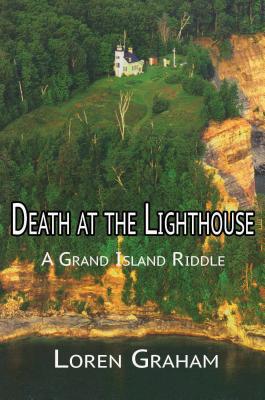
No-Nonsense Nonfiction: Death at the Lighthouse

Reading local books is always cool because the reader can recognize the places mentioned or alluded to, or perhaps knows the people in the book (when nonfiction) or people that inspired characters (when fiction).

The book I would like to tell you about today, Death at the Lighthouse by Loren Graham, is set on Grand Island, near Pictured Rocks National Lakeshore and the small town of Munising.  While I have not visited Grand Island, I saw it six days a week during the past year.  Now that I am no longer working there, I will tell you that I was a library assistant at the library in Munising.  So there were locations in this book that I knew, and family names that I recognized.  I admit, that makes it more interesting.


Statistics
Checkouts: 2 at the small public library where I am the director
Typical reader: True crime fans, fans of the author, residents and tourists of the area
Do the Dewey: 364.15 (true crime)
Source: Snowbound Books

Synopsis: In the early 1970s, the author and his wife bought the Old North Light on Grand Island, Michigan, as a summer home.  During the early renovations, they discovered that the lighthouse keeper and his assistant were allegedly murdered in 1908.  Graham spent years researching what had transpired, and this book is the result.

My Goodreads rating: 3 stars

In June 1908, the assistant lighthouse keeper from North Light of Grand Island turned up dead in a battered boat, looking like he'd been beaten to death and set afloat.  The lighthouse keeper himself was missing, and turned up weeks later, dead on a beach.  What happened?

Good question.  The author delves deep into not only the deaths of the men, but also the history of the Upper Peninsula and Munising, the clashing, multi-ethnic cultures of the denizens, and the lives of the imperious tycoons that established industries and towns.  This is a fascinating read, if you like a bit of true crime in your history, rather than the other way around.

But was there a crime, and whodunnit?  The conclusion the author drew took me by surprise.  Maybe it's accurate.  Maybe not.  If you read this book, please let me know what you think.

Monday, April 8, 2013

No-Nonsense Nonfiction: The Bandit Queen of India

I'd been contemplating going on hiatus from this blog, but I found something that I absolutely must review today, due to recent world events.  As luck would have it, I finished this book today.

As you may have heard, the former Prime Minister of the United Kingdom, Margaret Thatcher, died of a stroke this morning at the age of 87.  Regardless of what you might think of her policies and actions, there is no denying that she was a remarkable woman.  She was the only female Prime Minister Britain has ever had.  Women leaders, or women in any sort of role of authority, are unfortunately rare.

Much more common are the downtrodden and the abused.  Also newsworthy of late are all the rapes that have been occurring in India.  While the West certainly has its own problems regarding the culture of rape (see also the boys in Ohio who were convicted of such felonies, and how the media boohooed over the loss of their bright futures - and said little of how the violated girl's life must be in turmoil), India has been having problems.  There was the young medical student who was gang-raped on a bus and later died of her injuries.  Tourists have been raped in campgrounds and hotels.  And that really is only the tip of the iceberg.  Rapes happen in India for all sorts of reasons, including caste differences and other social conditions.

How do these two news items come together?  The book I want to discuss tonight is The Bandit Queen of India, an autobiography of Phoolan Devi (with Marie-Therese Cuny and Paul Rambali; Phoolan never learned to read or write).  This is the story of an amazing woman who was repeatedly raped, yet took justice into her own hands - and eventually was elected to a position of political power.

Statistics
Checkouts: Not available
Typical reader: People who like biographies, stories of charismatic criminals, and/or Indian history
Source: Interlibrary loan

Synopsis: Phoolan Devi tells her life story, from her tumultuous childhood to her release from prison.

My Goodreads rating: 4 stars

Phoolan Devi was born to a poor family of the lowly mallah caste.  She and her family endured hardships caused not only by their status but also by her father's brother, and later that uncle's son, in various ways.  Phoolan was married at the age of 11 to a widower in his 30s; while she should not have gone to his abode until age 16 or so, he insisted that she come with him to be his housekeeper.  That wasn't true; he locked her in a dark room and repeatedly beat and raped her.  She escaped repeatedly, until finally her mother gave back everything the man had given the family to renounce the marriage.  But after that, her family could not find a new husband for her.  Not only was she damaged, but she also was rebellious and had a penchant for talking back.

Eventually, she was betrayed and kidnapped by a gang of bandits.  This ended up being to her advantage, however, because one of the leaders, Vickram, fell in love with her and protected her.  They worked together, and she took revenge on not only her wicked husband but also many of the men who had raped her over the years.  She became a sort of female Robin Hood, taking from the rich and giving their rupees and goods to the poor.  She exacted revenge on many members of higher castes (mostly thakurs) who had stolen from, raped, or generally mistreated her fellow mallahs or others from the low ranks of Indian society.

All good things must come to an end, however.  Vickram was murdered and she was gang-raped yet again; she took revenge, but her banditry gradually tapered off as her gang grew smaller and police pressure increased.  However, she surrendered under her own terms.  She spent more than a decade in prison.

After the tales in the book and her release from prison, she went on to be elected to the Indian Parliament.  There she served until her assassination in 2001.


I read this book because it was a selection for the public library's book club.  I finished it because it was so enthralling.  Phoolan's narrative is fascinating.  At times it seems like a fairy tale - a very dark fairy tale, true, but when she wins the love and protection of Vickram and is later able to be a source of justice for the poor of her home state and the surrounding areas, it seems to have a fantastic air.  And Vickram is one of the most romantic guys to grace the pages of a book.  He treats Phoolan as no one has ever treated her before: he asks her how she feels.  He gives her space.  He protects and defends her, and tries to teach her.  Their partnership may not have been lovey-dovey, but he stands out as a wonderful man.

Phoolan Devi may have been a bandit and an outlaw, a thief and a murderess, but she brought justice to herself and to many others.  She enjoyed sharing her rupees with those she felt deserved them.  In a land where the lower castes were - are - untouchable unless they're being raped, she was righteous and vengeful.

The world needs more women like her.  There needs to be justice of some sort for the poor and the wronged.  Phoolan may not have gone about it in the best way possible, but she was effective in her little corner of the globe.  Her tenacity was admirable, and should be instilled in more future leaders.  The princesses being raised today do not have that.
Wednesday, July 25, 2012

Cover-to-Cover Commuting: Sex on the Moon

As I said before, I'm on a bit of a true crime kick this summer.  Sex on the Moon by Ben Mezrich has a catchy title and quite the different premise from the usual murders that are found in the 364 Dewey section.

Unfortunately, as I was writing this review, I happened upon some information that made me feel duped.  While this is no Million Little Pieces, it is an embellished tale.  Entertaining, yes; entirely factual, no.  The author did not do his homework for this book, which seems mostly based on interviews with the criminal behind the caper.  It drops my rating.

(As Wikipedia puts it, "Testimony given [for a National Geographic show] is at odds with some of the key claims made in Ben Mezrich's account.)

Statistics
Checkouts: Information unavailable
Typical reader: True crime fans and those drawn by the title
Source: Checked out from my local library

Synopsis: Thad Roberts, a daredevil and an up-and-coming fellow in a prestigious NASA program, risks it all to perform a most audacious heist - stealing moon rocks gathered by the Apollo missions.

My Goodreads rating: 3 stars

Thad Roberts is an idiot of a genius.  After a rough and rocky start to adulthood, allegedly getting kicked out of the Latter-Day Saints' missionary training as well his family, and marrying young and penniless, he decided to be an astronaut and set about achieving that goal.  He managed to land an internship several years in a row at the Johnson Space Center in Texas.  It was there that he came up with a wild, extravagant heist to impress his girlfriend - the liberation of moon rocks from a secure safe in one of NASA's most secure buildings.  Then he went and promptly got caught in a sting operation by the FBI.

The book is exciting in parts, particularly the execution of the theft itself, and dry and dull in others.  It lacks the complete story; apparently Mr. Mezrich only interviewed Roberts and Axel Emmermann, the Belgian rock collector who contacted the FBI about someone trying to sell moon rocks.  From what I've read elsewhere, both men are portrayed as greater than they really were.  The characterizations of those involved are actually quite the caricatures.  If you go by this book, the other interns had dull lives before Roberts spiced things up with camping trips, skydiving, and such.  And all the female interns were blonde and buxom beauties.  (Speaking of the female interns, I don't know why his girlfriend and other accomplice's names were changed, considering they also were charged in the heist and their names are matters of public record.)

I did not particularly enjoy the audiobook's narration.  Casey Affleck has a rather gravelly voice.  His diction is clear, though, and he differentiates between speakers.  It did not deter me.

In spite of being embellished, this was still an interesting book to listen to.  As I previously stated, the execution of the heist was exciting.  Learning a bit about NASA, the Apollo missions, and the moon rocks was also interesting.  If you want to read or listen to this book, just take it with a grain of salt.

Wednesday, July 11, 2012

Cover-to-Cover Commuting: Two books by Ann Rule

Ann Rule is one of the leading true crime authors in America.  I came across her work some years ago, when her book Green River, Running Red needed repair at the small library where I worked.  After fixing the binding, I checked it out and was engrossed in the story of the Green River Killer.  It was at once horrific and absorbing.  Adding to the intrigue of the book is that, as with her more famous work, The Stranger Beside Me (about Ted Bundy), Ms. Rule had unknowingly met the man she'd one day profile as a horrific serial killer.

While I don't care for mysteries, true crime stories and TV shows such as Forensic Files are fascinating.  So as I began my foray into audiobooks, I've gravitated toward this genre of nonfiction.  Two of the first books I listened to were by Ms. Rule, which I shall review here today.

Statistics
Checkouts (school/public library): 32
Typical reader: Fans of true crime and/or Ann Rule
Source: Checked out from the school/public library

Synopsis: Two children die in a house fire in Prairie Village, Kansas.  The fire was intentionally set - by their own mother.

My Goodreads rating: 4 stars

Statistics
Checkouts (public library): 60
Typical reader: As above
Source: Checked out from my "home" public library

Synopsis: A Southern belle tears her husband and his family apart with lies, manipulation, deception, robbery, and more.

My Goodreads rating: 4 stars

These two books pair together well.  Both are about strange, conniving women who ruin the lives of those close to them.  The tales are complex and twisted.  And both are abridged in audiobook format, much to my dismay.  (Most audiobook versions of Ms. Rule's books are abridged, it seems.)

Abridgement is when a book is shortened.  Many classics are abridged, including in the kid-friendly Great Illustrated Classics series.  It is also common with audiobooks.  You get the flavor of the book, and most of the story, but without the length and little details.

While Bitter Harvest seemed like a complete story, I felt like I missed something with Everything She Ever Wanted.  Having not read the print version, I'm not sure if there was a chunk left out of the story that could have otherwise enhanced it, or if it was just that confounding.

These books are narrated by different readers.  Before listening to them, this puzzled me somewhat; typically, the books of a particular author will be read by consistent talent, be it one particular voice actor or a full cast (provided that the recording/publishing company remains the same).  However, the change makes perfect sense.  Bitter Harvest is read in a Midwestern accent, befitting the Kansas location, while Everything She Ever Wanted is read in a delicious Southern drawl.  These were excellent choices by the crew at Simon & Schuster Audio.


These books ended up starting my true crime "kick" this summer.  While I'll still be reading and reviewing children's and YA literature, I'll also be highlighting a number of books in this nonfiction genre, both in audio and print formats.

Also coming soon, I'm interviewing an author of local interest.  Stay tuned!

Saturday, May 12, 2012

No-nonsense Nonfiction: Sky High review

This week was "Young Authors," where area students get to meet a children's author and do all sorts of fun stuff.  Marissa Moss was the featured author, and I got to meet her at a book signing one evening.  She signed all of her books we have in the school collection, plus the one I bought at the event.  The newest book is the one I'd like to tell you about today: Sky High: The True Story of Maggie Gee.
Statistics
Checkouts: New to the library
Typical reader: Early elementary children who like airplanes and/or pilots, or those in need of a biography
Source: Personally purchased from Snowbound Books

Synopsis: Maggie Gee tells her life story, of how she became a pilot for the WASP during World War II.

My Goodreads rating: 4 stars

This is one of those books I had to buy after hearing the author talk about writing it.  Ms. Moss heard about Maggie Gee and contacted her, since the two lived in the same general vicinity.  Ms. Gee agreed to tell her story, and the author created this book.  It took several years to get it published, but the timing when it was published was perfect - the WASP (Women Airforce Service Pilots) were finally being recognized in 2009 by Congress with the Congressional Gold Medal.

Maggie Gee's story is very inspirational.  The narrative speaks of her dreams of becoming a pilot and of reaching that goal.  She made her not-yet-true-stories become real.  That's beautiful.  The illustrations of this biographical picture book are lovely, but the most gorgeous thing is how it encourages children to pursue their ambitions.

This book can be tied nicely to many lesson plans.  Maggie Gee was one of only two Asian-American women in the WASP, and part of the book touches briefly on that, when she meets a male pilot who clearly worries that she's a spy or something for the Japanese.  Discuss race relations during World War II with the students, as appropriate to their age.  Talk about what services the WASP provided during the war.  Did you know that these women were shot at with live ammunition during in-air fight exercises, and some died due to friendly fire?  Or, take a more general approach and teach students about women's efforts during the war.  There's a lot of material out there, and this is a good place to start.

Monday, February 6, 2012

Guilty Pleasure: A Zombie's History of the United States

I was in the mood for a zombie book recently, and browsed my local library's catalog for such things. A Zombie's History of the United States by Dr. Worm Miller (I hope that's a pseudonym) came up, and I decided to give it a try.  Here's my review.
Statistics
Checkouts: Not available at the school library.
Typical reader: Zombie fans with some knowledge of, and interest in, history
Do the Dewey: Shelved at 973 MI (American history) at my local library
Source: My local library

My Goodreads rating: 3 stars

This parody offers an alternative history of several events throughout American history with the presence of zombies.  Sounds interesting, right?  Well ... once you get past the first couple vignettes, it is.  The preface had me skeptical, though I did enjoy pondering how zombies may have come to North America via the land bridge in the Bering Straits with the early peoples who would become Native Americans.  The colonial pieces were dull.  I might actually recommend skipping them.

My interest was firmly piqued with the story of Lewis and Clark, which offered a story where Lewis was extremely interested in studying the undead and experimenting with a cure.  Eventually he was bitten and experimented on himself - and became an undead hybrid, with his human wits about him but the hunger for flesh and the lack of a pulse of a zombie.  Creative?  Oh, yes.

The value of this book lies within that creativity.  Miller takes various famous events and sticks zombies into the fray, sometimes even altering famous quotes slightly to include references to the undead.  There are zombies at the Alamo, zombies interfering with the Transcontinental Railroad, zombies being wrestled by Teddy Roosevelt, and zombies fighting Nazis.  I'd endorse the passages regarding the 1800s the most.

Parodies often seem to be for those who don't worry about political correctness.  This book is no different - but may cross the line in a few places.  It's a little uncomfortable to read a book that glosses over history so that the real issues are hidden.  Zombies are the target of Jim Crow laws and the Ku Klux Klan.  They are the beings that would be rounded up to exist in the Oklahoma Territory.  Agent Orange is replaced by zombification spray in the Vietnam conflict.

While I often wondered if this book would be good for high school students, to raise their interest in real American history, there's too much hesitation because of the lackluster passages in some portions of the book, and the way it shrugs off important issues.  There are better-written historical rewrites that don't play as fast and loose with accuracy as this book does.  Interestingly, what comes to mind are the source-books for the old World of Darkness role-playing games, such as Werewolf: the Apocalypse and Vampire: the Masquerade.
Want a good reinterpretation of history? Try an RPG book.

Tuesday, December 27, 2011

Most Disappointing Books of 2011

Life's too short to read bad books.  They're sometimes unavoidable; we've all had to read a book for a class at some point that we absolutely couldn't stand.  But once you get past the requirements, there's no reason to waste your time on books that aren't worth reading.

Here are the books I simply could not finish in 2011.

It's Elementary: When You Reach Me by Rebecca Stead
This book won the Newbery Medal in 2010.  Normally, that's a sure sign of quality.  You can typically rely on books that win the medal, or honor (runners-up), to be excellent.  When You Reach Me just bored me, though.  I put it down at about page 39.

No-Nonsense Nonfiction: In the Company of Cheetahs by S. K. Niel
Oh, I wanted to like this book!  I love cheetahs, and practically did a happy dance in the public library when I found this on the shelves.  Unfortunately, I couldn't get even ten pages into this book.  I really wanted to read about the Cheetah Conservation Fund and its work.  This is badly in need of proofreading!  I could not get past the horrible writing or the overuse/misuse of italics.

Guilty Pleasures: Hit List by Laurell K. Hamilton
(Sorry, this one gets a little long and rant-y.)

I put up with the Anita Blake series as long as I could.  (Granted, I started reading the series only a couple years ago, but I read 19 and a half books.)  The first several books, written before 2000, were really good.  Anita was an interesting character - a strong heroine that could really kick butt, and had high morals.  Back then, she was a good necromancer who had a lot of plots surrounding her job for a company that helps settles wills and the like by raising zombies to answer questions and such.  She was a love interest to a powerful vampire in her hometown of St. Louis, Jean-Claude, who she inadvertently helped into power in the excellent first book, Guilty Pleasures.  A few books in, a hot new guy by the name of Richard Zeeman entered the picture.  He was not only hot, but also a closeted werewolf who was powerful enough that Anita didn't realize for most of the book that he was a werewolf.  A love triangle emerges, then a power triangle, bonding the necromancer, werewolf, and vampire together.

Then around 2000, Laurell K. Hamilton went nuts.  There's an interesting obsession with rape that crops up in both this series (despite the author's insistence to the contrary, we fans know that when Micah didn't take "no" for an answer in Narcissus in Chains, it was rape) and in the first book of the Meredith Gentry series.  The series took a turn from good plots and enjoyable writing to erotica with a dash of plot.  One or two books after this were okay to good, such as Skin Trade.

I kept holding out hope for the series because I liked Anita Blake so much as a character, despite how much I hated what the author was doing to her.  After the nineteenth book (Bullet), I was fed up with the lack of plot - or in that book, the recycling of old plot - and the lack of proofreading/fact-checking against previous novels.  But then I read good reviews of this year's release, Hit List.  It features Edward, the all-human, mostly-psychopath, bounty hunter that trained Anita and would love nothing more than to have a fight to the death with her someday.  I gave it a shot.

Really, I got two-thirds of the way through this before I gave up.  I was probably being far too generous with my time on this one.  But then the book introduces a character for a second time, and when a mixed-color weretiger up and loses one of his established colors, 100 pages after he's been established, I just can't take anymore.  Plus, Edward's been pretty much neutered.  But hey, that's what this series has gone and done with every flipping male in the series.


Don't worry.  Laurell K. Hamilton hates her fans as much as we hate her.  I'm glad I never bought one of her books.  She has nothing but contempt for her readers, and there's proof on her web site.

Tuesday, October 25, 2011

Guilty Pleasure: The Zombie Combat Manual

Happy Halloween!  I'll try to get another seasonal book review up by the actual date, but I'm really busy these days.  Here's a review of The Zombie Combat Manual by Roger Ma.
Statistics
Checkouts: Definitely not owned by the library (though I could see far too many of my war and weapons obsessed 3rd grade boys wanting it)
Typical reader: Zombie fans
Do the Dewey: 818.607 (miscellaneous modern writing)

My Goodreads rating: 5 stars

According to the back cover of this book, most individuals will have to destroy this undead opponent without the aid of a firearm.  This is logical.  You'll run out of bullets.  Your gun will jam.  You'll wake up to find zombies breaking into your house and your gun will be out of reach.  What should you do?

You should read this book and be prepared to take on zombies with an assortment of melee weapons that are readily available and know how to fight at a variety of distances, as well as how far you need to run to get some down-time, the best infant protection/mobility options, and what's fact and what's fiction about the zombie plague.

I haven't read other zombie survival guides, but this seemed like an excellent, well-rounded manual.  The anecdotes included are far superior to those in Max Brooks' World War Z, because this book actually gives its characters flavor.  I was frustrated while reading World War Z because, while it was interesting for the history, it really lacked any differentiation between speakers.  A Texan would give an account with the exact same lexicon as a South African or a Japanese person.  The Zombie Combat Manual never had that problem.  The survivors' stories were engaging and gave the book a decent plot, despite not being a novel.

The author really put a lot of thought into not only combat systems and survival tips, but also into how his zombies functioned and what happened in the zombie apocalypse.  The first chapter wastes no time in getting into the facts and myths about how zombies work.

If you're worried about zombies, or need a good reference tool for writing your own zombies novels, this book is a must-read.

Saturday, September 3, 2011

No-nonsense Nonfiction: "Unexplained Phenomena" reviews

Selecting nonfiction for a school library takes a critical eye.  However, I want to gush about the two books I read from the Unexplained Phenomena series by Capstone Press!  These books are pretty much the epitome of what I like to see in a nonfiction children's book.


Statistics
Checkouts: new to the library, courtesy of the Superiorland Preview Center
Typical reader: Middle- to upper-elementary students are going to really enjoy these.
Do the Dewey: 001.942 for Aliens, 398.24 for Legendary Beasts

My Goodreads ratings: 5 for both

As I said, I am very impressed with this series.  The layout for both books is outstanding.  The presentation of information and depth of coverage are fantastic.  There are glossaries as well as in-text definitions of world kids may not understand.  These are age-appropriate books, and can also be "high interest/low level" that will intrigue older students who do best with books that are written for a lower grade level than their own.

Searching for Aliens, UFOs, and Men in Black covers its topics through history, starting with things ancient people saw in the sky and continuing through the United States government's investigations of aliens and UFOs.  It provides rational explanations for sightings when possible, while still allowing readers to believe in the possibility of lifeforms from other planets.

From Wikipedia: an okapi
Tracking Sea Monsters, Bigfoot, and Other Legendary Beasts is more broad in scope, highlighting many well-known and some less familiar cryptids.  The creatures are grouped by where they are found - on land, in the sea, and in the air.  Height or length and features are provided, as well as what is known and speculated about each beast.  It also talks about the kraken, which was proven to be more or less real in the 1870s with the discovery of giant squid, and the okapi, which was initially believed by European explorers to be a myth like the classic unicorn but was proven to be an actual animal.

This series is well-rounded, informative, and highly interesting.  I'm sure that these books will be very popular.  If you're looking for a good paranormal/unsolved phenomena set for a library or a child in your life that loves this stuff, this set (four volumes total - I want the other two!) is an excellent choice.

Monday, August 22, 2011

No-nonsense Nonfiction: "The Girl's Guide to Everything Unexplained" reviews

I'm introducing a new feature today with a double billing!  As a school librarian, I have to make sure that the students have plenty of nonfiction material as well as fun novels and picture books.  I need to select books that support curriculum standards and classroom lessons.  From folklore to history, from dinosaurs to poetry, nonfiction can sometimes be the most challenging to select and circulate.  These books need accuracy and currency along with accessibility, and I need to keep in mind that this is a K-12 school: I'm serving a wide age group.

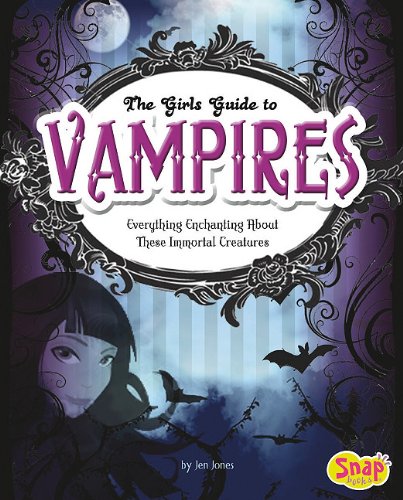
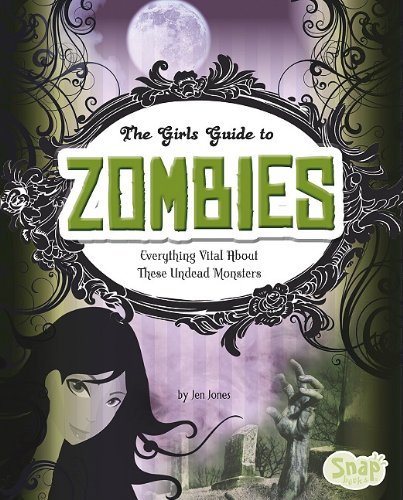
As I said, I'm highlighting two books today.  These are from The Girl's Guide to Everything Unexplained series by Jen Jones.  One is The Girl's Guide to Vampires and the other is The Girl's Guide to Zombies.


Statistics
Checkouts: new to the library, courtesy of the Superiorland Preview Center
Typical reader: Alas, while I've got students of both genders who would love these topics, boys won't pick up books labeled for girls.  Ironically, there's hardly anything in the books that make them girl-oriented.
Do the Dewey: 398.4 (398 is folklore/fairy tales)

My Goodreads ratings: 3 for vampires, 4 for zombies

I was only able to get half the series, which is a bit unfortunate.  (The other two books are on werewolves and wizards.)  These are pretty easy to read but not too watered down, making them great for elementary students grades 2-6.  The format is great, with the books introducing the lore and history of these creatures, how they feature in pop culture, how to recognize them (Is your BFF a zombie?  Is your crush a vampire?), and their strengths and weaknesses.

The zombie book was particularly good because it covered the wide scope that modern zombies do.  There's a bit about the origin of the word, and what Haitian zombies are, as well as what movies like Night of the Living Dead have given us.  I liked the bit about the movie Pathogen, which was written and directed by a 12-year-old girl.  Wow!

The vampire book ... I wish it were as good.  While the textual information is relatively on par with the zombie edition, the scope was too narrow.  Apparently, all vampires are of the Twilight ilk!  Books actually meant for kids, like the Bunnicula series of my youth or the more recent My Sister the Vampire get a little blurb at best.  I'm trying to stay off my soapbox regarding the series, but Twilight is not appropriate for elementary students - or really anyone who can't tell the difference between a good relationship and an abusive one.  Sneaking into your girlfriend's bedroom to watch her sleep is called stalking.  Throwing her through a glass coffee table because she has a papercut is physical abuse.  But, this book has an overwhelming amount of photos from the movies of the same name.  More Bela Lugosi, less Bella Swan, please!

I'd like to see how the other two books in this series compare.  I think the two that I received will be hits in the library this fall, at least.